
Pond Treatments
Guide & FAQ
How to choose the right pond treatment
- 5 min overview
- Problem matching, types & dosing format
- 5 common questions
Why pond treatments help
Most ponds and lakes build up material faster than nature can process it. Leaves, fish waste and decaying vegetation settle to the bottom, nutrients accumulate, and clarity and smell gradually get worse.
A treatment addresses one specific part of that cycle. The problems people bring to us most often are:
- cloudy or grey water with fine floating particles
- black organic muck on the bottom, in beach areas or along shorelines
- string algae and blooms that keep returning
- slick biofilm or dark staining on stream beds, waterfalls and rocks
- a pond that will not cycle properly after a fill or a spring start-up
Reducing the phosphate that feeds an algae bloom usually holds results longer than treating the bloom on its own.
The main types, and when to choose each
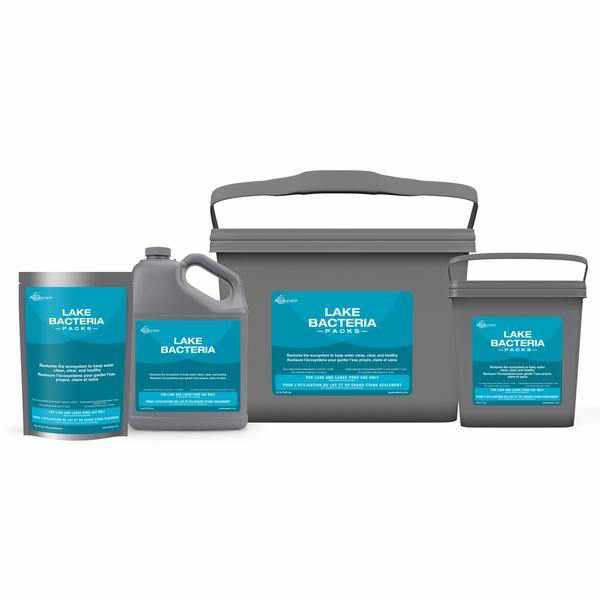
Beneficial bacteria
Bacteria break down fish waste, leaves and plant material biologically, including the settled muck layer on the bottom.
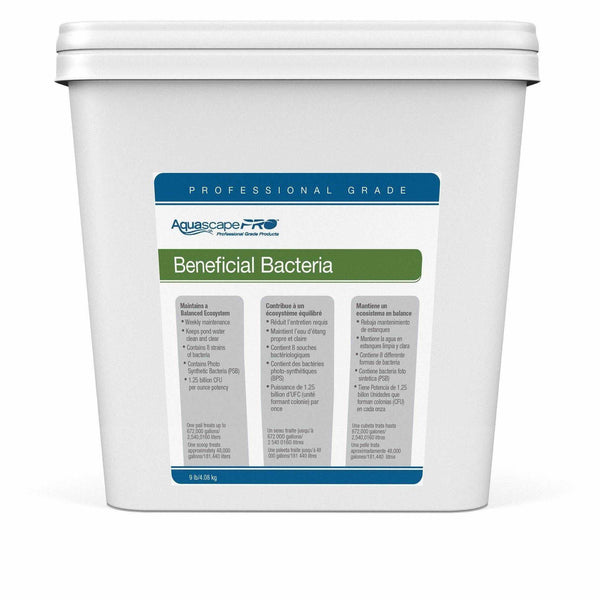
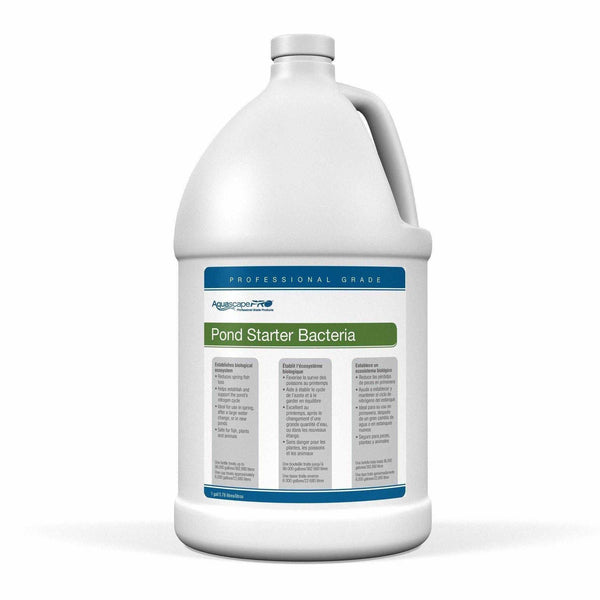
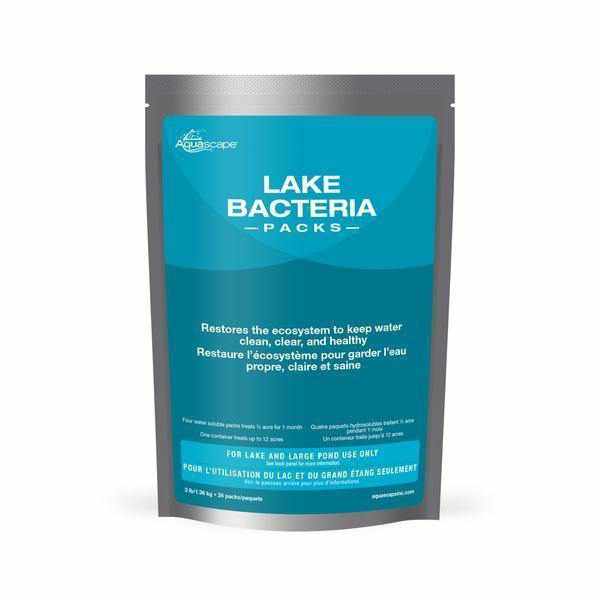
Choose bacteria when the problem is organic load: cloudy water from waste, sludge, smells or constant maintenance. AquascapePRO Beneficial Bacteria is a dry concentrate for ponds and small lakes, and Aquascape Lake Bacteria Packs are water-soluble packs for larger water. Pond Starter Bacteria seeds a new filter colony, so use it at new pond fill, after a full water change and at spring start-up.
Flocculants and clarifiers
Flocculants clump fine suspended particles into larger ones that either settle out or get caught by your filter.
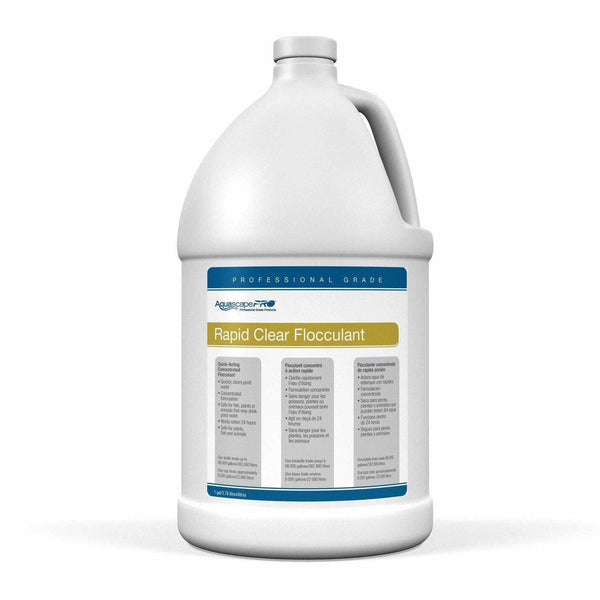
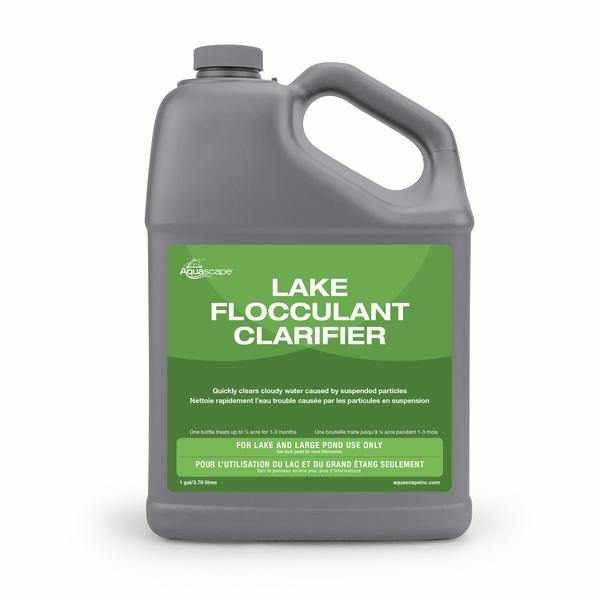
Choose a flocculant when the water is cloudy or muddy-brown from clay, mineral sediment or silt rather than biological waste. Rapid Clear is for pond-scale cloudiness, and Aquascape Lake Flocculant Clarifier covers larger water. If the cloudiness is green, it is algae and a flocculant is not the right treatment.
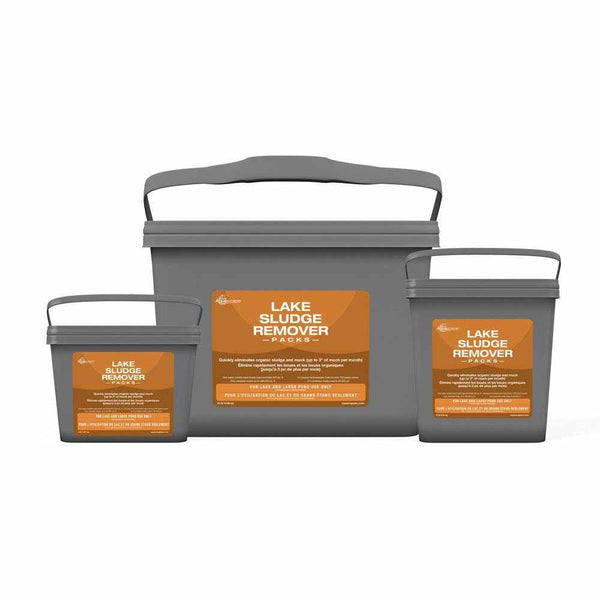
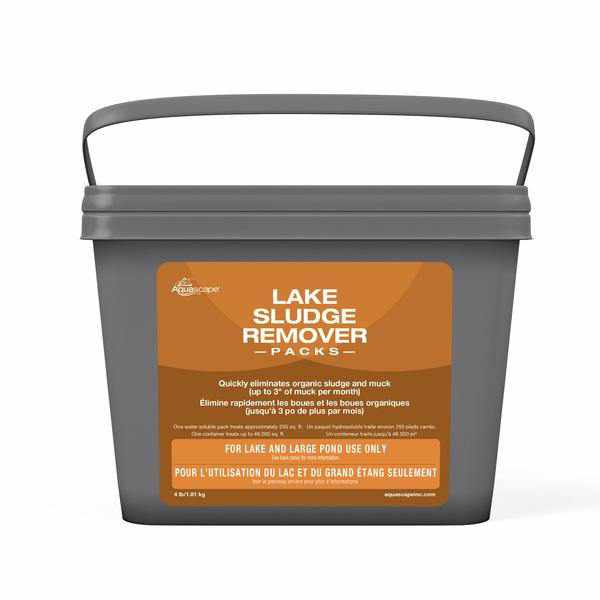
Sludge and muck removers
These packs sink and dose the bottom layer directly instead of dispersing through the water above it.
Choose sludge packs when the problem is a soft, smelly bottom in a lake, beach area or shoreline, and you want to spot-treat one area rather than treat the whole water body.
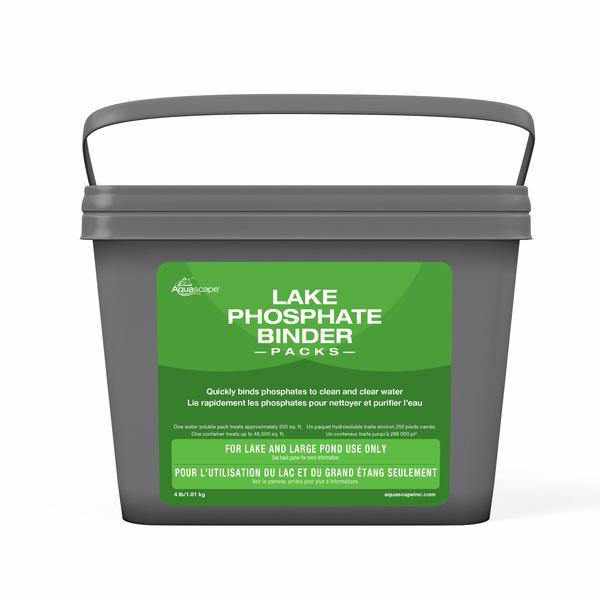
Phosphate binders
Phosphate is the nutrient algae grows on, and it enters ponds and lakes through runoff, waterfowl and decaying matter.
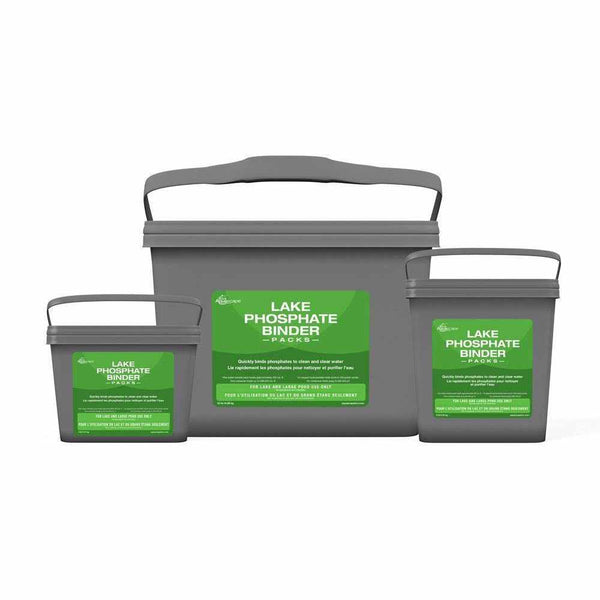
Choose a phosphate binder when algae keeps returning and you want to reduce the nutrient feeding it rather than treat the algae itself. The packs are water-soluble, so you can toss them onto inflow points and shallow margins where nutrient load concentrates.
Stream, waterfall and rock cleaners
These treat wet surfaces that ordinary pond bacteria cannot hold onto, because the water moves past too fast.
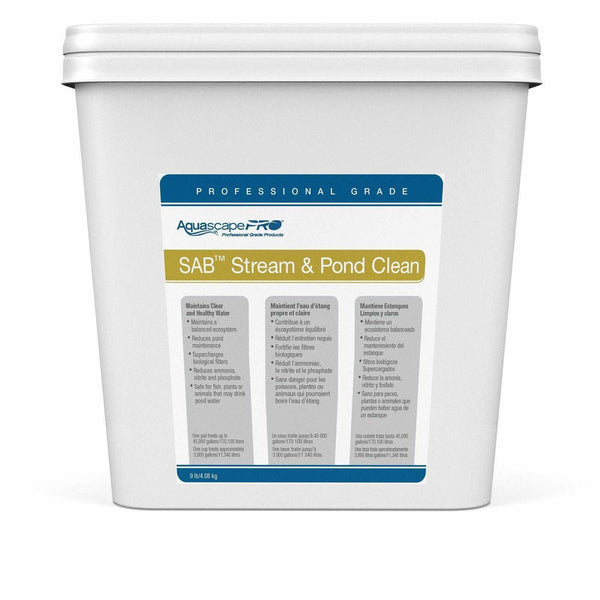
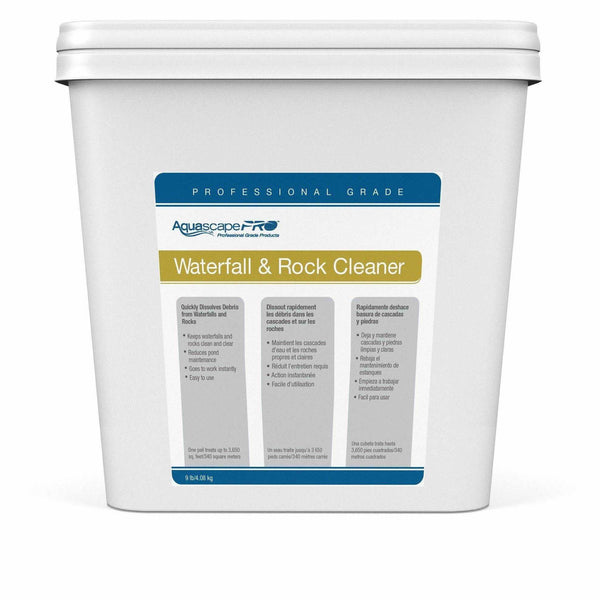
Choose SAB Stream & Pond Cleaner when stream beds, waterfall faces and spillways have a slick organic film and you still have circulation through them. Choose Waterfall & Rock Cleaner when rock surfaces are stained and you want direct application with no dilution, or when the water is too cold for biological treatments to be doing much.
Pond dye
Blue dye tints the water so less sunlight reaches submerged weeds and algae at depth.
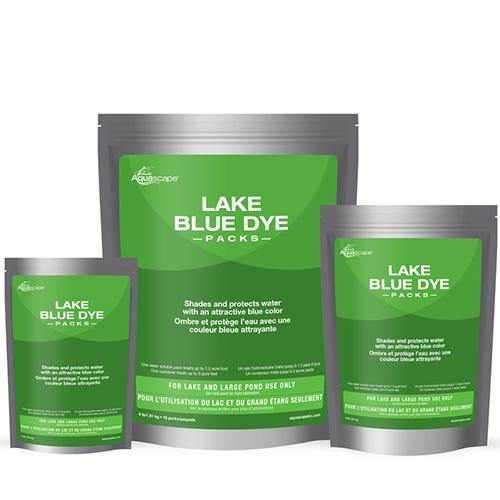
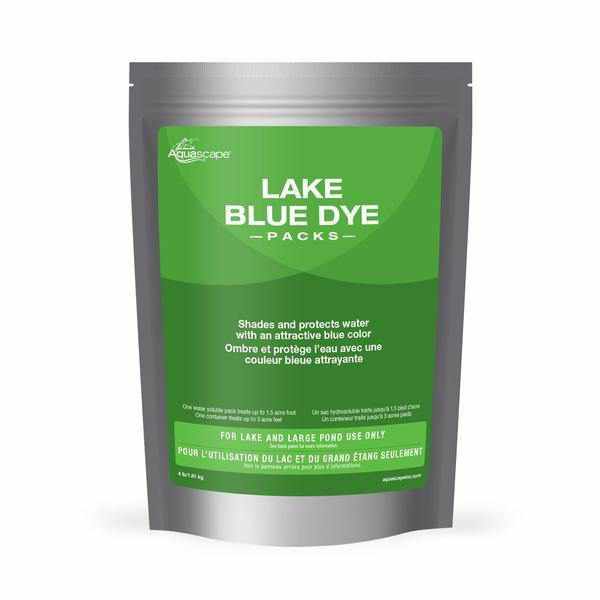
Choose dye packs when you want to slow submerged growth through the season and make fish harder for herons and other predators to see. Dye works better as prevention than as a fix for growth that is already established.
AquascapePRO is the professional-grade line, and those formulations are around 25% stronger than the retail versions.
How to choose the right size and format
Two things decide what to order: the problem you are solving, and how much water or surface you are treating.
- Pond-scale liquids and dry concentrates are dosed by volume. One container of Rapid Clear or Pond Starter Bacteria treats up to 96,000 gallons, SAB Stream & Pond Cleaner treats up to 45,000 gallons per container, and Beneficial Bacteria treats up to 672,000 gallons per container.
- Lake packs are measured by area or acre-feet. Lake Bacteria Packs are dosed four per 1/4 acre each month, Lake Flocculant Clarifier covers up to 1/4 acre for up to 3 months, and one Lake Blue Dye Pack treats up to 1.5 acre-feet.
- Surface treatments are measured by surface area. Waterfall & Rock Cleaner covers up to 3,650 square feet per container, and Phosphate Binder Packs treat up to 250 square feet each.
For a small backyard water garden, the dry concentrates and liquids are easier to dose than lake packs. Save the packs for water large enough that measuring by the gallon stops being practical.
What affects whether a treatment works
A few conditions decide whether a treatment does what it is meant to.
- Filtration. Rapid Clear only helps if something removes the clumped particles afterwards. A working filter or skimmer has to catch them, so treat the clarifier as part of the job rather than the whole job. If yours is not up to the task, look at pond filters and skimmers first.
- Oxygen and circulation. Sludge removers and bacteria need dissolved oxygen to work. A lake bottom with little circulation breaks material down slowly, and pond aeration systems can help there.
- Water movement. SAB Stream & Pond Cleaner needs flow to carry the enzymes across rock and stream surfaces. Waterfall & Rock Cleaner is applied straight to the surface and does not rely on flow.
- Water temperature. Biological treatments slow down in cold water. Waterfall & Rock Cleaner works at any water temperature, which makes it usable in early spring and late autumn.
- Fish load. In water with a heavy fish load, flocculants need care: as suspended particles clump and settle they can cause gill stress. Read the product details before dosing a stocked pond or lake.
What comes with these treatments
Rapid Clear, Pond Starter Bacteria, Beneficial Bacteria and SAB Stream & Pond Cleaner each include a measuring cup and dosage chart. Waterfall & Rock Cleaner goes straight onto the surface with no dilution, and the lake packs are pre-measured.
Dry containers hold 9 lb, liquids come in 1 gallon, and lake packs are sold in counts from 4 up to 1,152. Check the product page for the count that suits your water body.
Not sure which one you need?
Send PondHaven a short description of the problem, your approximate pond or lake size, and how heavily it is stocked with fish. We can tell you which treatment matches the problem and roughly how much of it you need.
No page change, it expands right here
Frequently asked questions
Quick answers to the most common questions about our pond treatments.
Will these treatments harm koi, game fish or visiting wildlife?
Read the product details before dosing a stocked pond or lake, and take particular care with flocculants in water with a heavy fish load. As clumping particles settle, they can cause gill stress.
How do I know if I need a flocculant, bacteria or a phosphate binder?
Look at what the water is doing. Cloudy or brown water from clay and silt needs a flocculant, organic muck and smells need bacteria or sludge packs, and algae that keeps returning points to phosphate binding. Green cloudiness is algae rather than suspended sediment, so a flocculant will not clear it.
Can I use lake packs in a small backyard water garden?
Dosing them accurately in a small pond is awkward, because Lake Bacteria Packs are sized at four per 1/4 acre each month. For a water garden, the AquascapePRO dry concentrates and liquids are much easier to measure.
How quickly will I see a difference?
It depends on the product. Rapid Clear usually brings clarity back within 24 hours, and Waterfall & Rock Cleaner acts on contact. Bacteria and sludge treatments work more gradually as the bacteria establish and digest material, so plan on regular dosing through the season.
Do biological treatments work in cold weather?
They slow down in cold water, because the bacteria become much less active. Waterfall & Rock Cleaner works at any water temperature, so it is the practical option for early spring and late autumn. Pond Starter Bacteria is for spring start-up, when the filter colony needs seeding.
Need expert help finding the right setup?
Contact Pond Haven Support