

Subsurface Pond Air Diffusers (Aerators)


Guide & FAQ
How to choose the right bottom-diffused aerator
- 3 min overview
- Depth, pond size & power
- 4 common questions
Why aerate from the bottom?
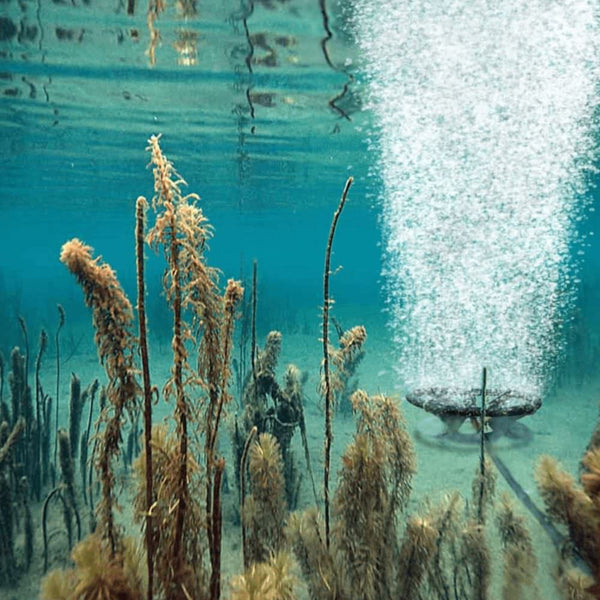
In warm weather, ponds separate into a warm surface layer and a colder bottom layer that can run low on oxygen. A bottom-diffused system pushes air to diffusers on the pond floor, and rising bubbles pull that deeper water to the surface so it can exchange gases with the air.
That circulation can support fish and beneficial bacteria, cut down on stagnant areas and foul smells from trapped gases, and help aerobic bacteria work through bottom muck. Because the compressor stays on shore and no electricity enters the water, the surface is free of floating equipment. In winter, the same movement can help keep open water near the diffusers.
Main types and when each fits
Shallow-water systems
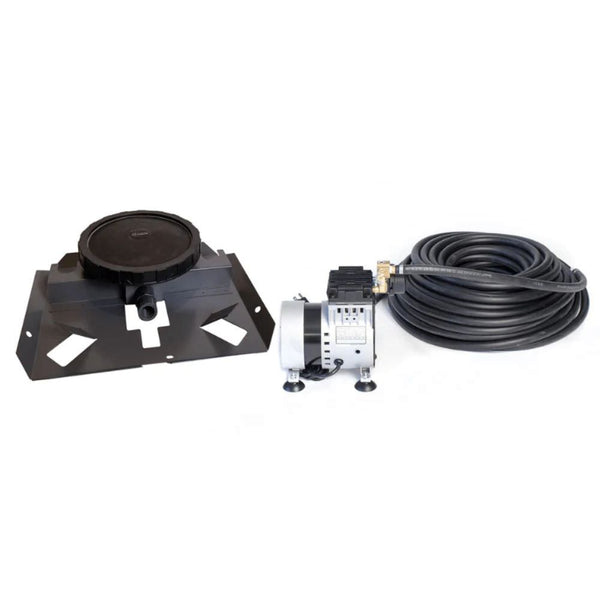
These use compressors built for low backpressure in water up to about 6 feet deep. PondHaven carries this type in the Airmax Shallow Water System, which suits ponds or coves up to 1/2 acre.
Choose a shallow-water system when the bottom sits under about 6 feet down and a deep-water compressor would work harder than it needs to.
Deep-water electric systems
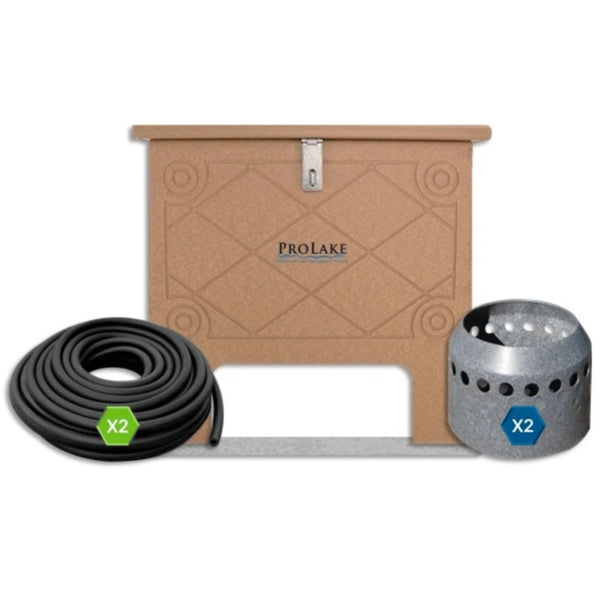
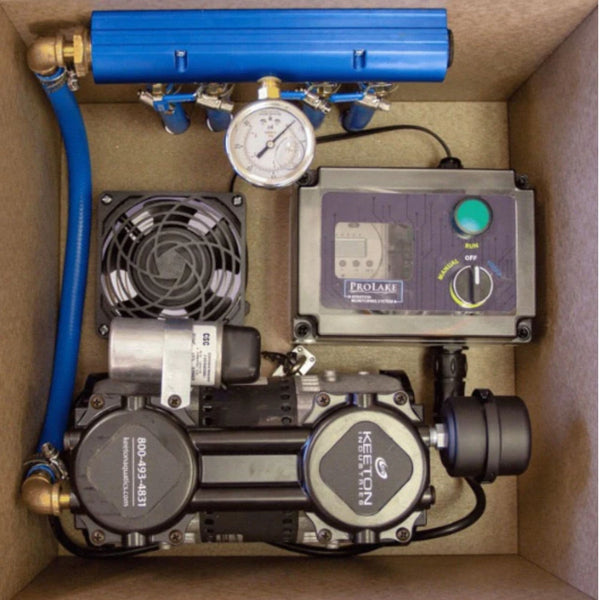
Rocking piston and similar compressors are built to push air down to deeper pond floors and along longer airline runs. The Keeton ProLake line covers ponds from 1 acre up to 16 acres, and the Scott Aerator Bubble Pro comes in Mini, Standard, Max, and Max XL systems.
Choose a deep-water electric system when your pond runs deeper than about 6 feet or spans several acres and you have power near the water.
Solar systems
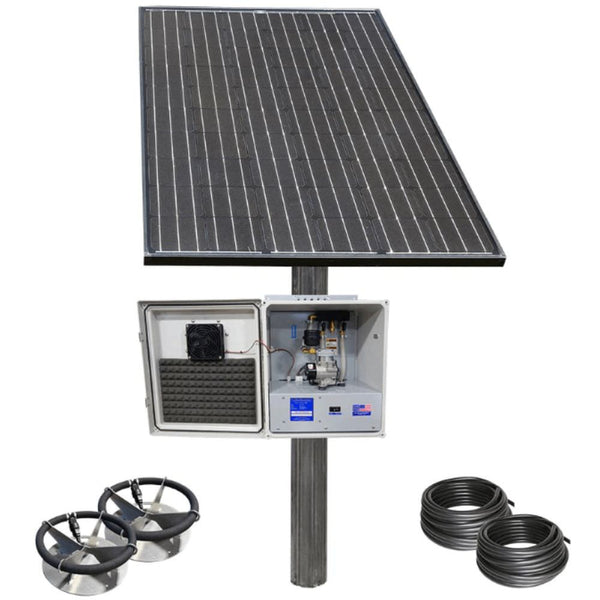
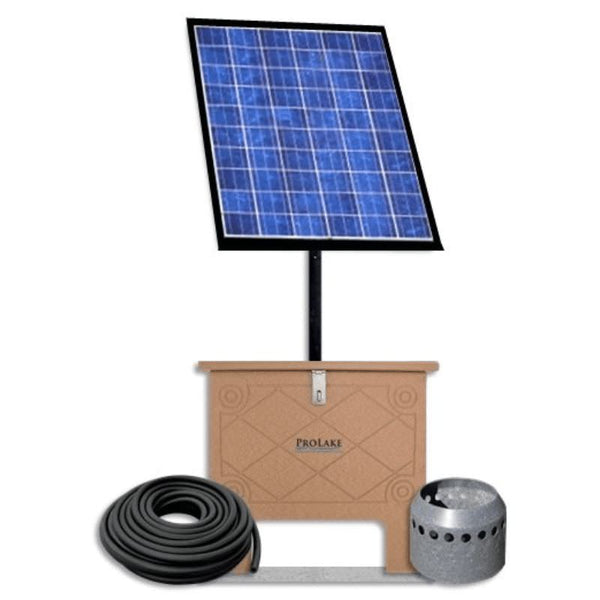
Solar aerators run on panels and battery backup, so no utility line has to reach the pond. PondHaven carries the Keeton ProLake Solaer models and the Scott Aerator Solar Pond Aeration System.
Choose a solar system when running electricity to the pond would be difficult or expensive.
If appearance or surface agitation matters more than bottom circulation, compare our pond aerators and the surface aerator vs bottom diffuser guide.
How to choose the right size or model
Start with the water itself, then match the system to it.
- Depth. Match the compressor to the bottom first, since two ponds of the same surface area can sit at very different depths.
- Surface area. The systems here cover ponds from about 1/4 acre to 16 acres. If yours is close to that size, see our 1/2 acre pond aerators.
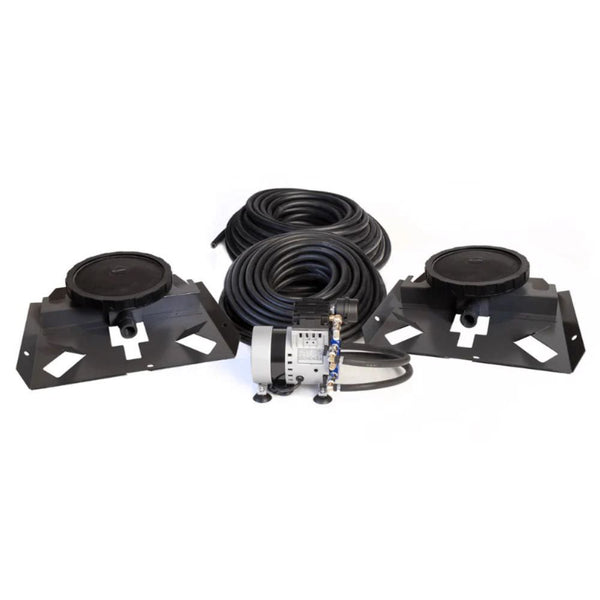
- Shape and basins. Long, kidney-shaped, or divided ponds often need more than one diffuser station to reach every cove.
- Power access. Mains power gives you the widest choice. Remote ponds are better suited to solar.
Installation, power, and placement
A shore-mounted compressor needs an electrical hookup and a dry, level spot above the seasonal high-water mark, inside a ventilated enclosure. The further it sits from the water, the more non-weighted airline you will trench to the shoreline.
Inside the pond, use self-sinking weighted airline so lines stay pinned to the floor and clear of boat props. Airline length and run distance affect the setup, so check the pond aerator installation guide before you order.
What normally comes with a system
Exact components vary by model. In general, a complete setup includes:
- air compressor
- diffuser assemblies
- airline and fittings
- cabinet or enclosure on many systems
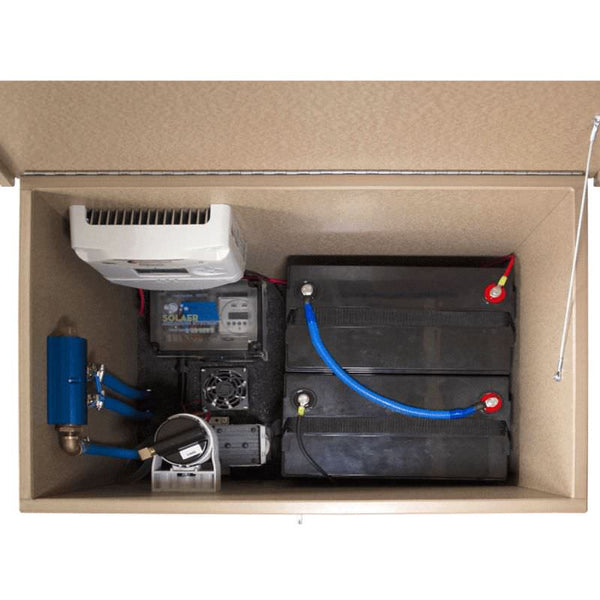
The Airmax Shallow Water System includes the compressor, cabinet, diffusers, airline, and fittings. The Keeton ProLake Solaer systems add solar panels, a charge controller, cooling fans, and a programmable timer.
Confirm the parts list on the product page for the model you are considering, and see our Scott Aerator collection for that brand's systems.
Not sure which one you need?
Send PondHaven your pond surface area, average and maximum depth, the number of separate deep areas, and how far the compressor would sit from the water and power source. We can narrow it to a few sensible options from there.
No page change, it expands right here
Frequently asked questions
Quick answers to the most common questions about our subsurface pond air diffusers (aerators).
Is a bottom diffuser better for my pond than a surface aerator or fountain?
It depends on your goal. Bottom-diffused systems move oxygen through the deeper water and leave the surface clear, which suits ponds used for swimming, fishing, or boating. Surface aerators and fountains agitate water at the top and can add a visible spray, so they fit shallower ponds and decorative projects. Our surface aerator vs bottom diffuser guide compares the two.
Can a diffused aerator work in a pond less than 6 feet deep?
Yes, with the right compressor. Ponds that shallow call for a low-backpressure system such as the Airmax Shallow Water Aeration System, which suits ponds or coves up to 1/2 acre.
How many diffusers do I need for an irregular or multi-cove pond?
It depends on the shape and the number of separate deep areas. Long, kidney-shaped, or divided ponds often need multiple diffuser stations to circulate water into every cove. Send us your pond dimensions and shape and we can suggest a layout.
Can I place the compressor several hundred feet from the pond?
Yes, but the distance changes the setup. Non-weighted airline is trenched from the compressor to the shoreline, and the electrical run to the compressor needs to suit the distance. See the pond aerator installation guide for how these runs are handled.
Need expert help finding the right setup?
Contact Pond Haven Support