

Buddha Outdoor Fountains
Guide & FAQ
How to choose the right Buddha fountain
- 3 min overview
- Types, sound & placement
- 5 common questions
Why people put a Buddha fountain outdoors
Water running over the carved face gives an outdoor space a steady, gentle sound. Many people use that sound to soften traffic, HVAC, or neighborhood noise on a patio or courtyard.
The carved head or wall panel also gives the space a focal point for a garden bed, meditation corner, or entry. These features work well where you want:
- a calm visual anchor for a patio or courtyard
- gentle water sound without a large pond
- a garden accent that reads as finished from several angles
- something to sit and look at from a bench or chair
A recirculating fountain does not solve noise on its own, but it can make a small outdoor area noticeably more comfortable.
Wall fountain or freestanding Buddha head?
PondHaven carries two layouts, and the difference matters mostly for placement.
Wall fountains (flatback)
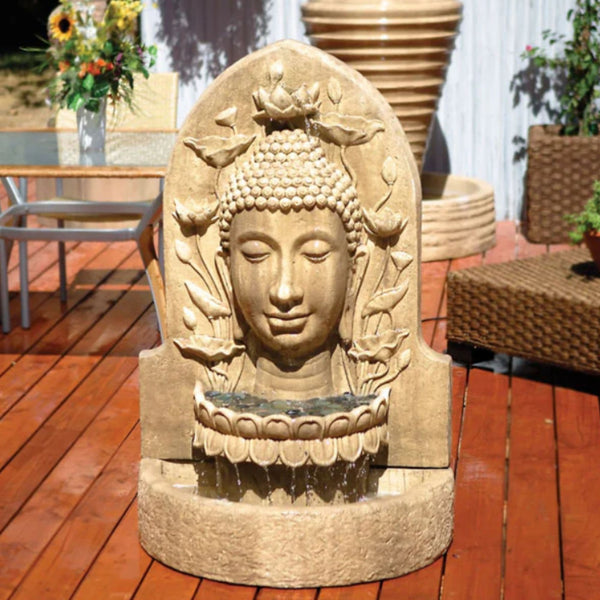
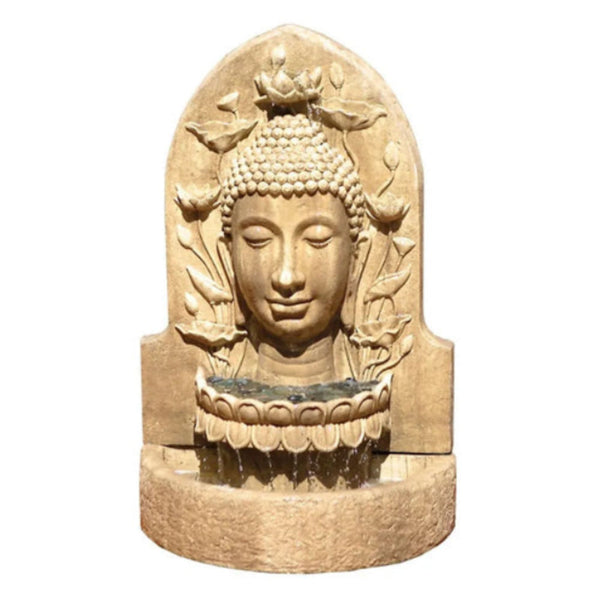
The flat reverse side rests flush against a garden wall, patio masonry, or an exterior wall. Water falls from lotus flowers above the Buddha face into a basin below.
Choose a wall fountain when floor space is tight, you have a stable vertical surface to set it against, or you want water movement along a boundary rather than in the middle of an area. The Buddha Wall Garden Water Fountain By Gist is this type.
Freestanding Buddha head bubblers
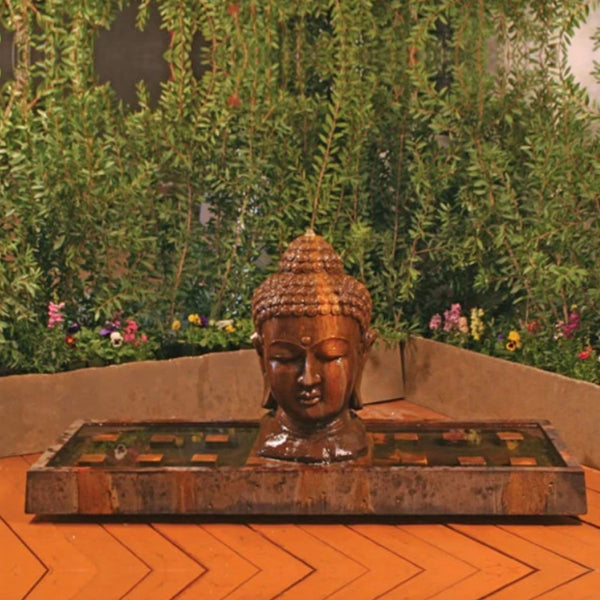
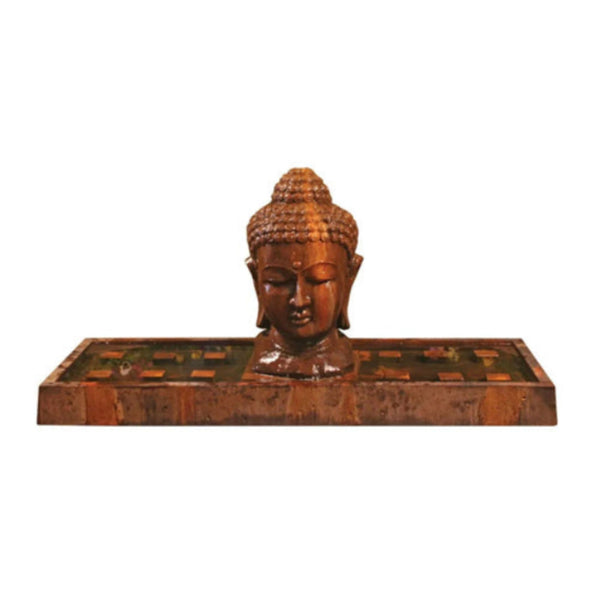
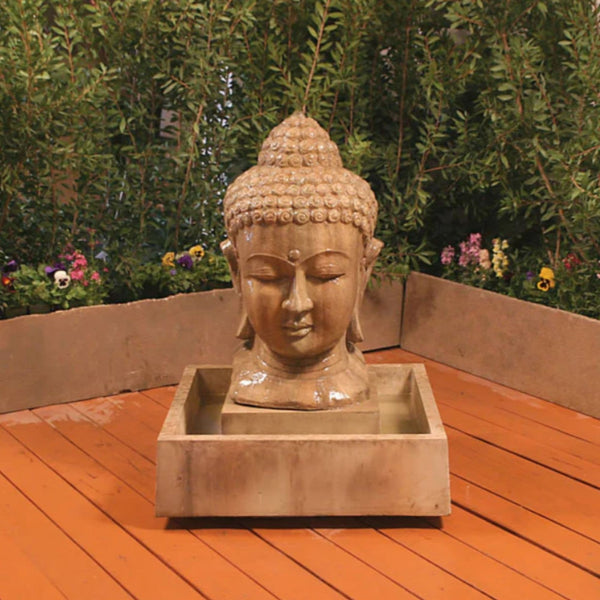
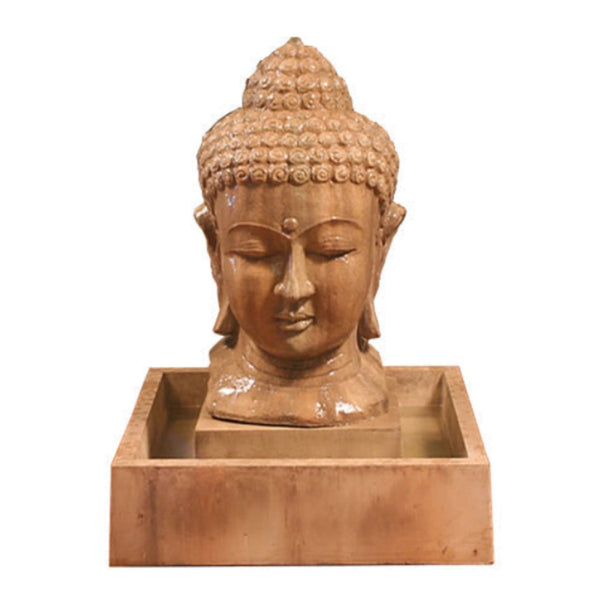
Water bubbles or trickles from the crown of a carved head, washes over the face, and collects in a square or rectangular basin below.
Choose a freestanding head fountain when the piece will sit in open space, such as a patio center or garden bed, and you want it to read as a sculpture from more than one side.
For other sculptural styles, compare our statue outdoor fountains, or see zen outdoor fountains for a broader set of garden water features.
How to choose the right size and sound
Three things decide which model fits: mounting style, water flow, and scale against the surrounding hardscape.
Mounting and footprint
A flatback model needs only the depth of the fountain itself plus a little working room. A freestanding basin model needs clear ground on every side it will be viewed from.
Water flow and sound
- Bubbler and cascade: water moves from the crown and down over the face. This gives a soft, continuous trickle that is easy to talk over.
- Two tier: water falls from lotus flowers into a basin pool below. This adds a second drop and a slightly more audible splash.
Pick the flow you would rather hear every day. Both styles recirculate the same water rather than needing a constant supply.
Height and scale
Match the fountain to the wall or paving around it. The Buddha Head Water Fountain By Gist stands 40 inches tall, which suits a courtyard or compact garden, while the large Buddha head model makes a bigger statement piece. Check each product page for exact dimensions before ordering.
Power, foundation, and placement
These requirements affect where the fountain can go, so plan them before you buy.
- Power: the recirculating pump needs a standard outdoor outlet nearby, ideally a weather protected GFCI receptacle. There is no dedicated water line to run.
- Foundation: set the fountain on a solid, level surface such as a concrete pad, paved terrace, or firmly compacted stone. It carries more weight once the basin is full.
- Wall support: flatback models need a stable vertical surface, such as a masonry wall or sound exterior siding.
- Water access: keep a hose within reach for the first fill and for topping off what evaporates.
Our outdoor fountain selection guide covers placement and sizing in more detail.
Not sure which one you need?
Send PondHaven the wall length or open footprint you have, how close the nearest outlet is, and how much water sound you want. We can point you to the model that fits and talk through placement.
No page change, it expands right here
Frequently asked questions
Quick answers to the most common questions about our buddha outdoor fountains.
How loud is the water flow on a Buddha fountain?
Most of these fountains produce a soft trickle rather than a loud splash, since water moves gently over the face and into the basin. The two tier model adds a second drop into a pool below, which is slightly more audible than a single cascade.
Does a Buddha fountain need a dedicated water line?
No. These fountains recirculate water from their own basin with a submersible pump. You fill the reservoir once with a hose and then top it off now and then to replace what evaporates.
Can a Buddha fountain sit flat against a patio wall?
A flatback wall fountain can, and it is designed to. Freestanding Buddha head models have finished sides and a basin, so they are meant to sit out in the open where the water flow is visible from more than one angle.
What kind of foundation does it need?
A solid, level surface that can support the fountain when full, such as a concrete pad, paved terrace, or firmly compacted stone. An uneven or soft surface can stress the basin and leave the water line sitting crooked.
How do I look after the pump and basin?
Keep leaves and debris out of the basin so they do not collect around the pump, and rinse the basin when residue builds up. Before freezing weather arrives, drain the fountain and store the pump indoors; tell us your model and we can confirm the care steps for it.
Need expert help finding the right setup?
Contact Pond Haven Support