

Kasco Marine



Guide & FAQ
How to choose the right Kasco unit for your pond
- 4 min overview
- Product types, sizing & power
- 5 common questions
Why pond owners run this equipment
Much of what pond owners call us about starts with still water: surface odors, muck buildup, murky water, and fish struggling in hot weather or under winter ice. Moving, oxygenated water supports fish and beneficial bacteria and helps limit stagnant areas.
The equipment also handles property-side jobs. A circulator helps keep floating weeds and debris off a dock, and a de-icer helps keep open water around boats, pilings, and bulkheads through winter.
Nutrient loads, feeding, and organic matter still shape a pond, so treat this as one part of a routine rather than a cure.
The main product types and when each fits
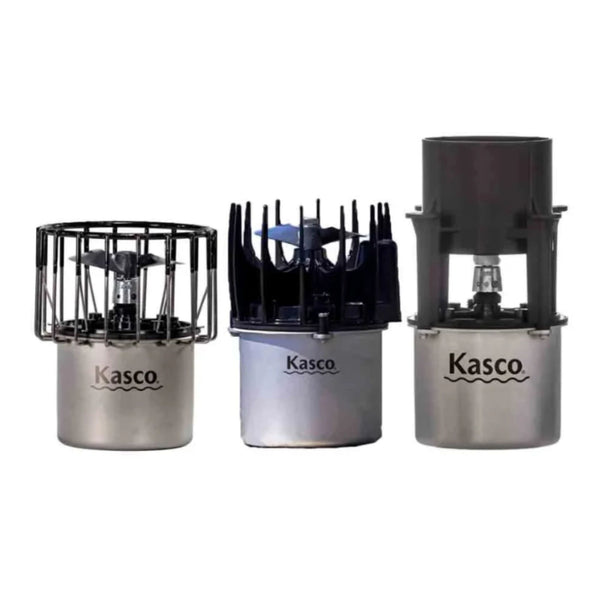
Decorative fountains (J Series)
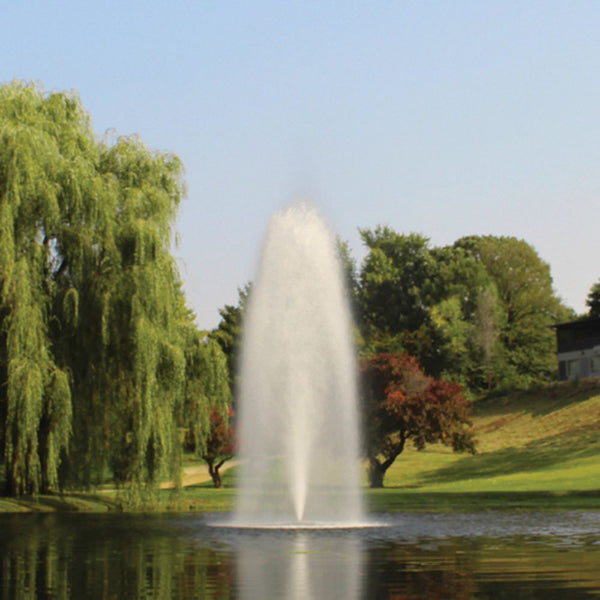
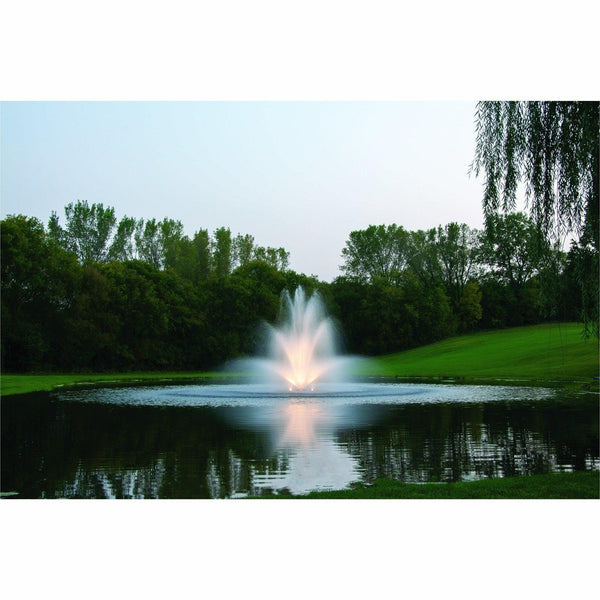
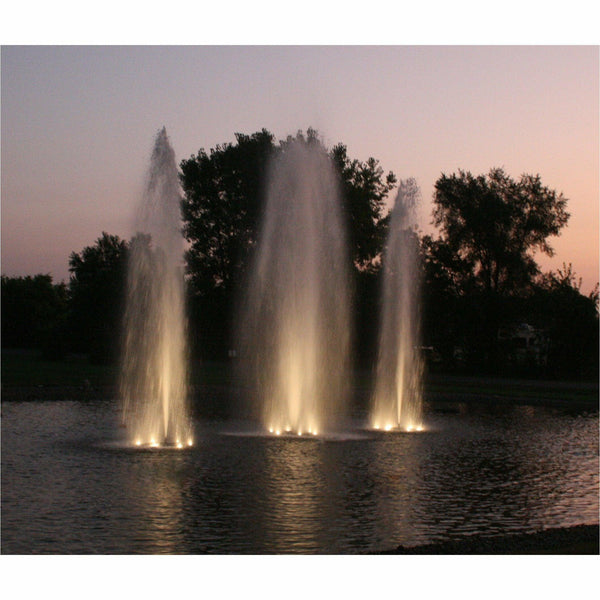
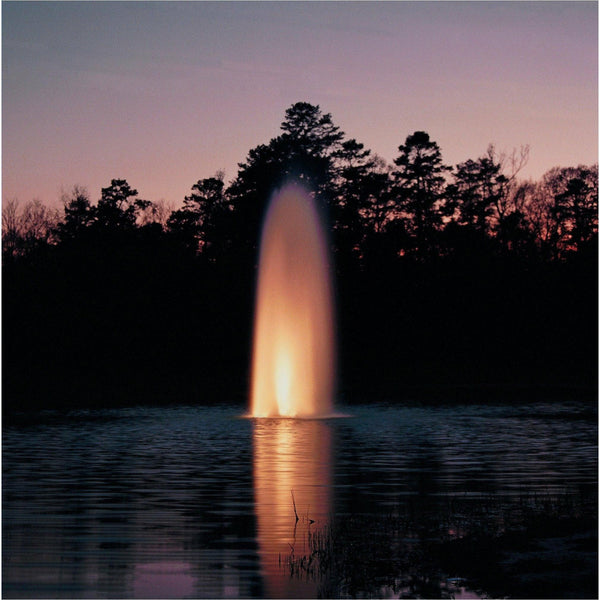
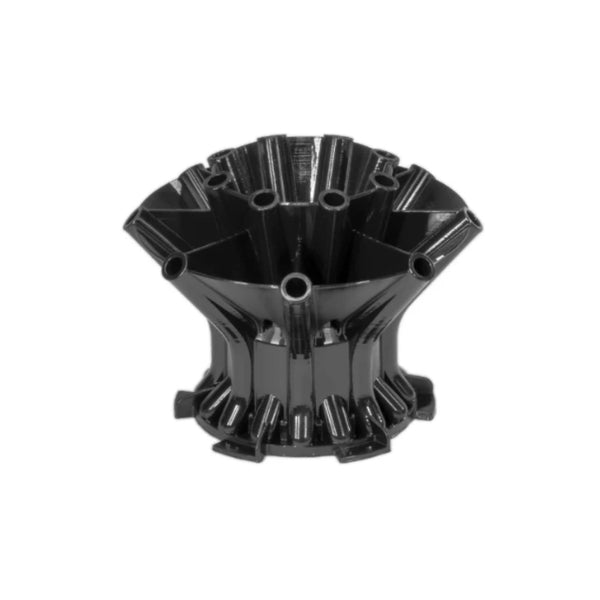
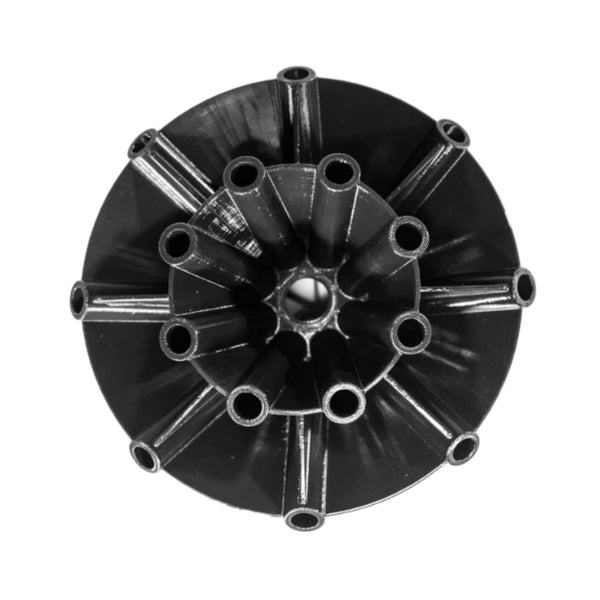
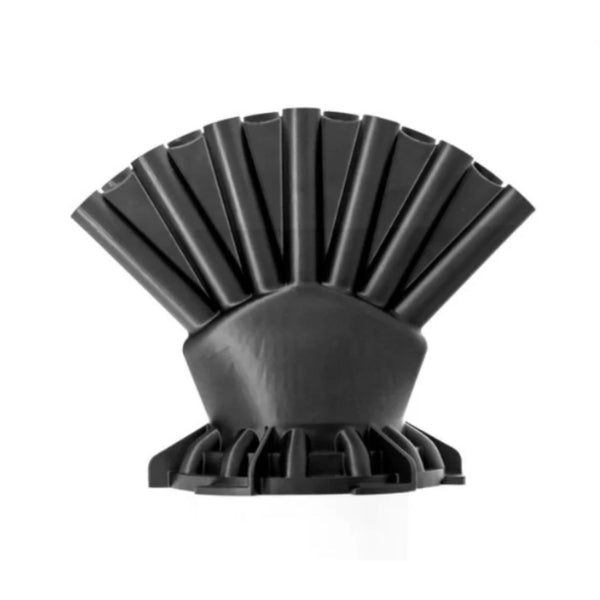
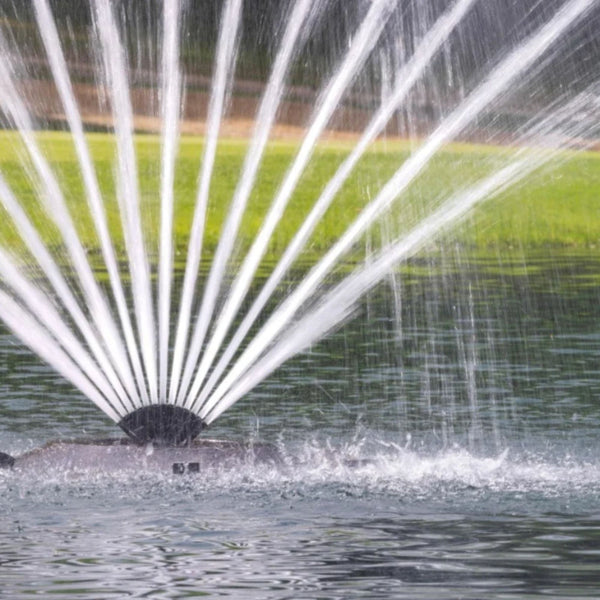
Choose a J Series fountain when the display is the priority. It takes interchangeable spray nozzles, so you can change the look without changing the fountain. The Mahogany, Mighty Oak, Madrone, Magnolia, Palm, and Fern patterns run from a two-tier ten-stream design to a fanned thirteen-stream display.
Mahogany and Mighty Oak fit J Series units from 3/4 HP to 7.5 HP, and Palm fits 2 HP to 7.5 HP.
Aerating fountains (VFX)
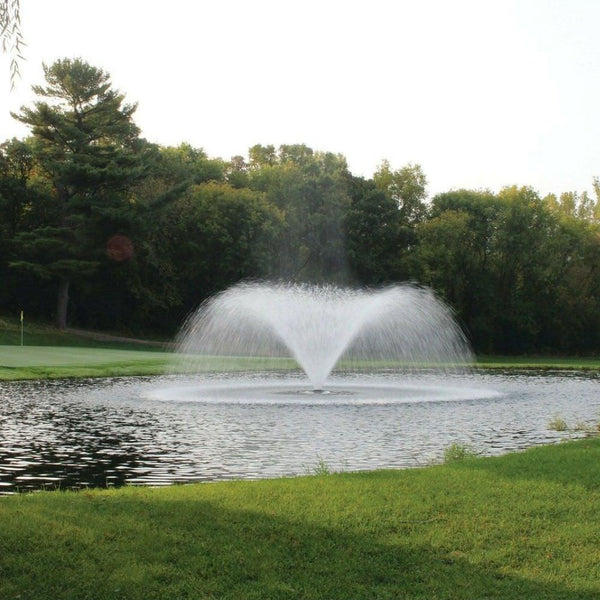
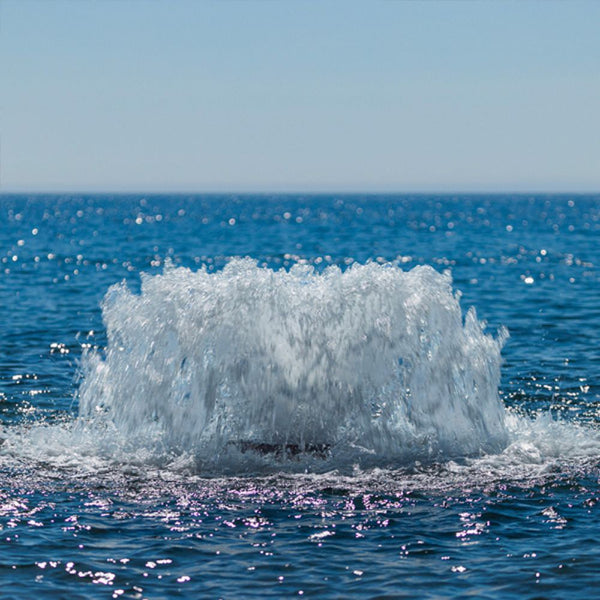
Choose the VFX when you want a visible display and more water movement at the same time. Its wide V-shaped pattern agitates water across the surface, which adds oxygen while still giving you something to look at.
If the display matters more than the aeration, compare our Kasco fountains. If oxygen is the only goal, see our Kasco aerators.
Surface aerators
Choose a surface aerator when oxygen is the goal and you do not need a spray display. These fit aquaculture, wastewater lagoons, shallow ponds, and sites where water clarity and oxygen matter more than spray height.
Bottom-diffused aeration systems
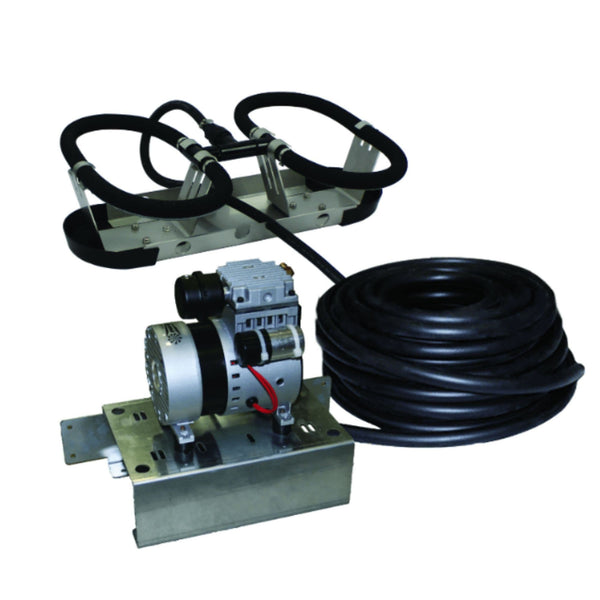
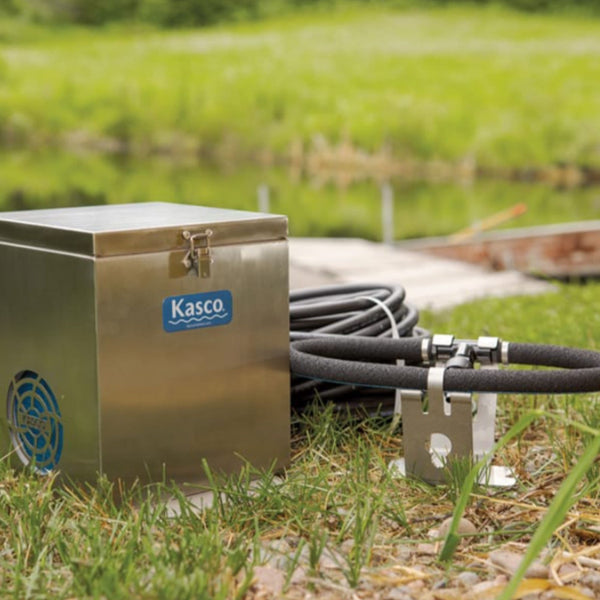
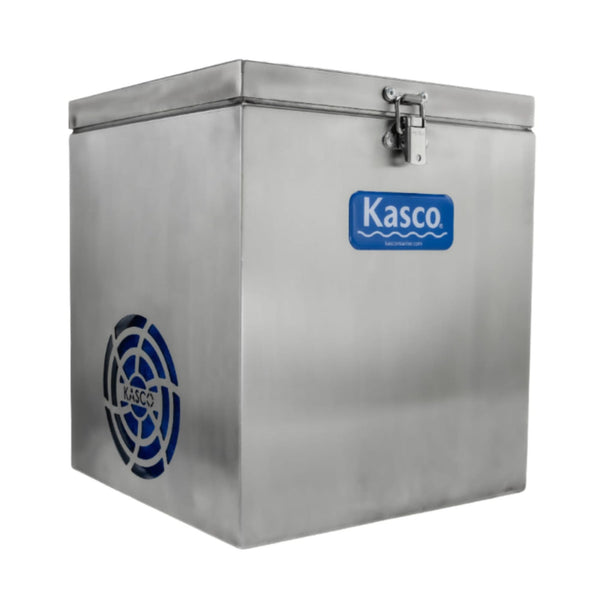
Choose a bottom-diffused system when the pond is deep, or when you would rather not run an electrical cord through the water. A shore-mounted compressor pushes air through weighted tubing to diffusers on the pond floor, and rising bubbles pull deeper water toward the surface.
Kasco's Home Series is meant for ponds up to 2 acres.
Water circulators (AquatiClear)
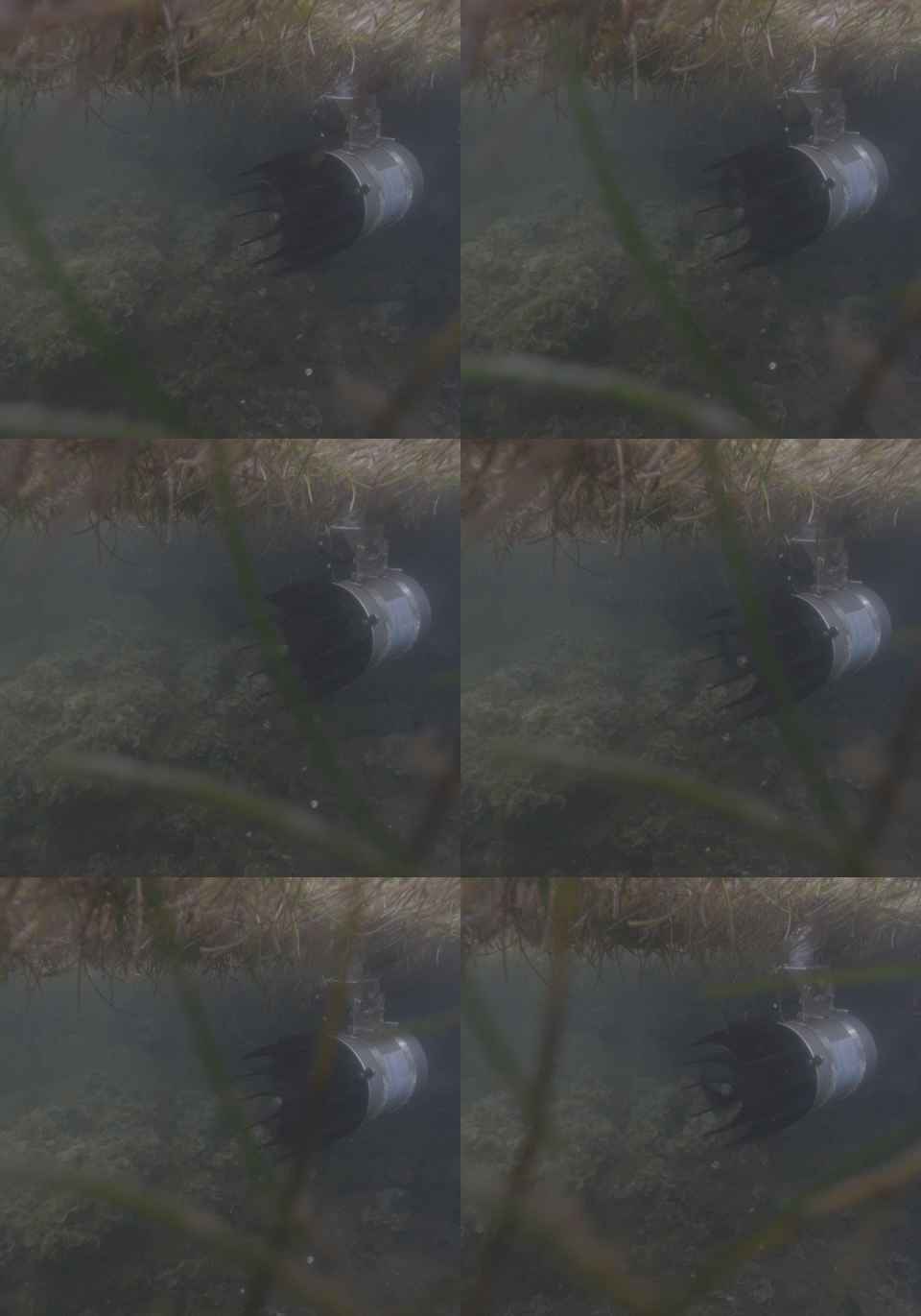
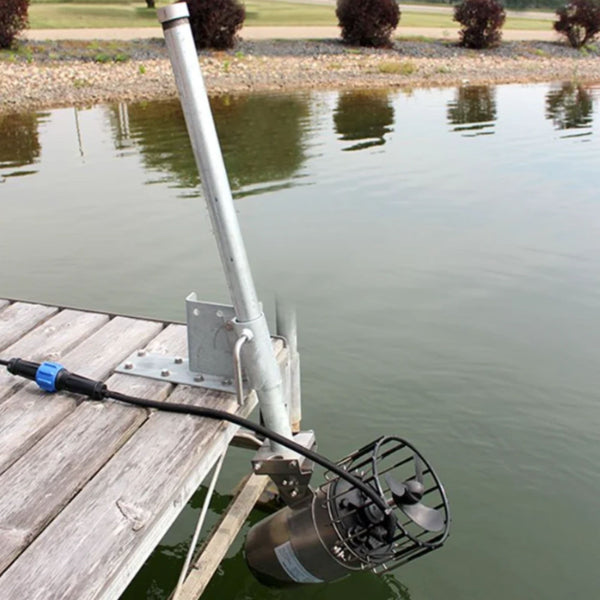
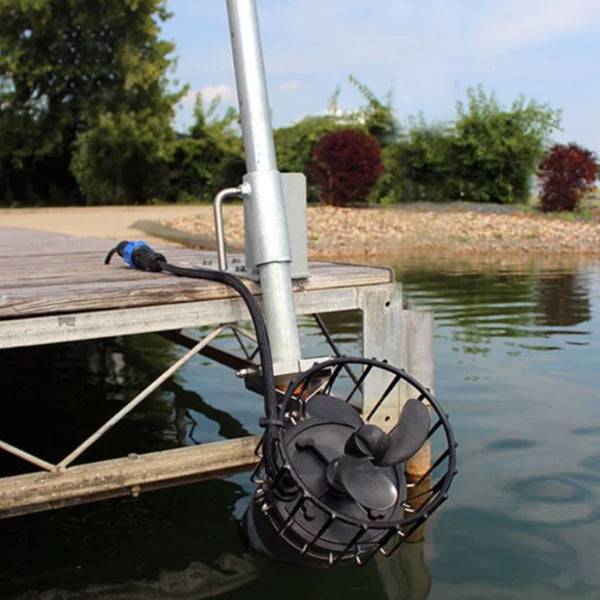
Choose AquatiClear when the problem is floating weeds, debris, or muck at a dock, marina, or shoreline. It moves water in a set direction and its design resists clogging, so it can run continuously. For oxygen across a whole pond, compare our Kasco aerators instead.
De-icers
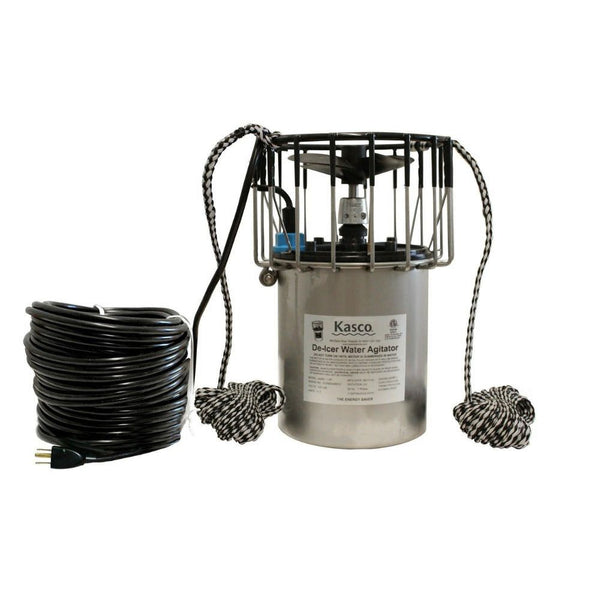
Choose a de-icer when winter ice is the concern, to help keep open water around docks, boats, pilings, and bulkheads where ice can cause damage.
How to choose the right size or model
Start with four things:
- What you want the unit to do: display, oxygen, directed water movement, or ice defense.
- Pond surface area and shape: long, divided, or irregular ponds may need more than one unit or diffuser to circulate the whole body of water.
- Average and maximum depth: shallow water favors floating fountains and surface aerators, while deeper ponds usually get more from bottom-diffused aeration. As a general rule, water deeper than about 8 feet is where diffused aeration starts to make sense.
- Power supply: what is available at the shore sets your options.
Kasco replacement motors are stocked from 1/2 HP up to 7.5 HP, so matching the model number on your existing unit is usually straightforward. Confirm the ratings shown on the individual product page before you order.
Power, cable and placement requirements
A few items are worth settling before you buy.
- Circuit: plan on a dedicated GFCI/GFCB-protected circuit for equipment running outdoors.
- Electrical supply: confirm what the unit needs on its product page before running wire, since the supply varies between models.
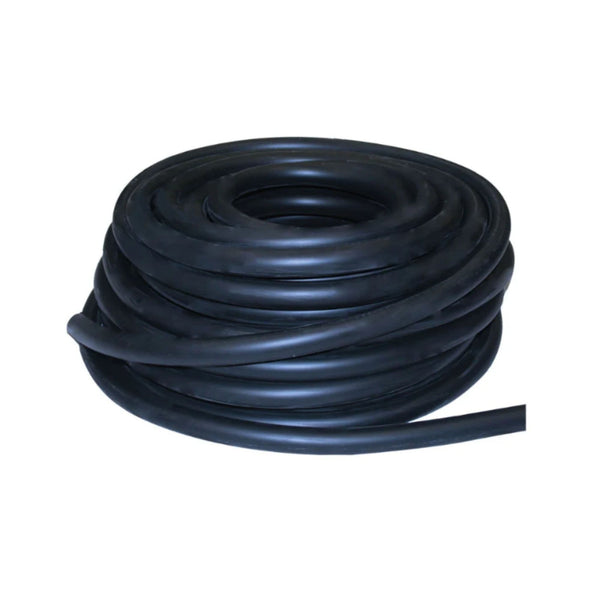
- Cord and tubing length: measure from the power source down the bank to where the unit will float, then allow slack for anchoring. Diffused systems use weighted air tubing, such as Kasco SureSink, which sinks and holds position on the pond floor.
- Depth: floating fountains and aerators need enough water under them to avoid pulling in silt and debris. Diffusers belong in the deepest basins.
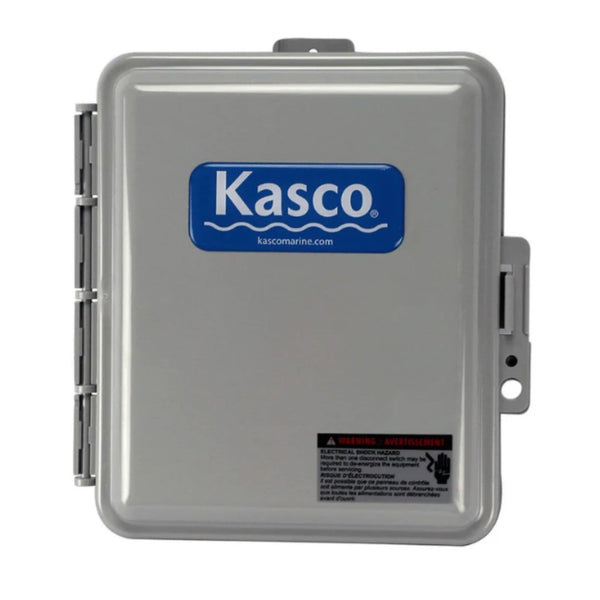
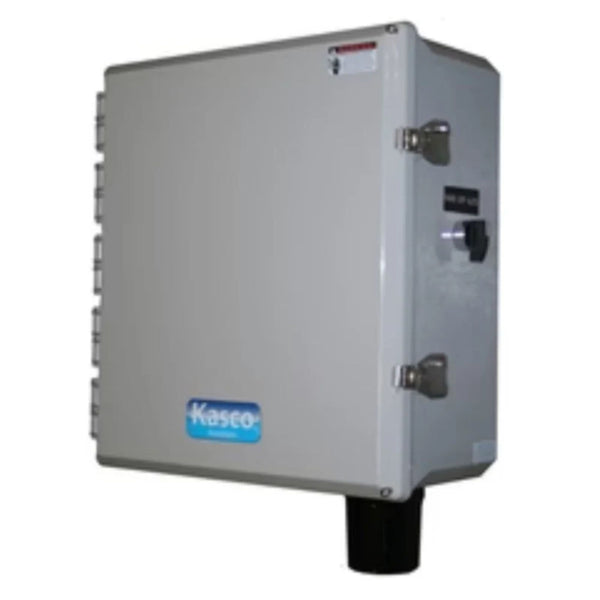
- Control panels: Kasco panels provide GFCI/GFCB protection, weatherproof lockable enclosures, and timers on most models, sized to match the equipment they run.
For wiring runs and setup detail, see our guide on how to run power to a pond fountain and our pond fountain installation guide.
Accessories, lights and replacement parts
Check the individual product page for what ships with the unit itself. Beyond the unit, PondHaven carries:
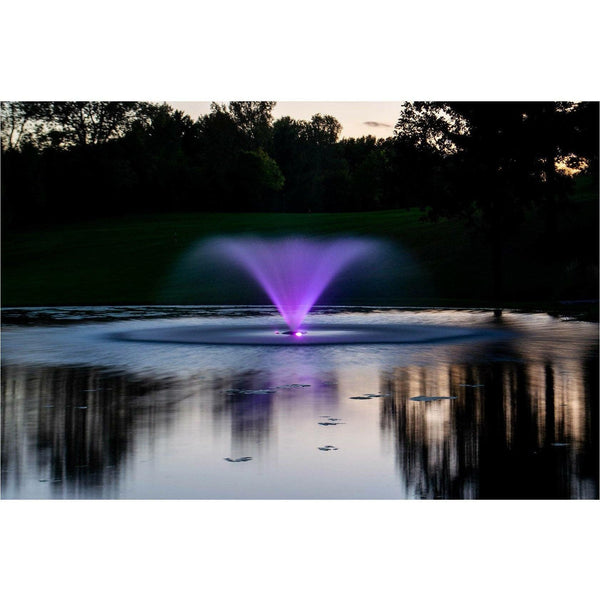
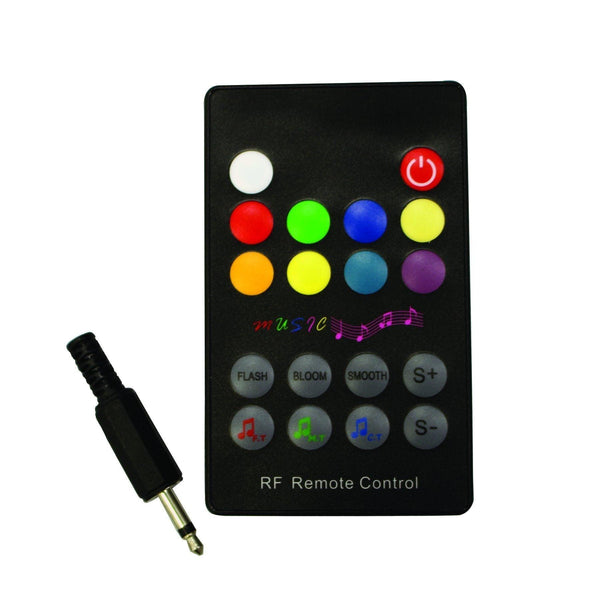
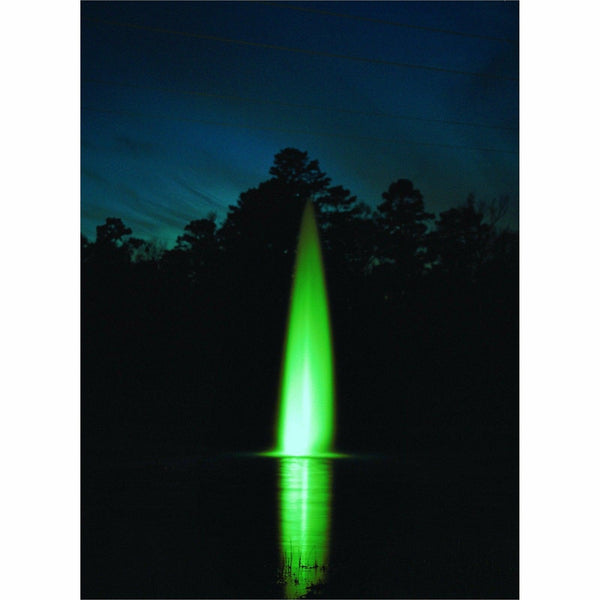
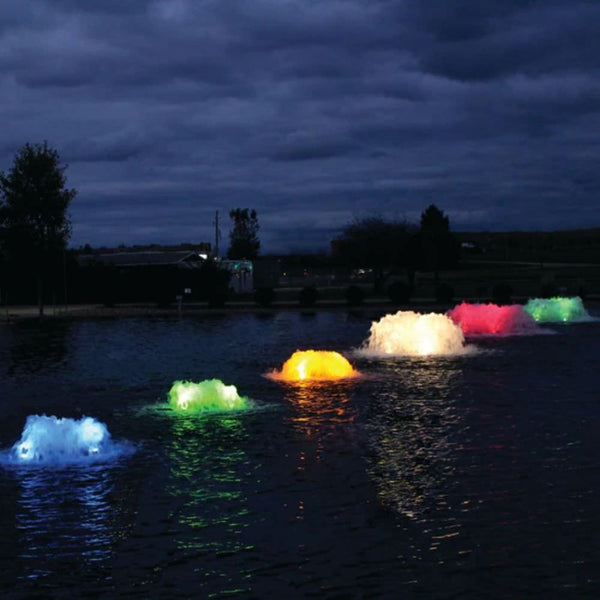
- Light kits: RGB LED and Stainless Steel LED sets in 3- or 6-fixture configurations that fit J Series fountains, VFX fountains, and surface aerators. RGB kits give 9 colors, 3 patterns, and 5 brightness levels from a remote, with one-piece composite fixtures and a 2-year warranty. Stainless kits offer 5 color options with interchangeable lenses, daisy-chained fixtures, and a 3-year warranty.
- Control panels with built-in GFCI/GFCB protection and timers on most models.
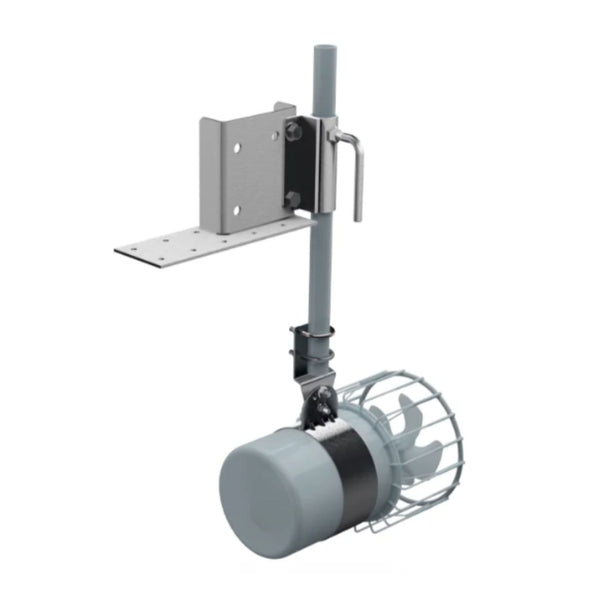
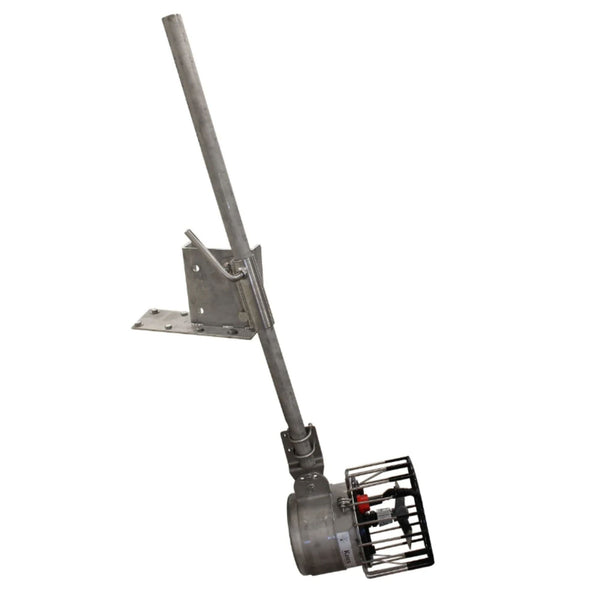
- Mounts: the Universal Mount and Industrial Mount hold De-Icers and AquatiClear units on docks, pilings, walls, and similar structures.
- Replacement motors from 1/2 HP to 7.5 HP for J Series fountains, aerators, and circulators.
- SureSink weighted air tubing for diffused aeration systems.
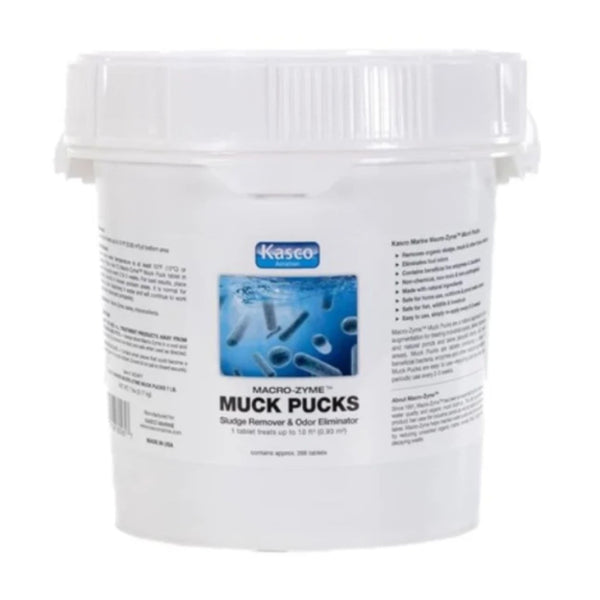
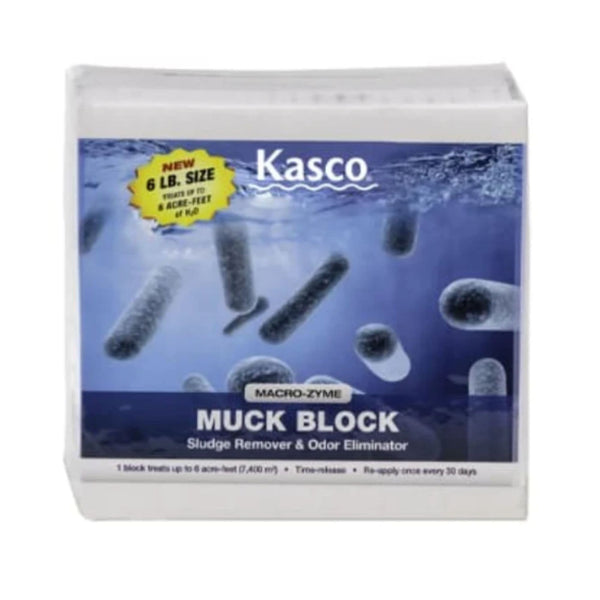
- Kasco Pond Probiotics, a bacteria and enzyme treatment used alongside the equipment to help break down organic waste and muck.
Not sure which one you need?
Send PondHaven your pond size, depth, the goal you have in mind, and what power is available near the water. We can point you to the right Kasco line and model size from there.
No page change, it expands right here
Frequently asked questions
Quick answers to the most common questions about our kasco marine.
What is the difference between a Kasco J Series fountain and a VFX aerating fountain?
The J Series is built around the display, with interchangeable nozzles you can swap for different spray patterns. The VFX balances a visible wide V-shaped pattern with more water movement for aeration. Pick the J Series for looks and the VFX when oxygen matters as much as the display.
When is bottom-diffused aeration a better fit than a floating surface aerator?
Deeper ponds are usually better served by bottom-diffused aeration, since the bubbles move water from the floor upward and there are no electrical cords in the water. Surface aerators suit shallow ponds, aquaculture, and wastewater lagoons where fast oxygen transfer at the surface is the priority.
Can I run a light kit on the same power supply as the fountain?
Lighting usually needs either a dedicated circuit of its own or a control panel sized to run both, because the lighting load adds to what the fountain draws. Check the light kit and control panel pages for the setup you need before running cable.
How long a power cord do I need?
Measure from your power source, down the bank, to the spot where the unit will float, and add extra length for anchoring slack. Buy the cord length that covers that run rather than guessing, since the floating position is rarely right at the shoreline.
How is the AquatiClear circulator different from a surface aerator?
AquatiClear pushes water horizontally in one direction to move floating weeds, debris, and muck away from a dock, marina, or shoreline, and its design resists clogging so it can run continuously. A surface aerator works on oxygen and circulation across the pond rather than on clearing one area.
Need expert help finding the right setup?
Contact Pond Haven Support