

Sphere Outdoor Fountains









Guide & FAQ
How to choose a sphere fountain
- 3 min overview
- Types, sizing & installation
- 5 common questions
Why a round fountain suits open spaces
A sphere has no front and no back, so you can set one where it will be seen from all sides: the middle of a courtyard, an open garden bed, or a circular drive.
Water tends to cling to the curved surface instead of falling freely through the air. Compared with open spray designs, that usually means:
- Less splash reaching nearby paving and seating
- A soft, continuous wash of sound rather than heavy falling water, which suits conversation areas
- Less water carried off by wind than designs that throw water through the air
The main types and when to choose each
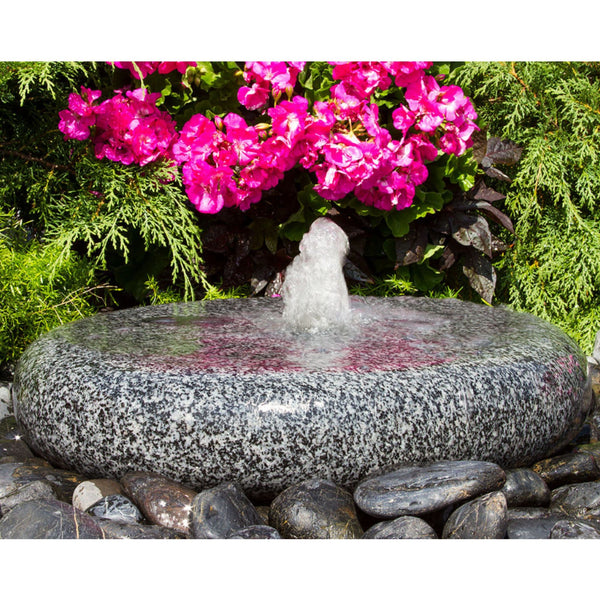
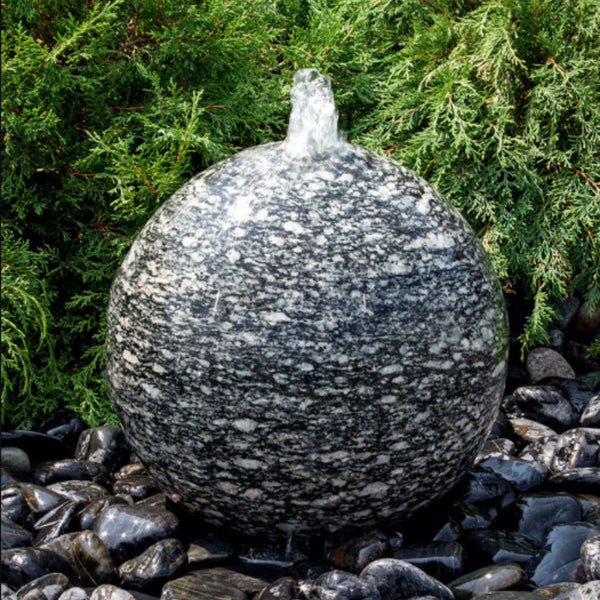
Smooth natural stone spheres
Granite, blue limestone, and green marble spheres are hand-polished so water glides over them as a thin, even film. The wet stone shows its grain and color as the water runs down.
Choose a smooth stone sphere when you want a permanent garden piece with natural variation and a low, soft sound. These tend to be the quietest of the group.
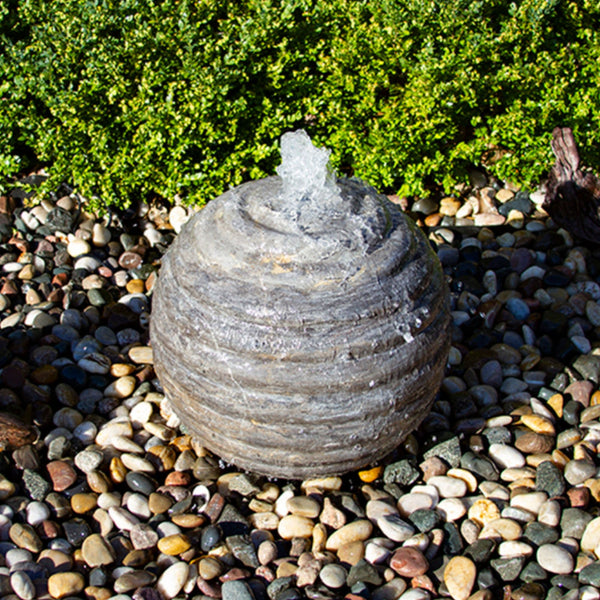
Ribbed and textured spheres
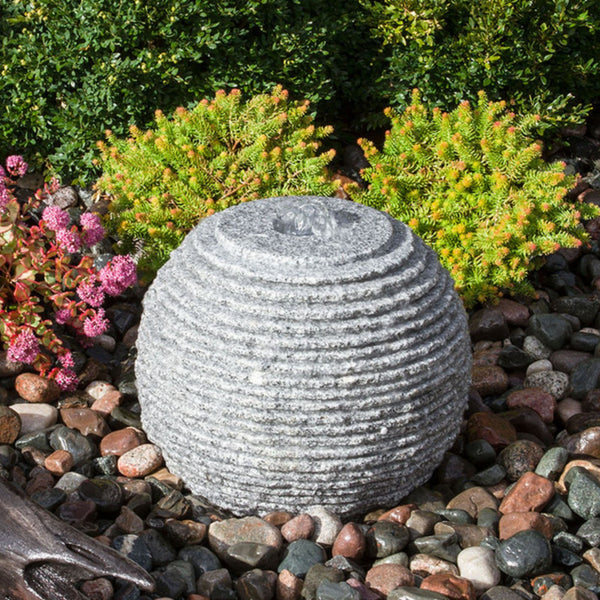
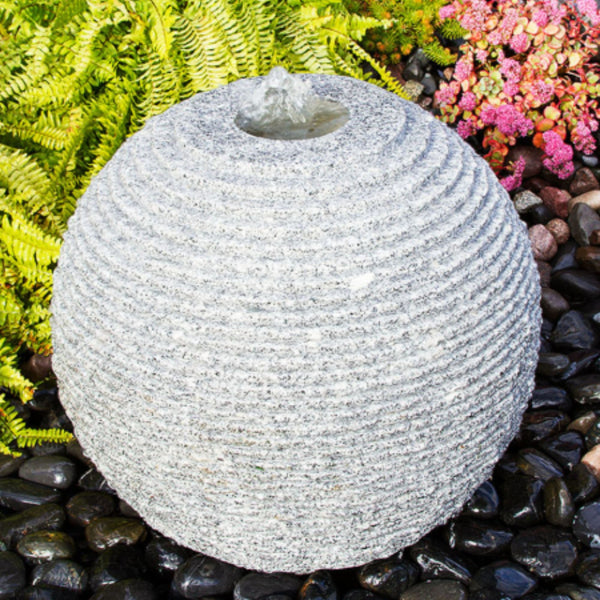
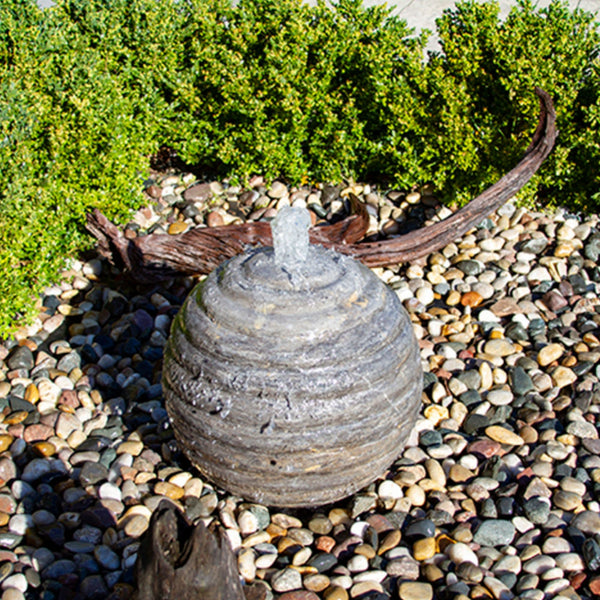
Saw-cut horizontal grooves or a beehive profile break the water into visible ripples and catch light along the ridges. PondHaven carries ribbed granite and ribbed blue limestone versions.
Choose a ribbed sphere when you want the water movement to be seen as well as heard. The sound is usually a little more lively than on a polished sphere.
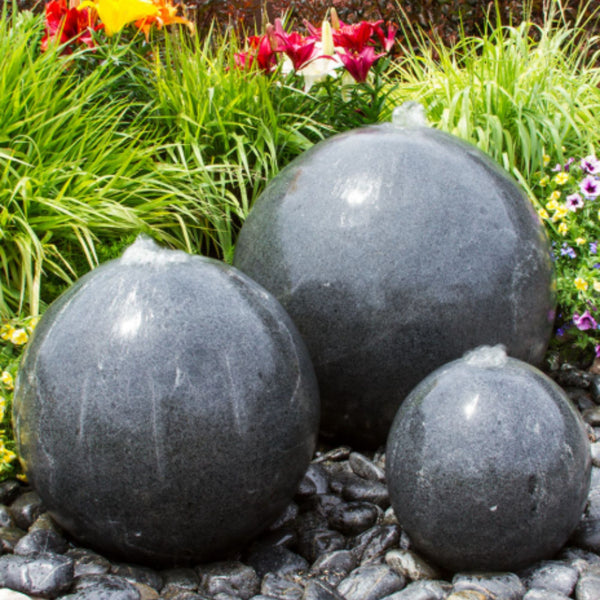
Multi-sphere kits
The triple granite set combines 12, 18, and 24 inch spheres cut from the same stone for a matched look.
Choose a multi-sphere kit when the space is wide and a single sphere would sit small in it.
Illuminated acrylic spheres
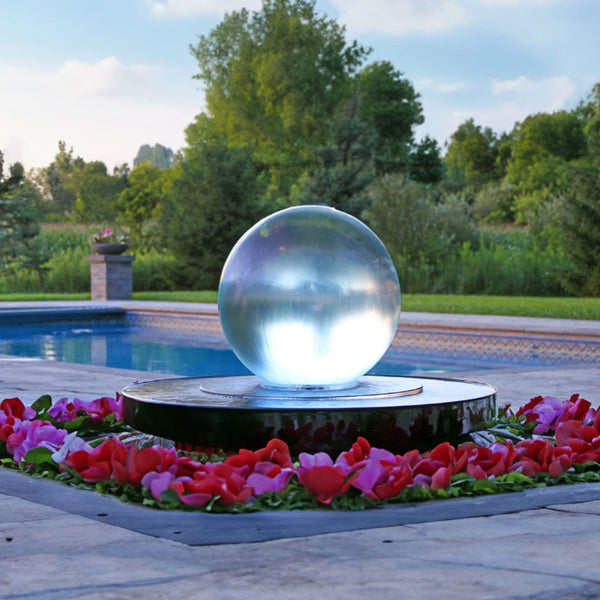
The crystal sphere kit uses a 24 inch clear acrylic ball with built-in color-changing LED lighting, for indoor or outdoor settings.
Choose the acrylic sphere when night-time display matters and you want light traveling through the water. If a solid, natural look is the goal, compare the stone spheres instead.
For shapes that are not round, see our vase outdoor fountains and modern outdoor fountains pages.
How to choose the right size or model
Sphere diameters in this group run from 8 to 24 inches, and several stone models come in three sizes.
- Match the sphere to the space. A small sphere suits a patio corner or a planting bed, while the 20 and 24 inch options hold their own in a wider courtyard or entry.
- Think about the base too. The basin and its finished surround generally take up more ground than the sphere itself.
- Pick the surface by the look you want. Polished stone gives a soft sheet of water; ribbed stone gives visible ripples and a slightly brighter sound.
- Pick the material by the look. Granite reads gray or black with speckle and veining, blue limestone is cooler and softer in tone, and green marble shows distinct natural veining.
For a broader comparison, read our guide on how to choose an outdoor fountain.
Installation, power, and placement
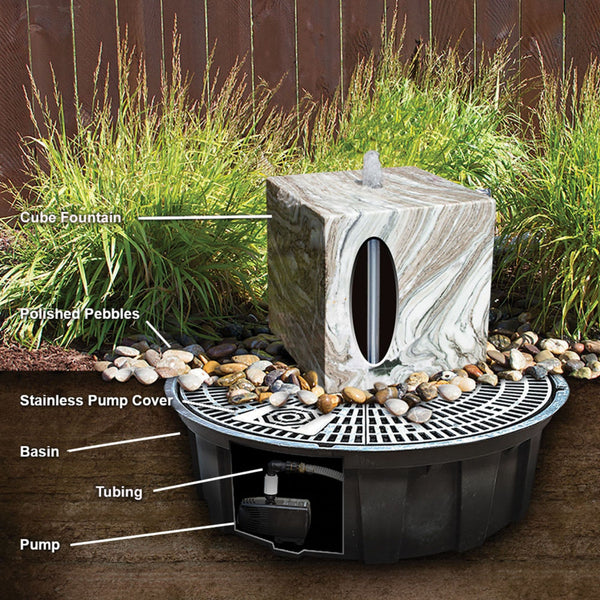
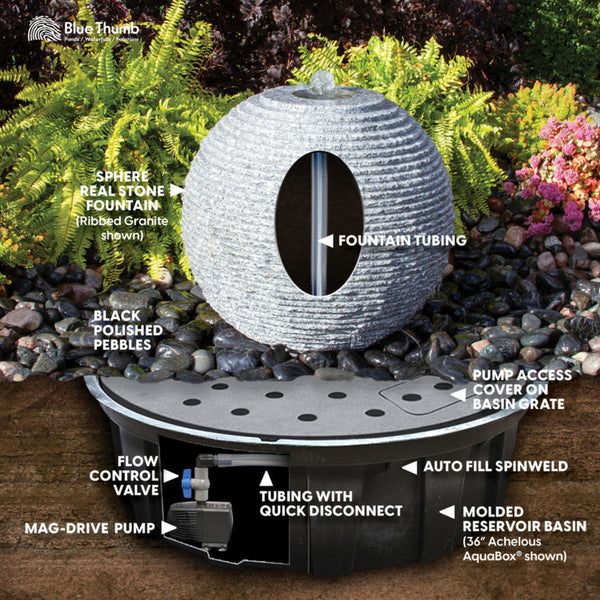
Stone sphere fountains in this group are commonly set up as recirculating systems, with a basin below grade and a pump feeding water up through the sphere. Check the product page for the exact setup before you dig.
- You will usually need to dig. In a typical pondless setup, the basin sits in an excavation and finishes flush with the surrounding ground.
- Real stone is heavy. Plan a firm, level base for the basin and its support, and expect to need help lifting the larger spheres.
- Power comes from an outlet. The pump runs on a standard exterior GFCI outlet. Water recirculates in the basin, so these usually need no dedicated water line.
- Leave service access. Keep the finished surface over the basin easy to lift so the pump can be reached.
What comes with it
Several of the stone sphere kits are sold as complete setups rather than a bare sphere. The parts list varies by product, and descriptions cover items such as:
- a basin
- a submersible pump
- plumbing and tubing
- pebbles on some models
- color-changing LED lighting on the crystal sphere kit
Check the product page to confirm the parts list for the size and finish you want.
Not sure which one you need?
If you are weighing two or three options, send PondHaven the space you have, the look you want, and if an outlet is nearby. We can help you pick a sphere size and surface texture that suit the spot.
No page change, it expands right here
Frequently asked questions
Quick answers to the most common questions about our sphere outdoor fountains.
Does a sphere fountain splash or lose much water in the wind?
Generally less than a spraying or tiered fountain. Water travels down the curved surface as a thin film instead of falling through the air, so less of it lands on nearby paving. Sun and wind still cause normal evaporation, so expect to top up the basin now and then.
How does the sound compare with a tiered fountain?
Softer in most cases. A sphere produces a quiet wash as water glides over the surface, where a tiered fountain makes more splashing as water drops from level to level. A ribbed sphere is usually slightly more audible than a polished one.
Do I need to run a dedicated water line?
Usually not. Water recirculates from the basin, so the main utility you need is power for the pump at an exterior GFCI outlet. You top up the basin occasionally to replace what evaporates.
How should I care for a stone sphere fountain in freezing weather?
Shut the system down before the first hard freeze, drain the basin and lines, and store the pump somewhere dry and above freezing. Emptying the water also protects the basin, and it is worth covering small spheres or moving them indoors if you can.
How do I know which size and finish to choose?
Match the sphere to the space first: small spheres suit a patio corner or planting bed, while 20 and 24 inch spheres suit a wider courtyard or entry. If you are still unsure, send PondHaven the space you have, the look you want, and if an outlet is nearby, and we can help narrow the options.
Need expert help finding the right setup?
Contact Pond Haven Support