

Decorative Pond Fountains
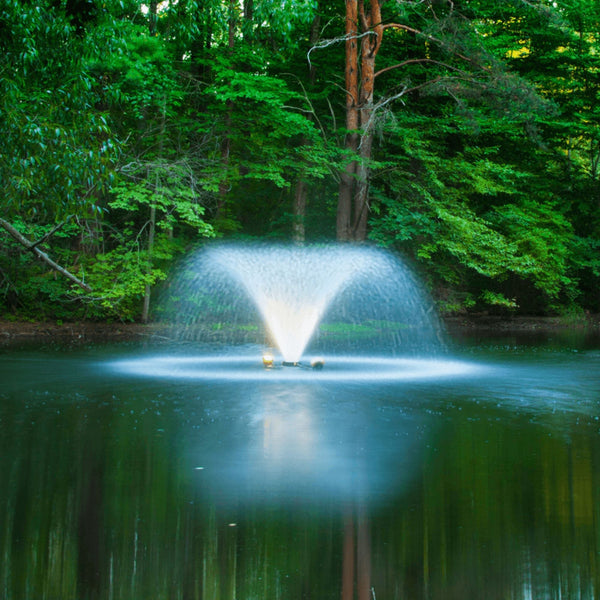
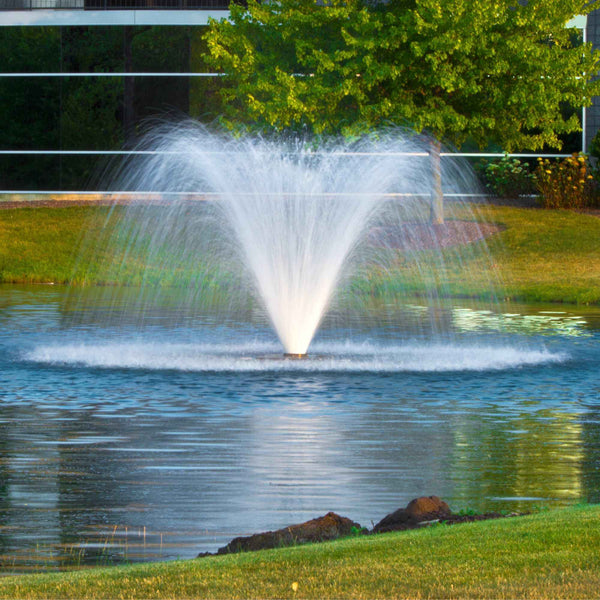
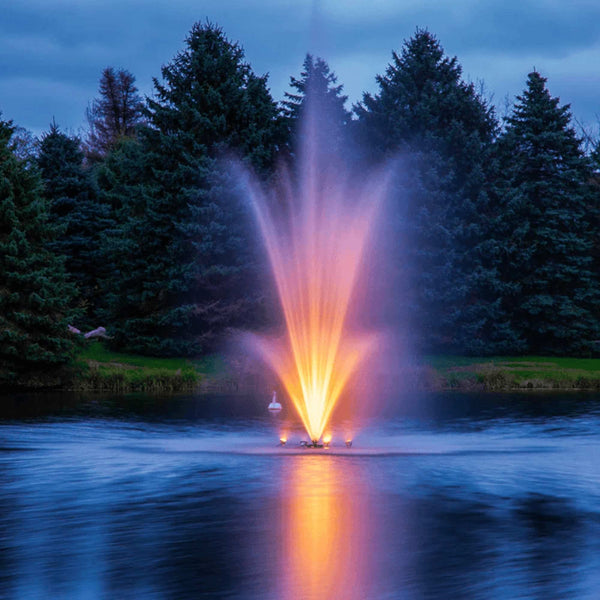
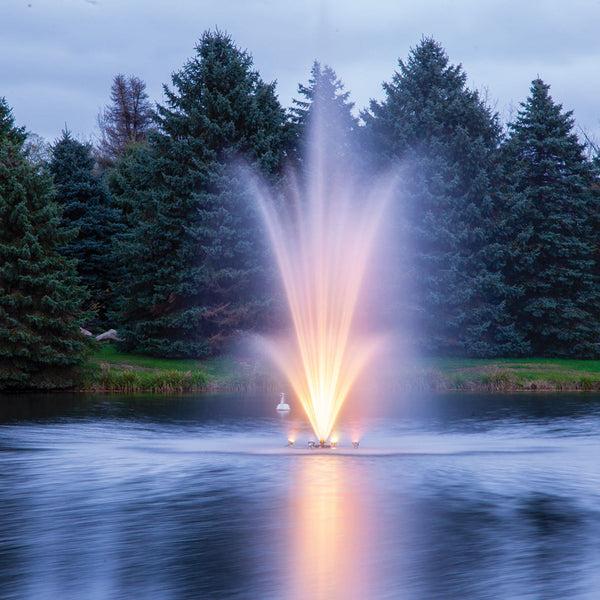









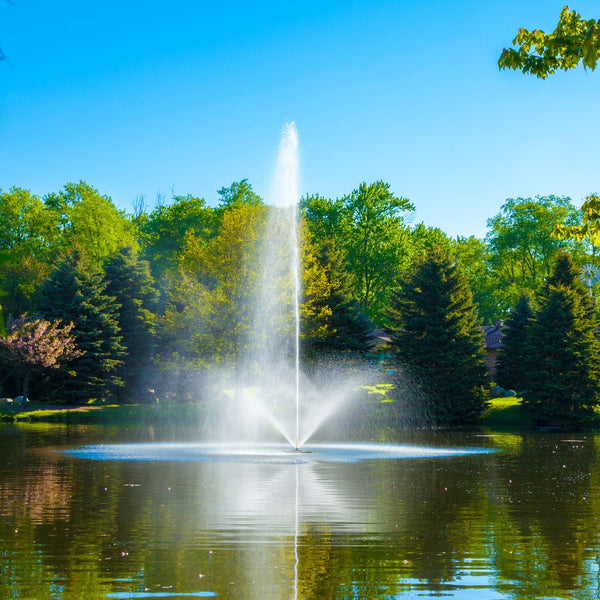
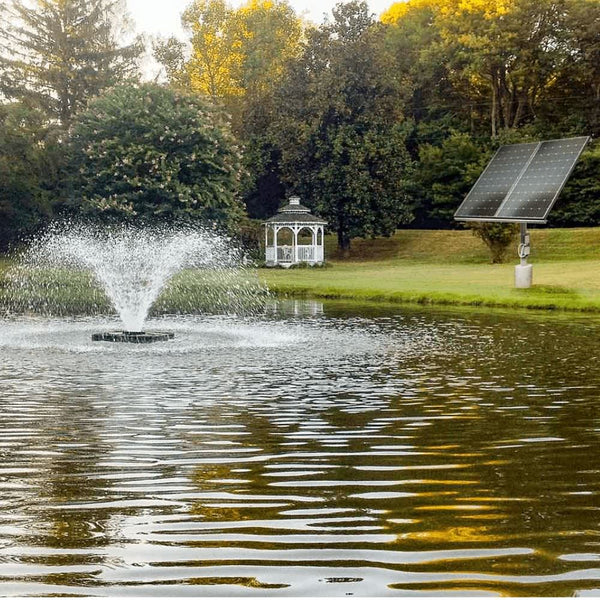
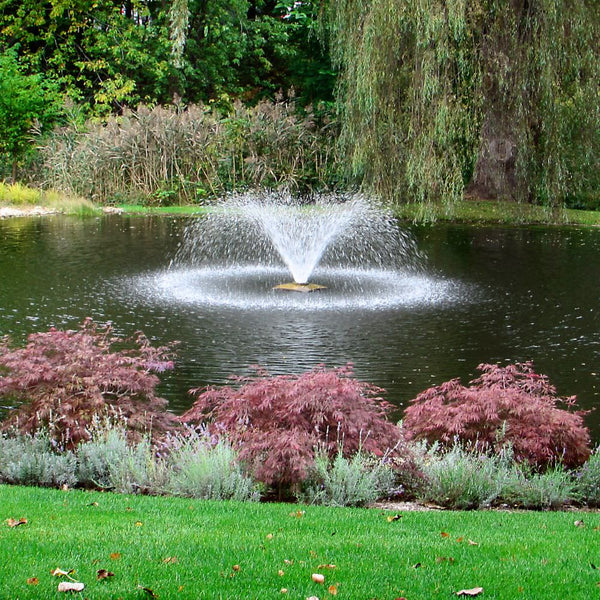
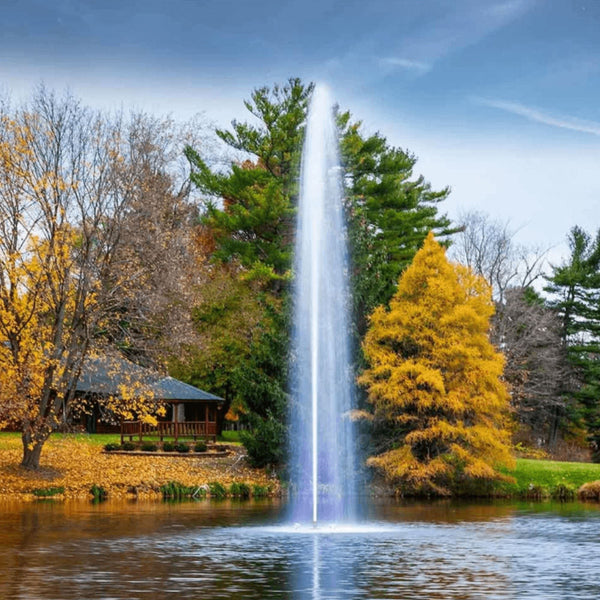

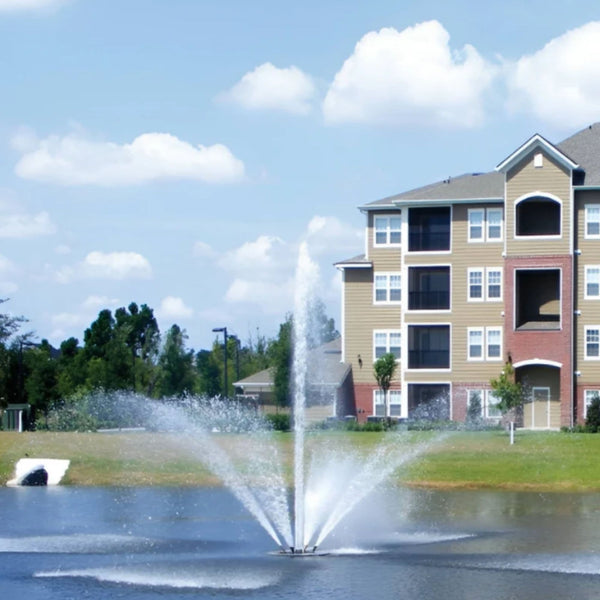
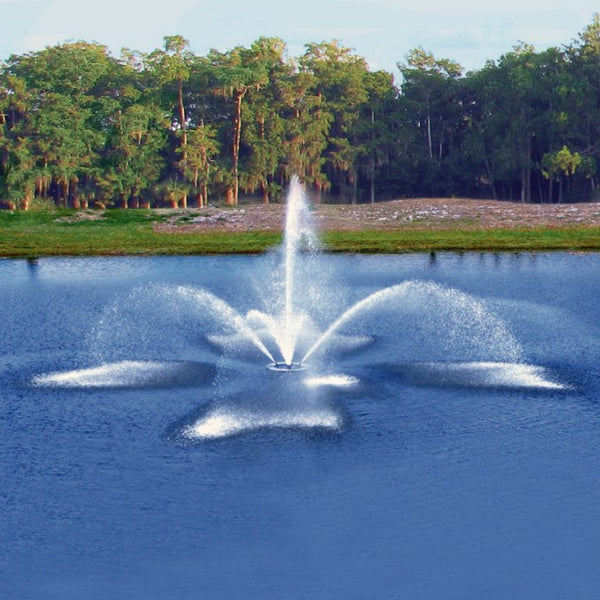
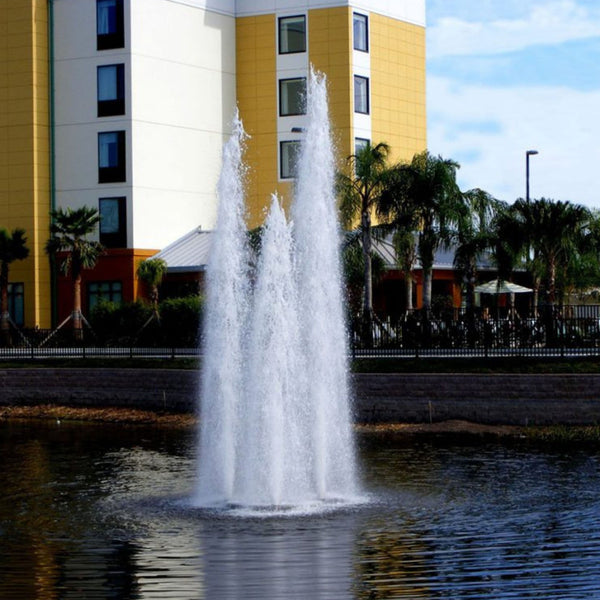
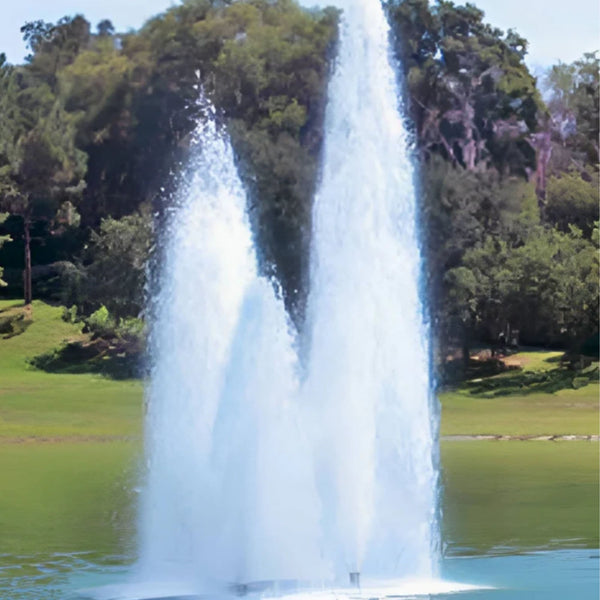


Guide & FAQ
How to choose a decorative fountain for your pond
- 3 min overview
- Types, spray size & power
- 5 common questions
Why add a decorative fountain?
A decorative fountain gives an open pond a visual centerpiece and keeps the surface layer moving. In ponds that otherwise sit still, that surface movement can help limit stagnant surface scum and odors while mixing some air into the upper water.
It tends to earn its place on:
- home ponds where the view from the house matters
- HOA basins, golf courses, and commercial entrances
- ponds with fish or other aquatic life
- properties where steady water sound helps cover traffic or neighbor noise
A fountain adds some oxygen, but it is not the same as a bottom-diffused system when deep-water circulation is the main goal. We cover that difference in Do fountains aerate ponds?.
The main types, and when to choose each
PondHaven carries two display styles, plus a solar option. The pattern you pick decides both how the fountain reads from shore and how much water it moves.
High-display decorative fountains
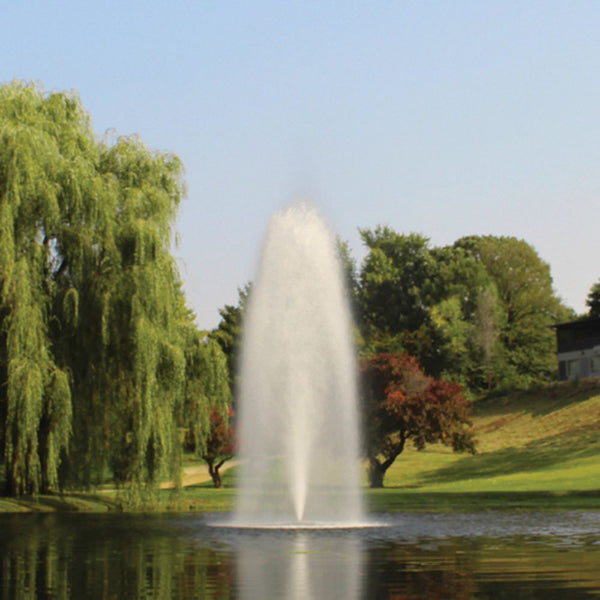
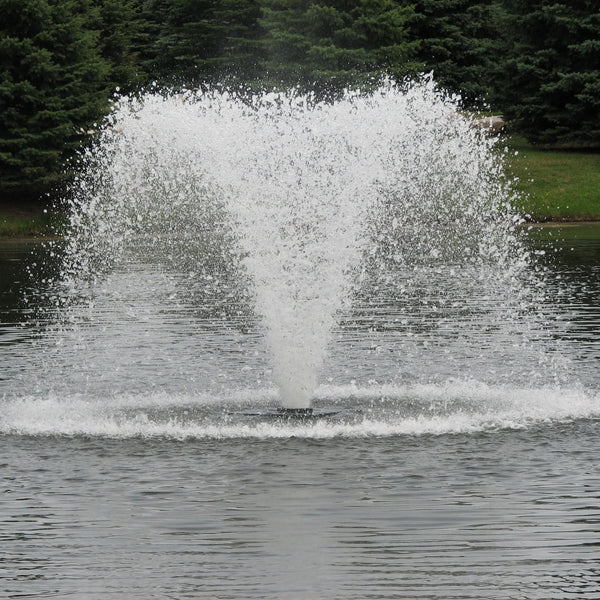
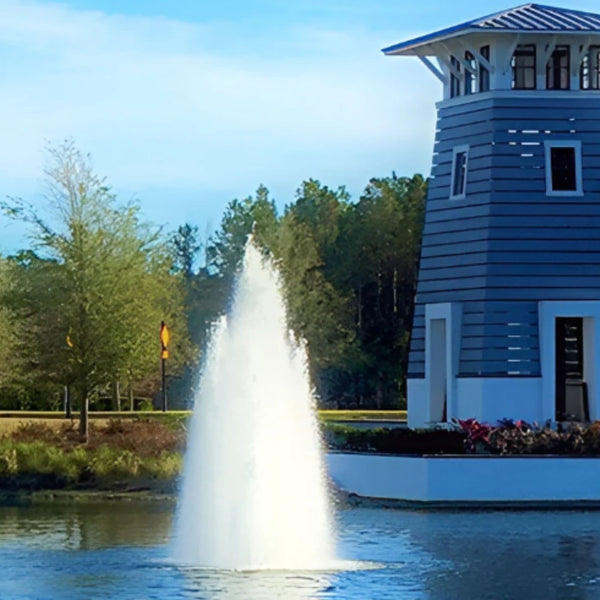
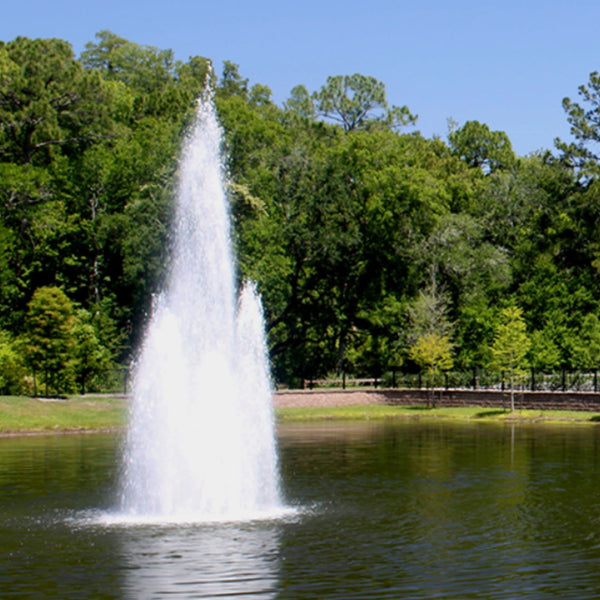
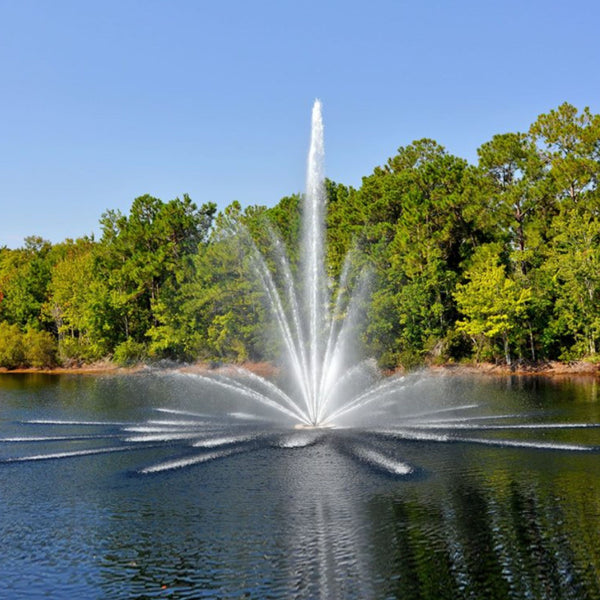
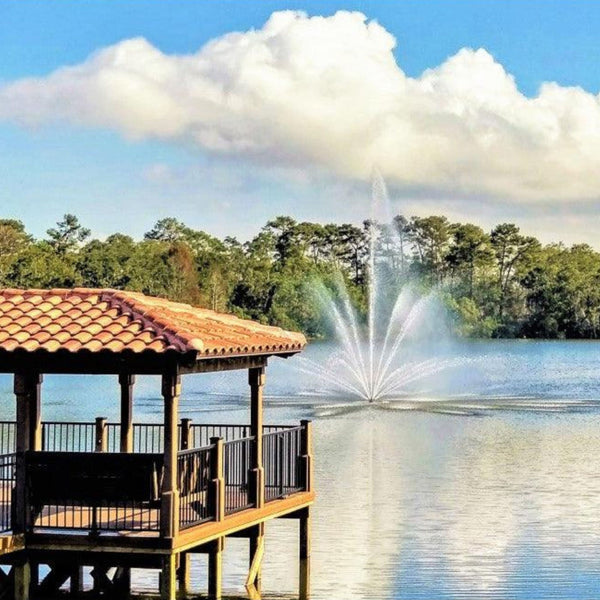
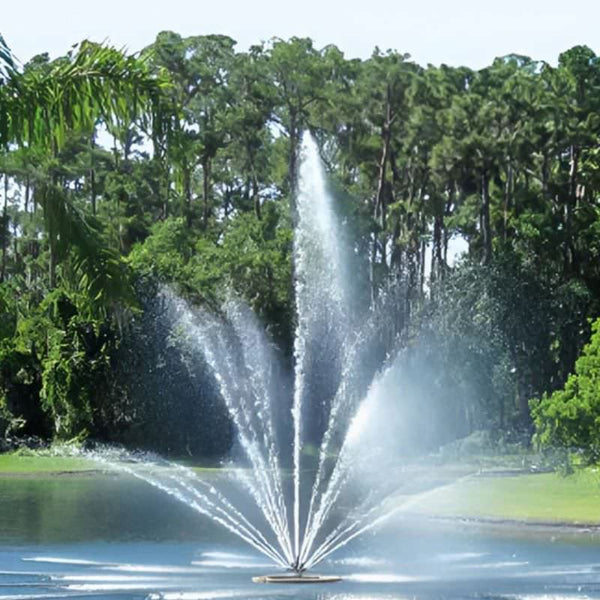
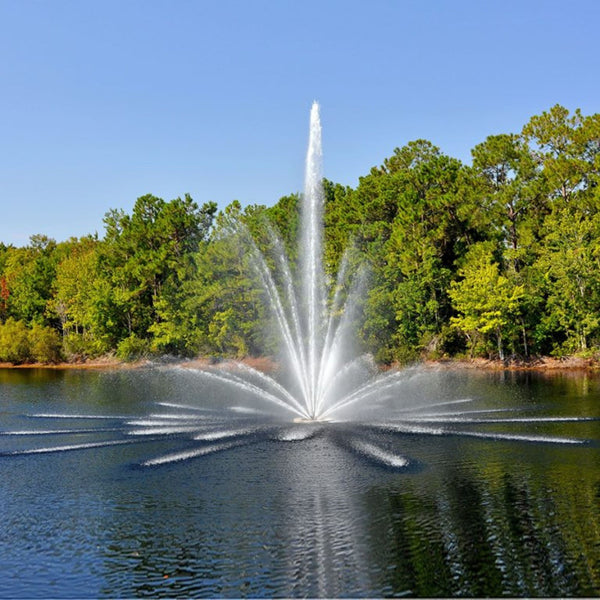
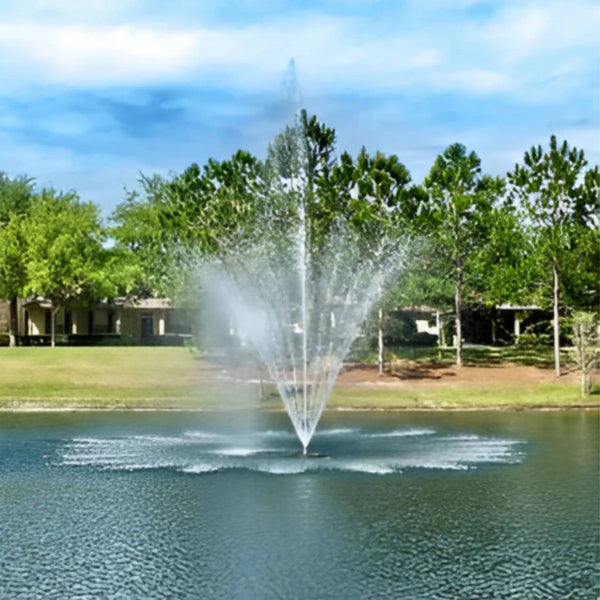
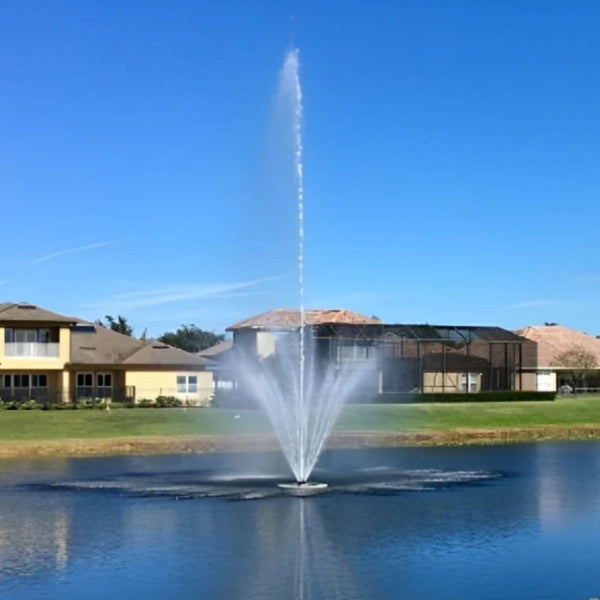
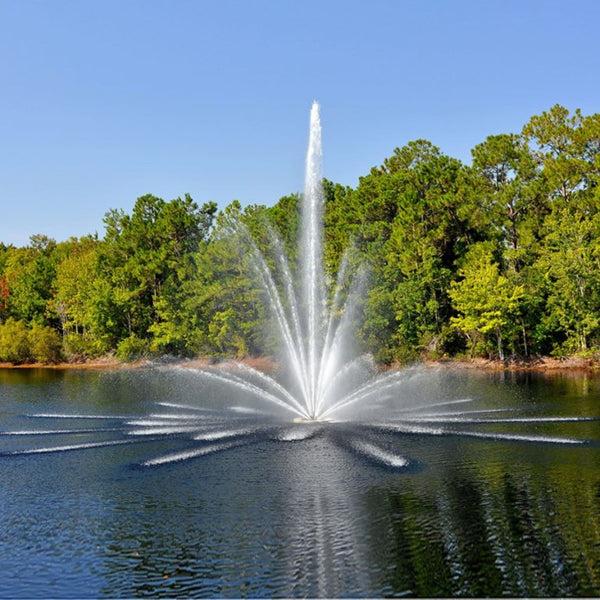
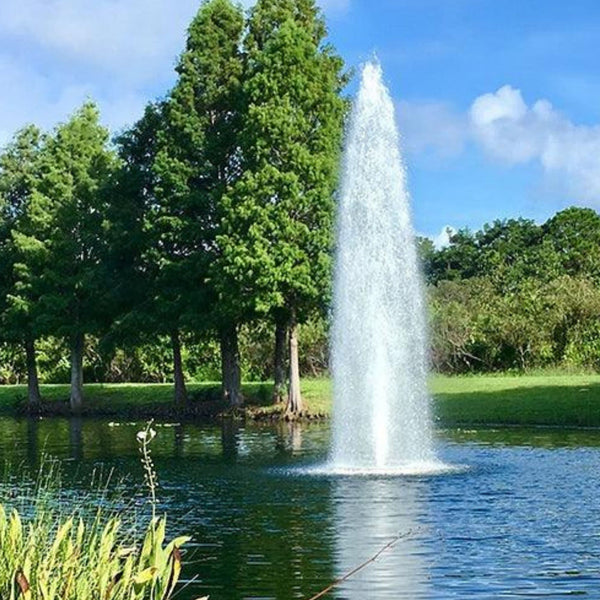
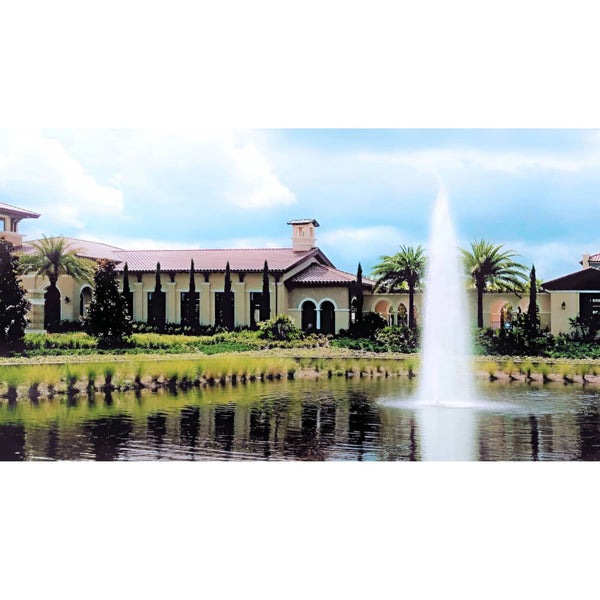
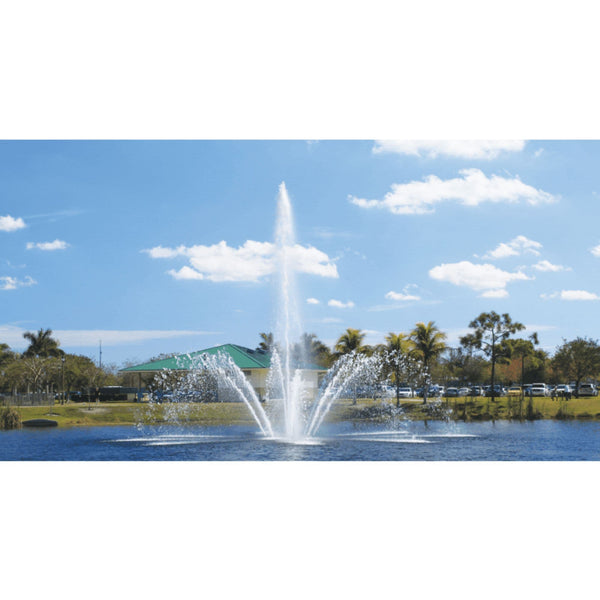
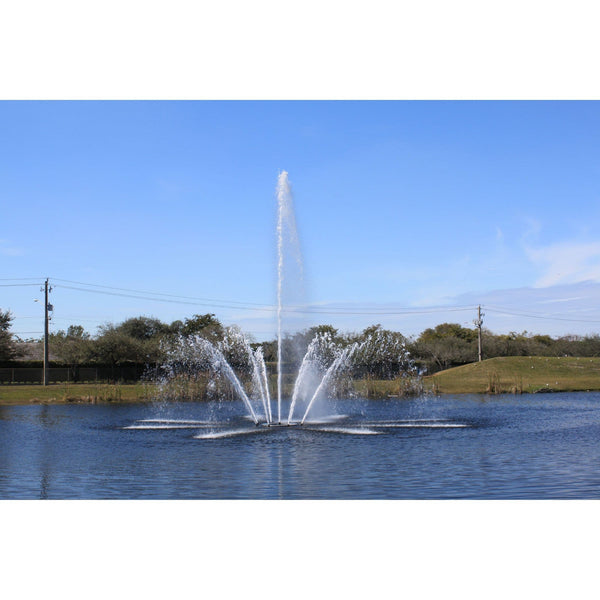
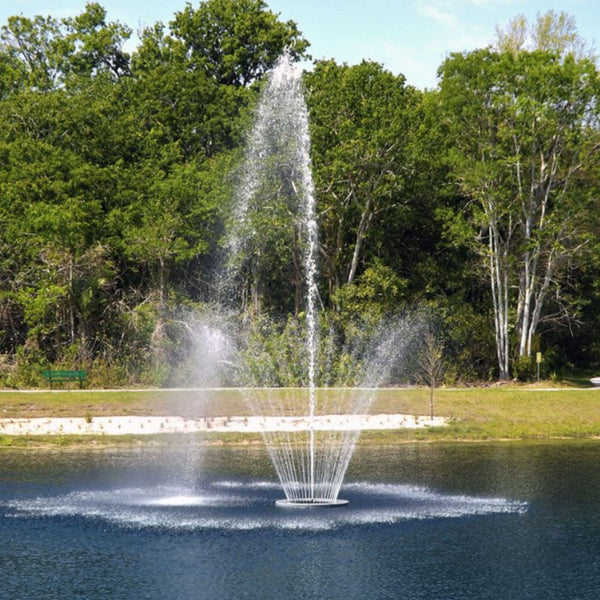
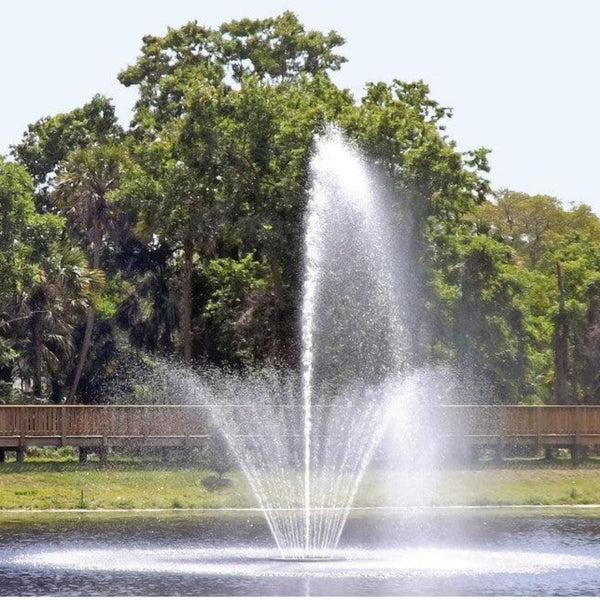
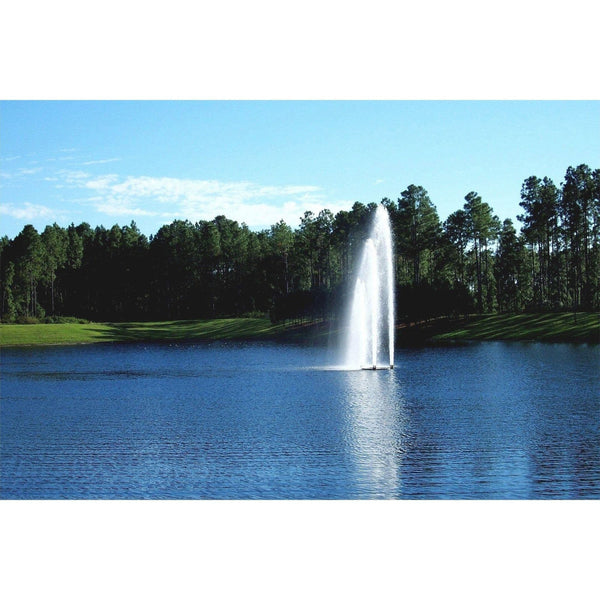
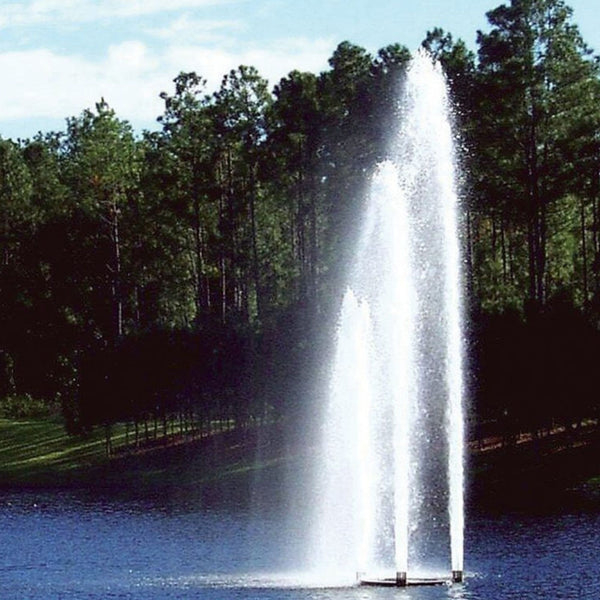
These use sculpted, high-pressure sprays: multi-tier, trumpet, arching, geyser, funnel, fan-jet and pyramid patterns.
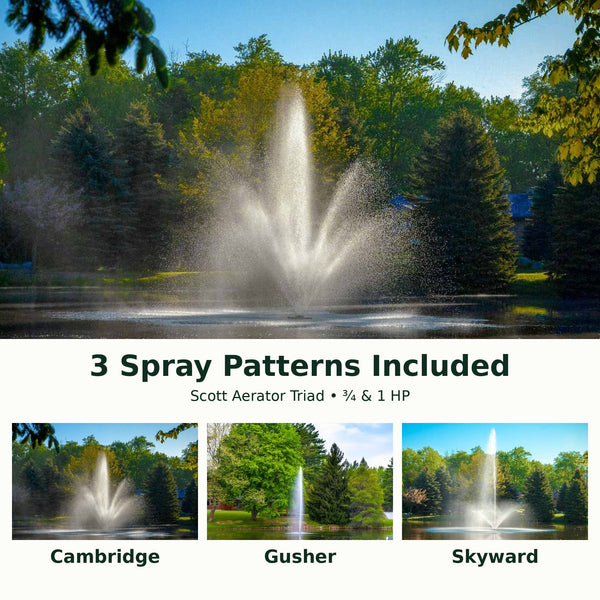
Choose a high-display fountain when the look is the main reason for buying. The Vertex line covers small home ponds up to large lake displays, and Scott Aerator offers patterns such as the Amherst, Clover, Cambridge, Atriarch, Skyward, and Gusher. The Kasco J Series sits in this group as well. For the Kasco models on their own, see Kasco fountains.
Aerating display fountains
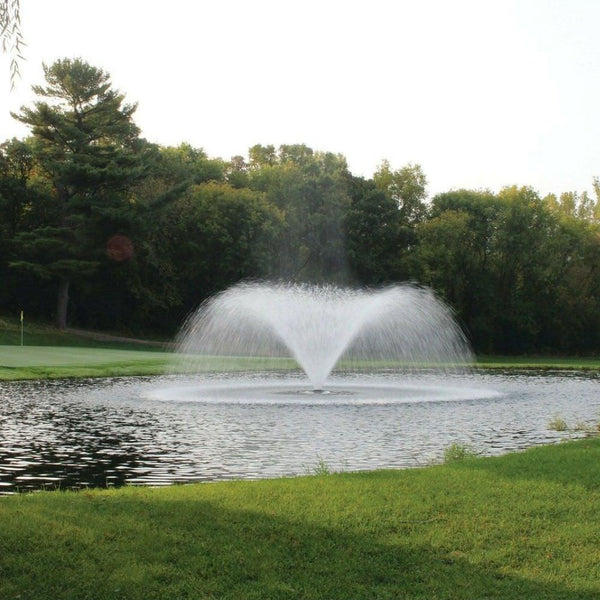
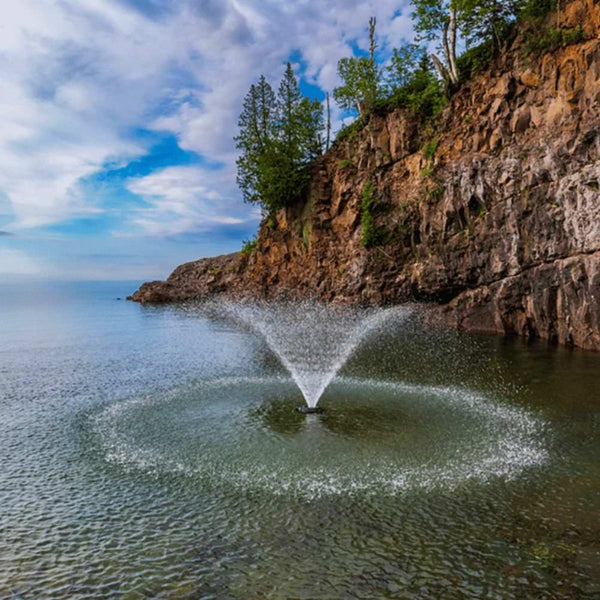
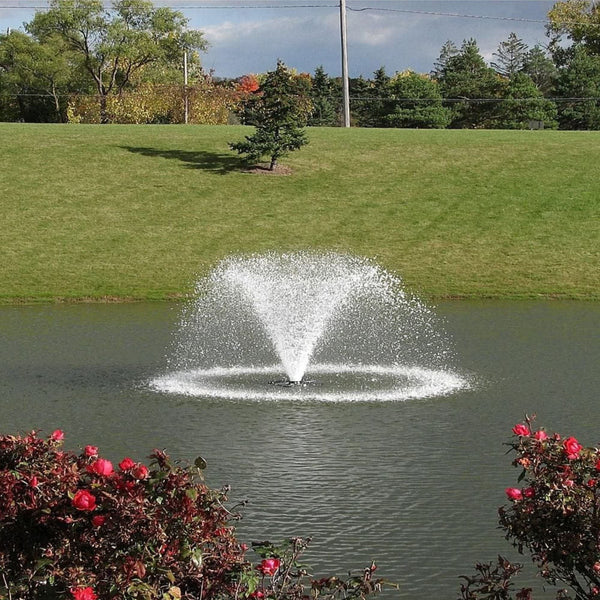
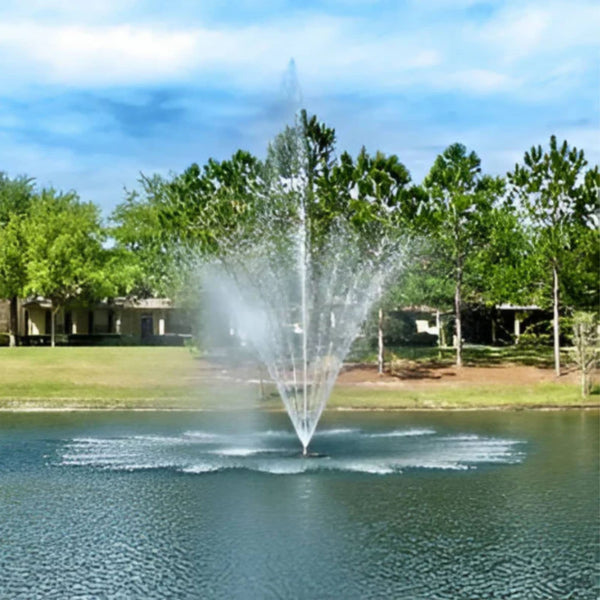
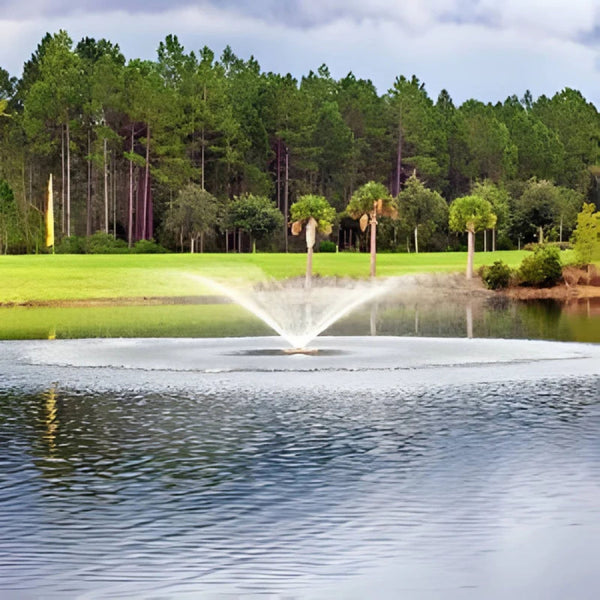
These move a high volume of water into broad V-shaped or funnel cascades. The pattern is simpler, and more water is turned over in the process.
Choose an aerating display fountain when water movement matters as much as appearance, for example on fish ponds or water that goes flat in summer. The Kasco VFX, the Scott Aerator DA-20 and North Star, and the Vertex AerationJet fall into this group.
Solar floating fountains
The Scott Aerator DA-20 Solar runs on solar panels, with no grid connection at the pond.
Choose a solar fountain when running electrical service to the water would be difficult or expensive, such as remote farm or pasture ponds.
If lighting matters to you, compare our pond fountains with lights. PondHaven focuses on floating pond and lake fountains here, so shore-side features like basalt columns, spillways, and statuary spitters are not what you will find on this page.
How to choose the right size or model
Start with the pond, not the pattern. The spray diameter should stay under about half the pond's narrowest dimension, so wind drift does not carry water onto the banks.
Then look at:
- Motor size. The units here run from about 1/2 HP up to 30 HP, so the same style of display is available for a backyard pond or a large lake.
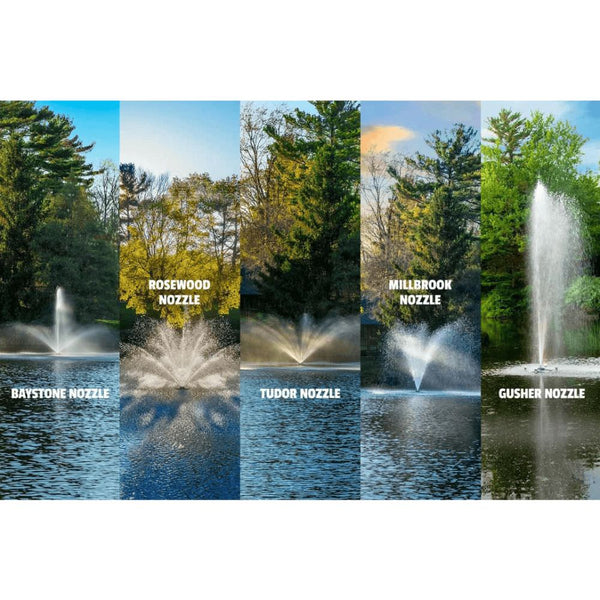
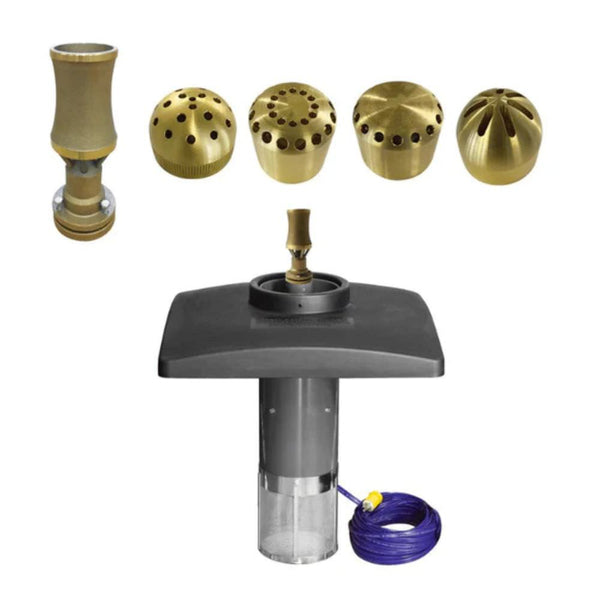
- Display flexibility. Some models swap patterns with interchangeable brass nozzles. The Scott Aerator Triad takes three nozzles (Gusher, Skyward, and Cambridge), and the Great Lakes takes five.
- Viewing distance. A tall column reads well from far away, while tiered and arching patterns show more detail from the house or patio.
Power, depth and placement
Three practical points decide where a floating fountain can sit: power at the shore, clearance under the float, and anchoring.
- Power. The motor size and the distance from your breaker panel to the water determine the supply and cable run you need. Larger motors and long runs are where voltage drop becomes a concern. For the details, read How to run power to a pond fountain.
- Depth. A floating pump draws water from beneath the float, so it needs enough clearance to avoid pulling in bottom material. The needed depth depends on the model and motor size, so check the listing for your unit.
- Anchoring. Units are held in place with anchor lines tied to shore stakes or submerged weights. Plan on two points so the float stays centered in wind.
Not sure which one you need?
Send us your pond's size, average depth, the distance from your power source to the water, and the kind of display you have in mind. We will come back with a short list of patterns and motor sizes that fit your pond and your power.
No page change, it expands right here
Frequently asked questions
Quick answers to the most common questions about our decorative pond fountains.
Can a decorative fountain replace a bottom aeration system?
Usually not, if oxygen in the deeper water is what you are trying to fix. A fountain aerates at the surface and turns over the upper layer, while a bottom-diffused system moves the whole water column from the pond floor. For ponds with depth or recurring low oxygen, the two solve different problems, as we explain in Do fountains aerate ponds?.
What size fountain fits my pond?
Keep the spray diameter within about half the pond's narrowest dimension. That leaves room for wind drift so the spray falls back on water instead of washing over the bank. If your pond is long, divided, or oddly shaped, tell us the layout and we can suggest a pattern and motor size.
What voltage do I need for a pond fountain?
The supply depends on the motor size and how far the cable runs from your breaker panel to the water. Rather than guessing, send us those two details and we will confirm what your setup needs. How to run power to a pond fountain walks through the choices.
Can I leave the fountain in the pond during winter?
It depends on the model, so confirm it on the product page before the first freeze. Some units in this group are sold for year-round duty and others are meant to come out of the water seasonally, and treating them the same way is how motors get damaged.
Can I add lights to a fountain later?
Some of these fountains are sold with light kits, and we list those separately in pond fountains with lights. Check the listing for your model, because lighting options are not the same across every unit.
Need expert help finding the right setup?
Contact Pond Haven Support