
Do Fountains Aerate Ponds?
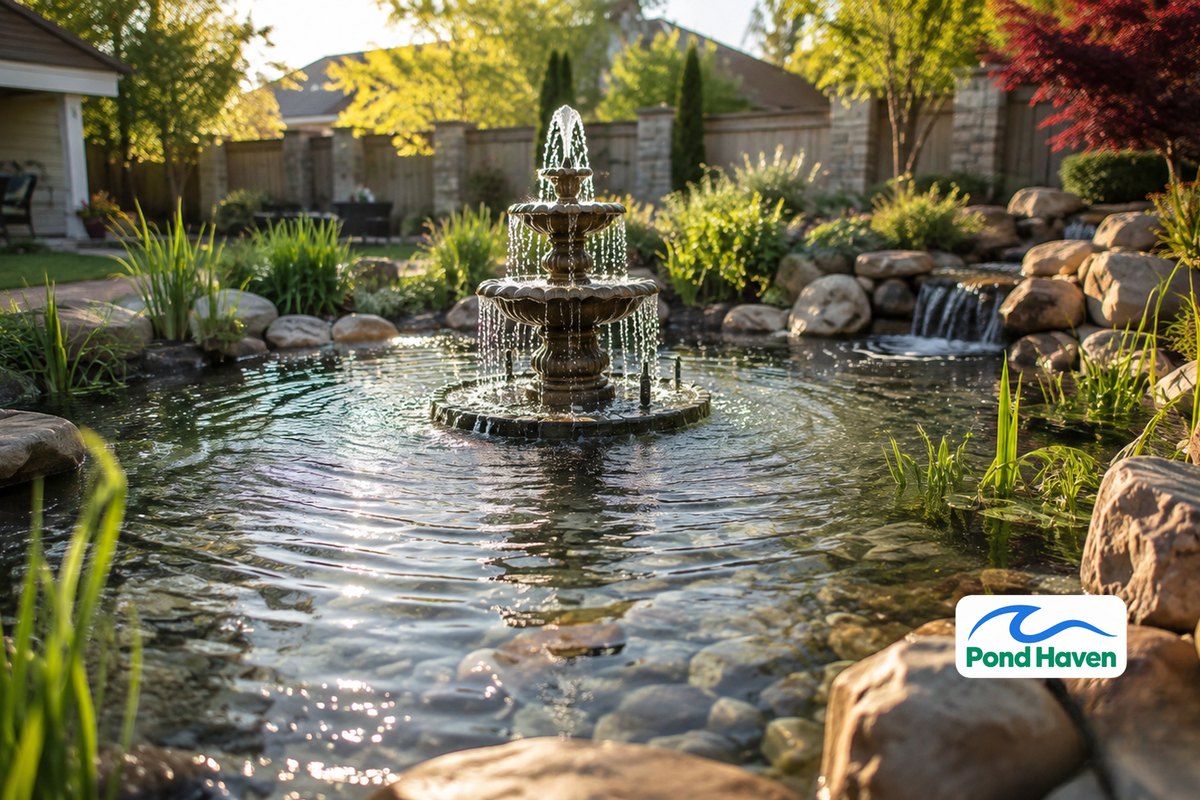

Yes, for most ponds under 6 feet deep, a fountain is a solid investment. It circulates surface water, adds dissolved oxygen, and gives your pond a visual centerpiece. But it is not a substitute for a bottom-diffused aeration system in deeper ponds.
A fountain pulls water from 1 to 3 feet below the surface, sprays it into the air, and returns it oxygenated. That simple mechanism does real work, but it has hard limits. Here is what a fountain can and cannot do, how to size one, and when you should buy an aerator instead.
- Fountains oxygenate only the top 2-3 feet of water; they are best for ponds under 6 feet deep.
- A fountain raises surface dissolved oxygen by 1-3 mg/L, supporting fish and aerobic bacteria.
- Fountains do not break up thermal stratification, prevent winterkill, or oxygenate bottom water.
- For ponds over 6 feet deep with fish, a bottom-diffused aerator is the priority; add a fountain for looks.
- Size the fountain to roughly 1 foot of spray height per 1,000 square feet of pond surface area.
What Does a Fountain Actually Do for Your Pond?
A fountain is a surface aerator. Its pump draws water from just below the surface, pushes it through a nozzle, and sprays it into the air. The spray breaks the water into droplets, maximizing the surface area exposed to air. Oxygen dissolves in, and carbon dioxide escapes.
What a fountain does well:
- Agitates the surface for gas exchange (oxygen in, CO2 out).
- Reduces thermal stratification in shallow ponds under 6 feet.
- Creates surface movement that deters mosquitoes and some floating algae.
- Adds aesthetic value with spray patterns and lighting.
What a fountain does NOT do:
- Circulate bottom water in deep ponds.
- Break up a thermocline (the temperature boundary between warm surface and cold bottom water).
- Prevent winterkill or keep an open hole in ice.
The key spec to remember: fountains move surface water, not bottom water. If your pond is deeper than 6 feet, the bottom layer stays stagnant and oxygen-poor regardless of how big your fountain is.
The Main Benefits of a Pond Fountain
Oxygenation for Fish and Beneficial Bacteria
Healthy fish need dissolved oxygen (DO) at 5 to 8 mg/L. A fountain raises DO in the surface layer by 1 to 3 mg/L, which is meaningful in a shallow pond. That oxygen also feeds aerobic bacteria, the microorganisms that break down organic sludge, fish waste, and decaying leaves before they become muck.
In ponds under 6 feet deep, surface aeration reaches the bottom. The entire water column benefits. This is the sweet spot for a fountain.
Algae Control (With Limits)
Surface circulation disrupts floating algae like Spirogyra (water silk) and Cladophora (blanket weed). These filamentous algae thrive in still, warm surface water. Constant movement makes it harder for them to establish.
But a fountain does little for algae that form scums or colonies deeper in the water column. In deeper ponds, these colonies can live where nutrients concentrate, a zone a fountain never touches.
Mosquito and Pest Deterrence
Mosquito larvae, Culex spp., need still water to hatch. A fountain's surface agitation prevents egg rafts from settling and larvae from breathing. This is a genuine, measurable benefit for any pond within mosquito range.
The moving water also discourages some insect pests that prefer calm surfaces, though it is not a complete pest-control solution.
Aesthetic Value and Property Appeal
A fountain is the single most visible upgrade you can make to a pond. A 6-foot spray pattern is visible from across a yard. Add LED lighting and the fountain becomes a nighttime feature that extends pond enjoyment well past sunset.
The sound of falling water masks road noise and creates a calming backdrop. For small acreage ponds, a fountain is a low-cost way to increase perceived property value.

When Is a Fountain NOT the Right Choice?
Deep Ponds (Over 6 Feet)
This is the big one. In a pond deeper than 6 feet, the water stratifies in summer. Warm, oxygen-rich water sits on top. Cold, oxygen-poor water settles at the bottom. A fountain only mixes that top layer.
When a storm or cool snap triggers turnover, the bottom water rises and can deplete oxygen throughout the pond. Fish kills happen this way. A fountain cannot prevent it.
The fix: A bottom-diffused aeration system. An air compressor on shore pushes air through a weighted airline to a diffuser on the pond floor. Rising bubbles lift oxygen-poor bottom water to the surface, mixing the entire water column. This is the correct tool for deep ponds, period.
Winter and Ice Management
Fountains do not prevent ice. Worse, they can accelerate ice buildup. Spray that hits freezing air turns to ice and accumulates on the fountain and surrounding surface.
The fix: For winter, use a floating de-icer. A 750 to 1,500 watt de-icer keeps an open hole in ponds up to 1 acre, allowing toxic gases to escape and oxygen to enter. A bottom aerator also keeps an open hole while continuing to mix the water column.
Shallow, Weedy Ponds
In a pond under 2 feet deep, a fountain can churn up sediment, clouding the water and disturbing the bottom. Heavy weed growth can clog the intake screen and starve the pump of water.
The fix: Choose a fountain with a debris-filtering intake screen. If weeds are dense, address them with an aquatic herbicide or weed roller before installing a fountain.
Fountain Advantages
- Raises surface dissolved oxygen by 1-3 mg/L in shallow ponds.
- Deters mosquitoes and floating algae.
- High visual and sound appeal, especially with LED lighting.
- Lower upfront cost than most aerator systems.
Fountain Limitations
- Does not oxygenate bottom water in ponds over 6 feet deep.
- Cannot prevent winterkill or keep ice open.
- Higher operating cost than a low-HP air pump.
- Won't solve muck or nutrient problems alone.
Fountain vs. Aerator: Which Does Your Pond Need?
| Factor | Fountain | Bottom Diffused Aerator |
|---|---|---|
| Primary function | Aesthetics + surface aeration | Whole-water-column oxygenation |
| Effective depth | Under 6 feet | 6 to 30+ feet |
| Oxygenates bottom water | No | Yes |
| Winter use | No (can freeze) | Yes (keeps open hole) |
| Algae control | Surface algae only | Reduces bottom nutrient recycling |
| Equipment cost | $200-$2,500+ | $400-$3,000+ |
| Operating cost | 0.5-2 HP pumps, higher electric | Low HP air pumps, lower electric |
| Best for | Decorative backyard ponds | Fish ponds, deep ponds, lakes |
The takeaway: If you have fish and a pond deeper than 6 feet, buy the aerator first. A fountain can be added for looks, but it is not the workhorse. If your pond is under 6 feet and you want both function and beauty, a fountain may be all you need.
Measure your pond's deepest point before buying anything. Under 6 feet, a fountain handles aeration. Over 6 feet, budget for a bottom-diffused aerator and treat the fountain as a decorative add-on.
How to Size a Fountain for Your Pond
Spray height rule of thumb: Aim for roughly 1 foot of spray height per 1,000 square feet of pond surface area. A 4,000 square foot pond (about 0.1 acre) calls for a 4-foot spray pattern.
Pump sizing: The pump must deliver the fountain's required gallons per hour (GPH) at the rated spray height. A 6-foot spray fountain typically needs a 1/2 HP pump moving 3,000 to 4,500 GPH. Undersizing the pump produces a weak, sputtering spray. Oversizing wastes electricity.
Placement: Install the fountain in the deepest area of the pond, at least 10 to 15 feet from shore. This prevents bank erosion and keeps the spray over open water where it does the most good.
Electrical: The fountain requires a GFCI-protected circuit. Run 12V or 120V lines per local electrical code. For most homeowners, a floating fountain kit is the easiest option. It arrives with the pump, float, and nozzle pre-assembled. You anchor it in place and plug it in.

How Much Does a Pond Fountain Cost?
- Floating fountain kits: $200 to $800. Includes pump, float, and often LED lights.
- Decorative tiered fountains: $500 to $2,500. More elaborate spray patterns and lighting options.
- Installation: $100 to $500 if you hire out the electrical work. DIY is feasible for floating units on a GFCI circuit.
- Operating cost: A 1/2 HP pump running 24/7 costs roughly $30 to $50 per month in electricity at $0.15/kWh.
A fountain is not a one-time purchase. Factor in the monthly electric bill and seasonal maintenance when budgeting.
Fountain Maintenance Checklist
- Weekly: Check the intake screen for debris; clear leaves and algae.
- Monthly: Inspect the pump impeller; clean if clogged.
- Spring: Flush lines, check for winter damage, and test the GFCI circuit.
- Summer: Run 24/7 during hot months when water temperature exceeds 75°F and DO drops.
- Fall: Remove and store the fountain before freezing; drain all lines.
- Winter: Do not run the fountain. Use a de-icer or bottom aerator instead.

Frequently Asked Questions
Do fountains actually oxygenate a pond?
Yes, but only the surface layer. A fountain can raise dissolved oxygen in the top 2 to 3 feet, which helps fish in shallow ponds. It will not oxygenate bottom water in ponds deeper than 6 feet.
Will a fountain keep my pond from freezing?
No. Fountains accelerate ice formation in freezing temperatures because the spray freezes on contact with cold air. Use a 750 to 1,500 watt de-icer or a bottom aerator to keep an open hole in winter.
Are fountains bad for fish?
No, if sized correctly. The spray itself does not harm fish. The pump intake can trap small fish or fry, so use an intake screen and place the fountain away from spawning areas.
Can I run a fountain 24/7?
Yes, in summer. Running it continuously maximizes oxygenation and algae control. Turn it off during freezing weather to prevent ice damage to the pump and float.
The Bottom Line: Is a Fountain Worth It?
Yes, if your pond is under 6 feet deep, you want a visual centerpiece, and you have modest fish loads. A fountain provides real aeration, mosquito control, and curb appeal for $200 to $800.
No, if you have a deep pond, overwinter fish, or expect a fountain to solve a muck or algae problem on its own. It will not.
The best setup for ponds over 6 feet deep is a fountain for looks plus a bottom-diffused aerator for water quality. The aerator does the heavy lifting; the fountain makes the pond worth looking at.
Match the tool to the pond's depth and your goals. A fountain is a great addition, not a substitute for proper aeration.