

1/4 Acre Pond Fountains



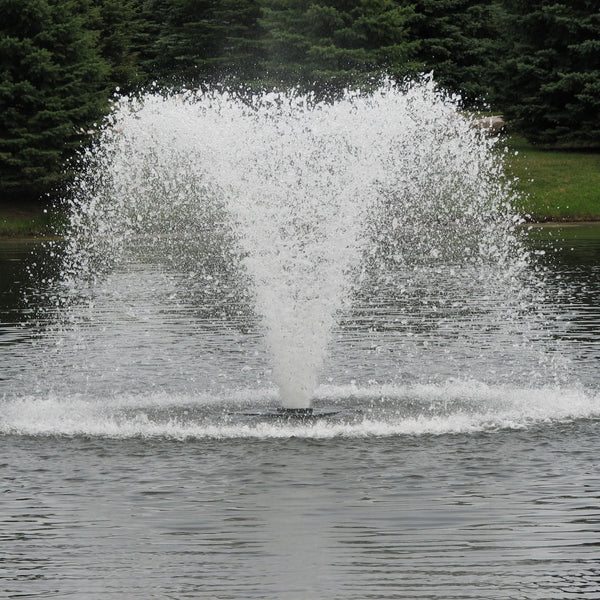




 View product

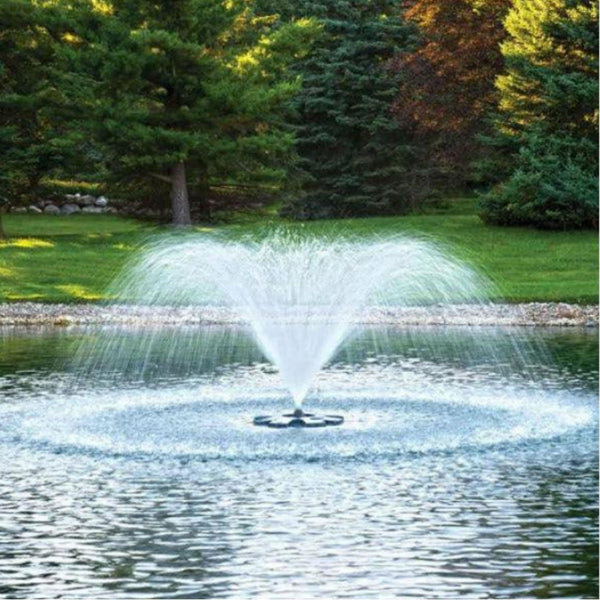
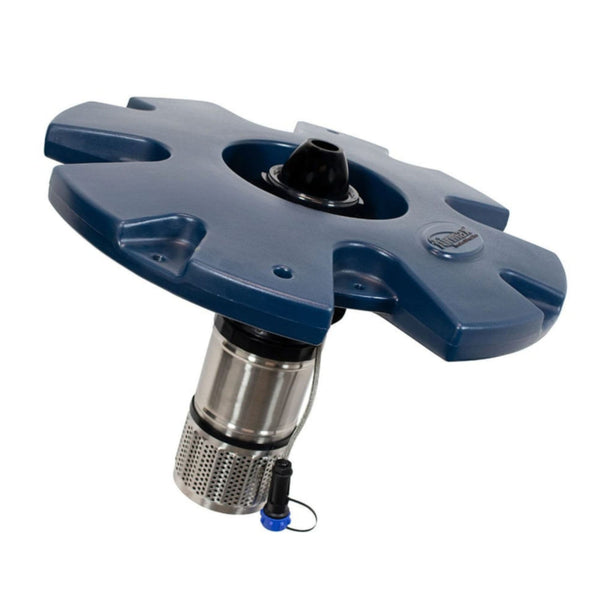

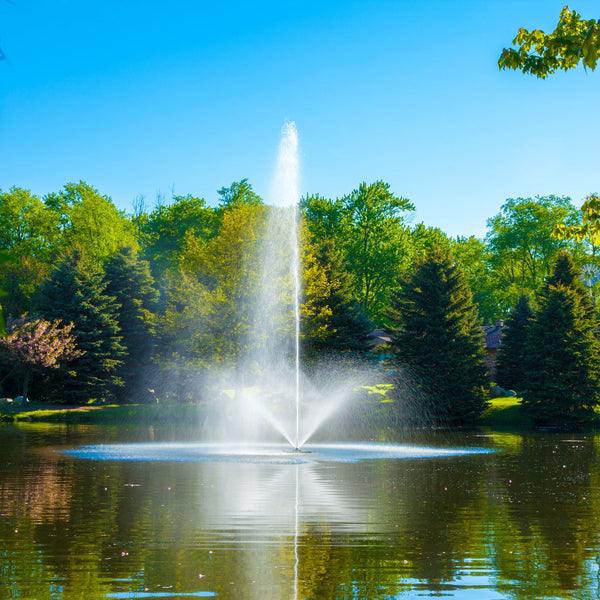
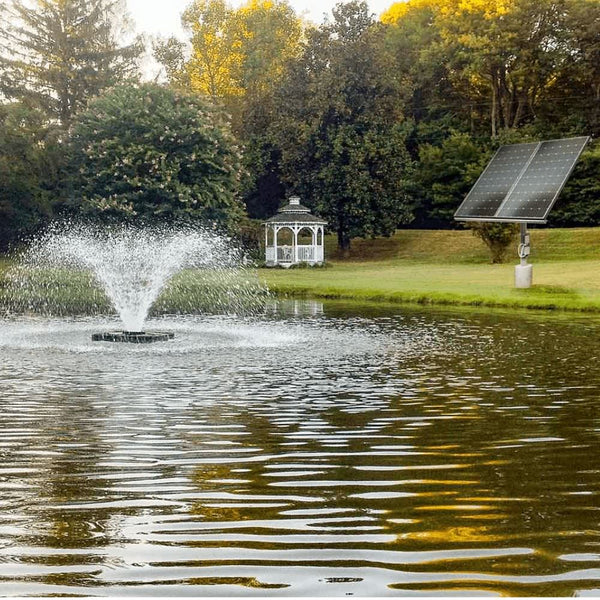
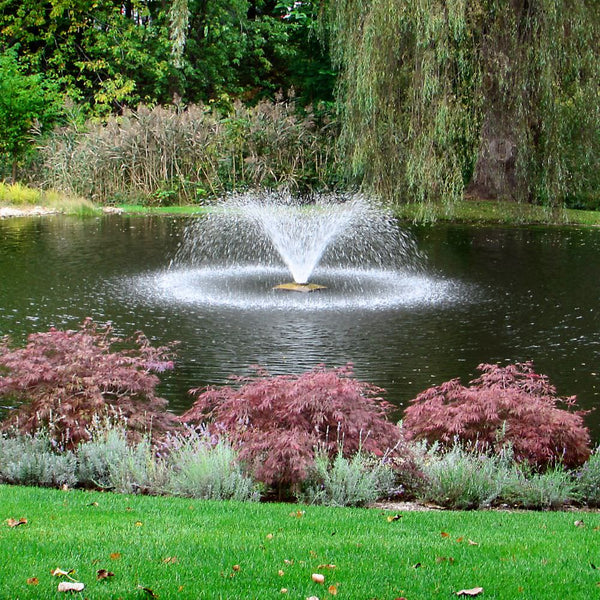
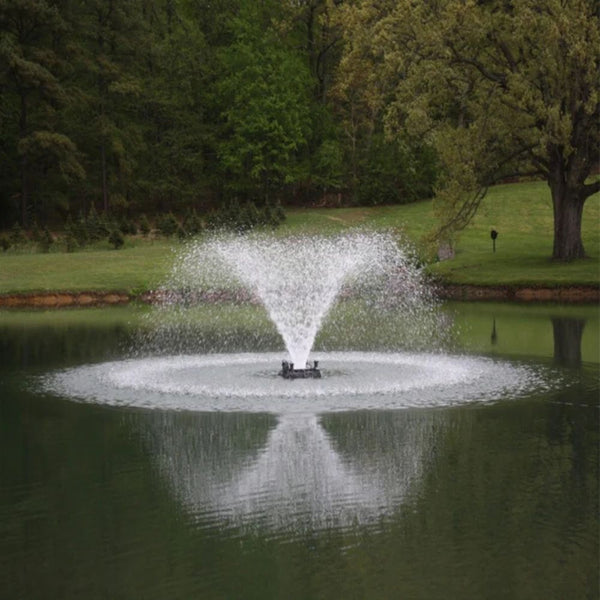
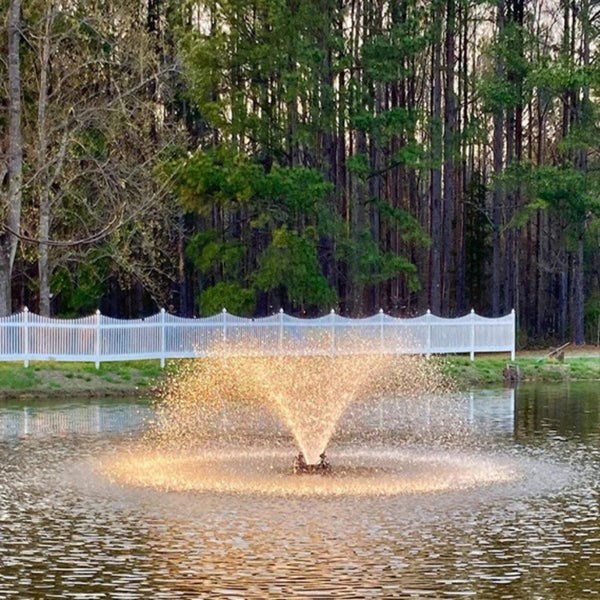


 View product
 View product



Guide & FAQ
How to choose the right pond fountain
- 3 min overview
- Types, sizing & power
- 5 common questions
Why a fountain helps a small pond
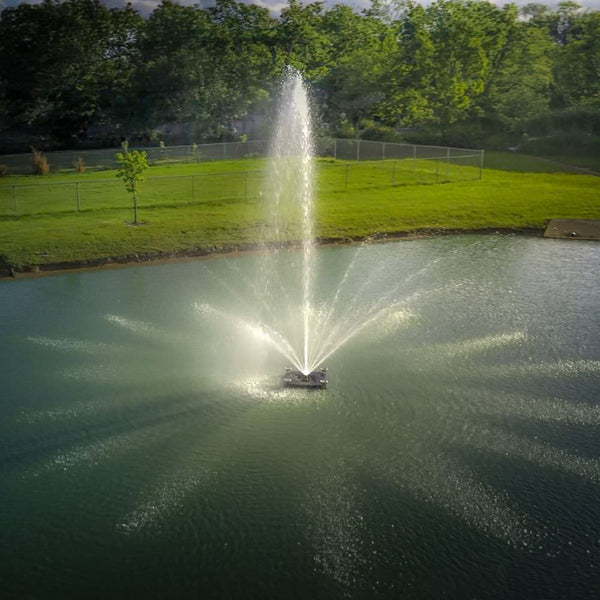
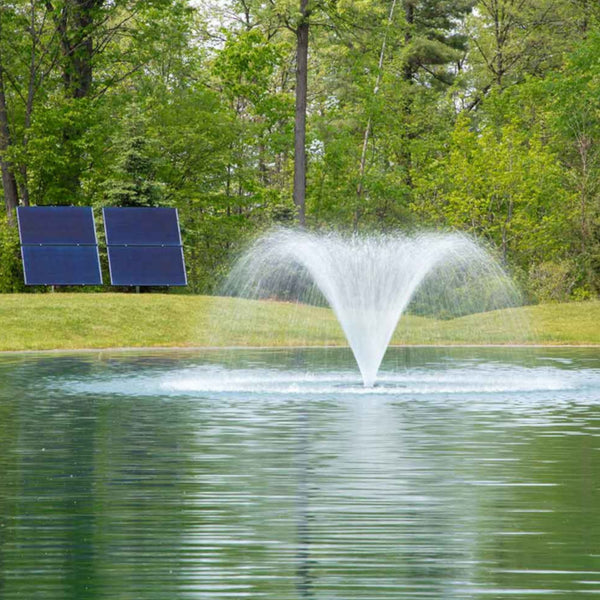
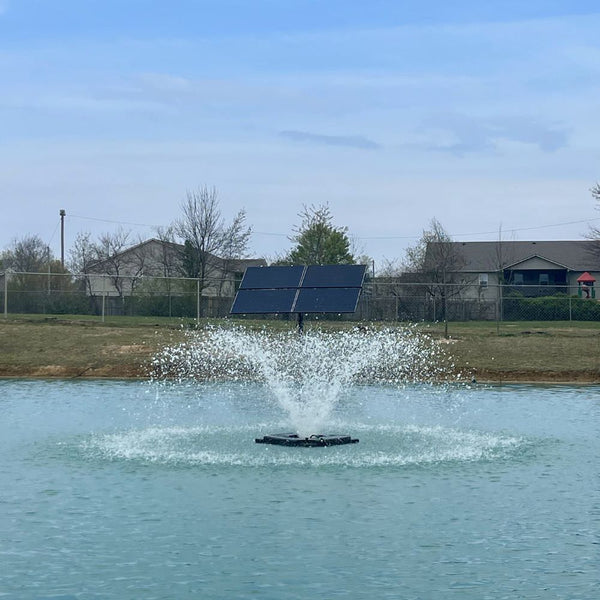
Small ponds with little circulation can build surface scum, algae mats and odors, especially in warm weather. A fountain keeps the top layer moving and adds oxygen as the spray falls back to the surface.
- It breaks up still water where mosquitoes breed.
- It supports fish and aerobic bacteria near the surface.
- It adds the sound and movement people want from a water feature.
A fountain mainly works on the upper layer of water. If your pond is deep and the problems show up near the bottom, read do fountains aerate ponds before you decide.
The main types, and when to choose each
High-aeration display fountains
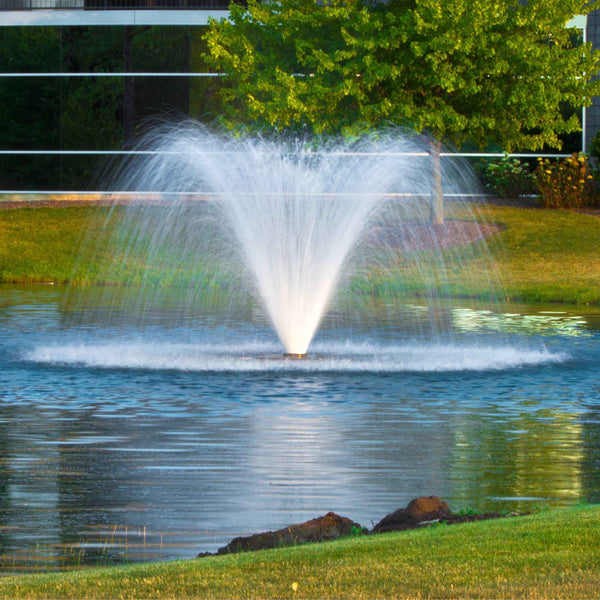
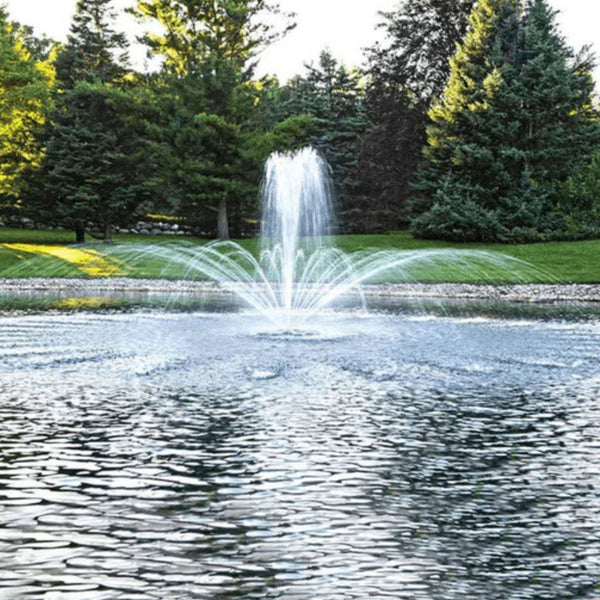
These produce wide, lower-profile trumpet patterns that move a lot of water at the surface. The Scott Aerator DA-20 Display Pond Aerator Fountain is the one in this group.
Choose this when circulation and keeping algae and odors down matter as much as the look.
Decorative display fountains
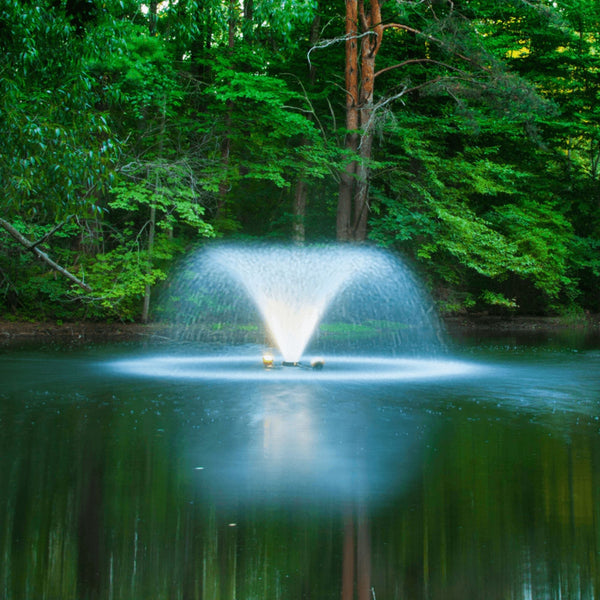
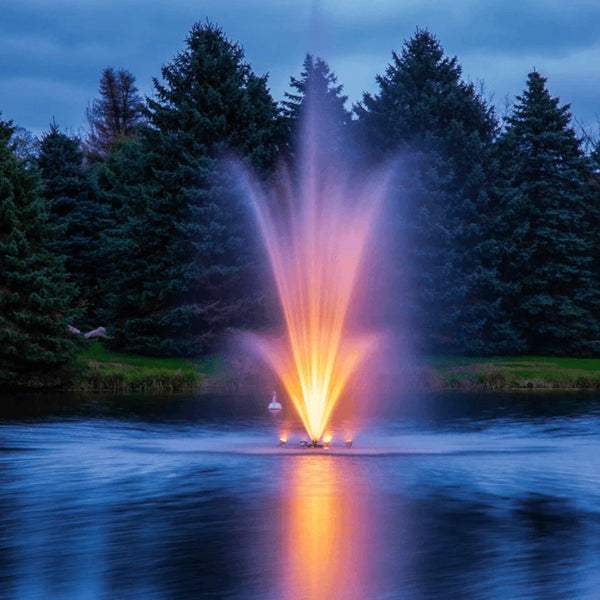
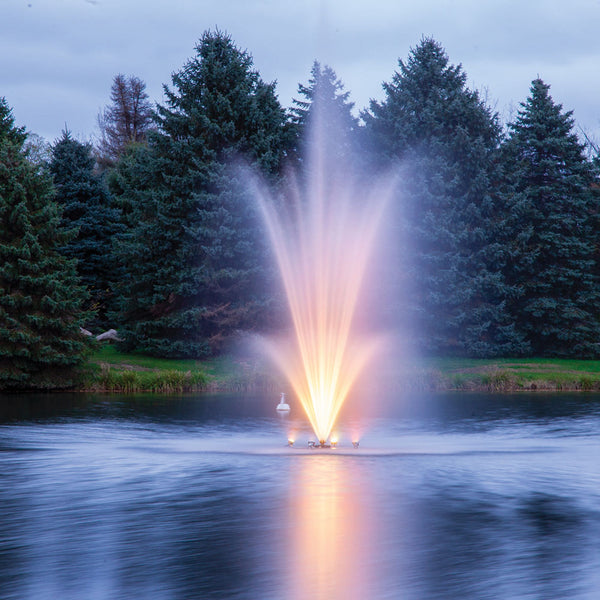
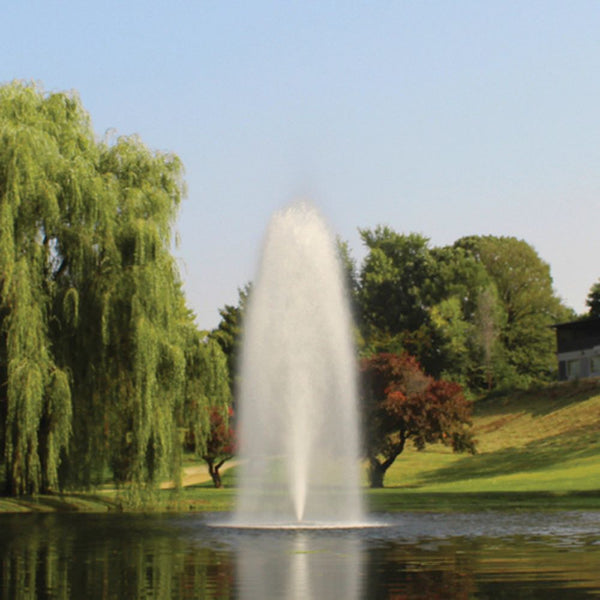
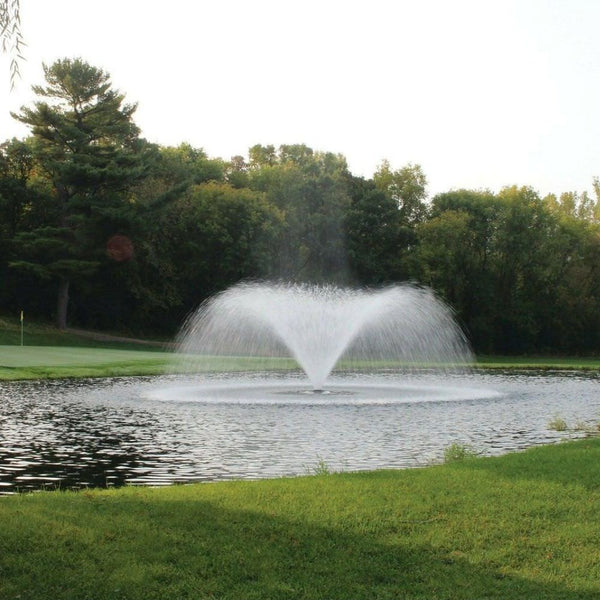
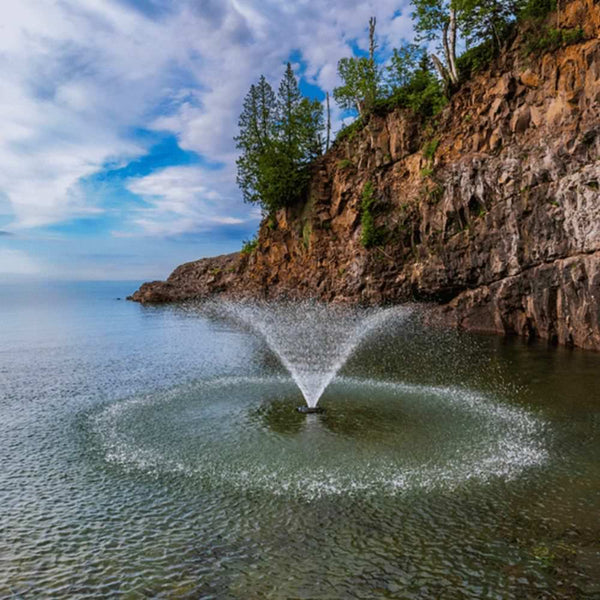
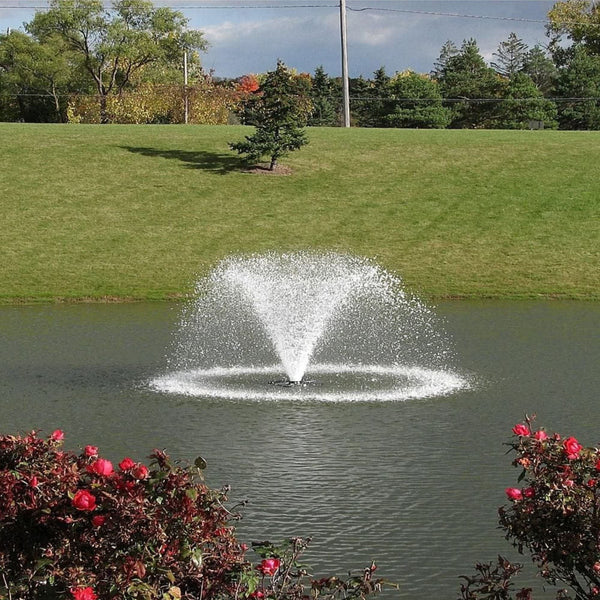
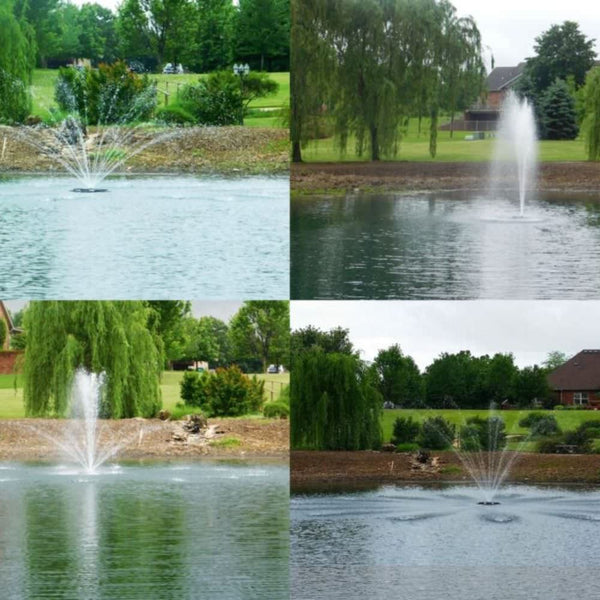
Tall columns, V-shaped sprays and multi-tier patterns built for visual impact. The Amherst, Clover, Atriarch, Skyward, Gusher and Jet Stream models fall here.
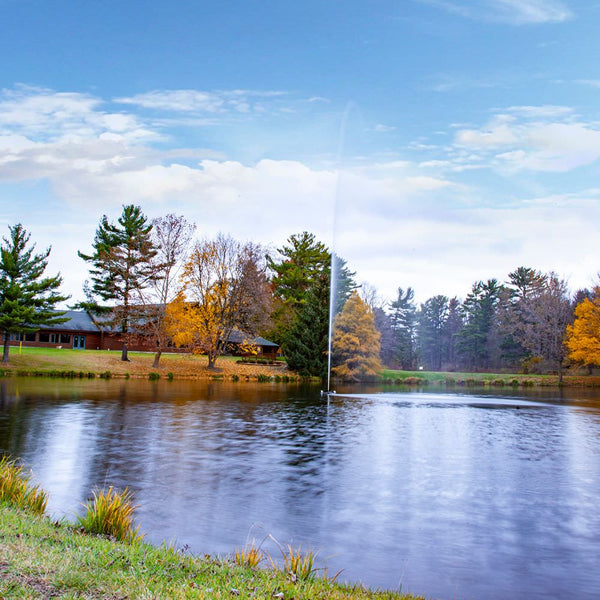
Choose this when the display itself is the main reason for buying. For a pattern that holds its shape in wind, the Gusher's narrow vertical column drifts less than a wide mist. For height, the Jet Stream's spray reaches up to 80 feet.
Multi-pattern fountains
The Triad ships with Gusher, Skyward and Cambridge brass nozzles, and the Great Lakes comes with five interchangeable brass nozzles. Both let you change the display without buying another unit.
Choose this when you want to swap the look by season or occasion.
For ponds larger than this size, compare the 1 acre pond fountains and 2 acre pond fountains. All of the models above are in the Scott Aerator fountains line.
How to choose the right size and spray pattern
Start with the pond's shape and open water, not with the tallest display.
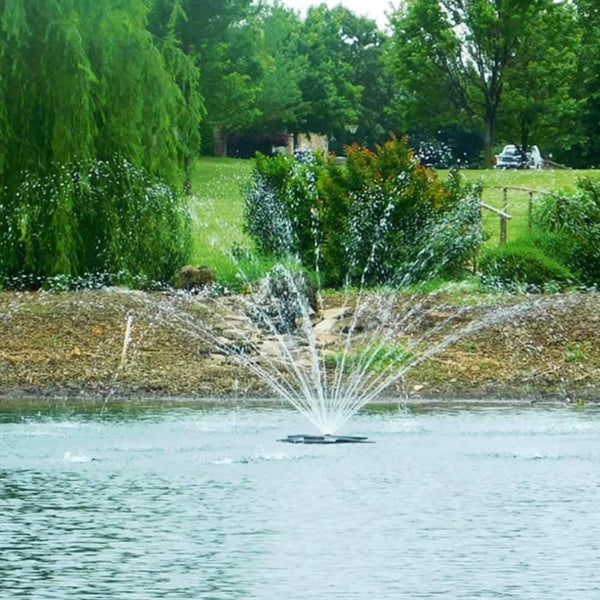
- Spray footprint. Leave enough room that the pattern lands in the water on a windy day. Wide misting patterns reach further sideways than narrow columns.
- Oversizing. A spray that is too large for a small pond splashes the banks, wets walkways and can stir up bottom sediment. On a quarter-acre pond, the pattern should fit inside the shoreline with room to spare.
- Height versus flow. Tall columns give you drama. Wide lower patterns move more water and do more for pond health. The DA-20 sits on the flow side, the Jet Stream on the height side.
- Changing patterns later. Single-nozzle models are fixed. The Triad and Great Lakes accept different brass nozzles, so you can change the display afterwards.
Compare more options on our floating pond fountains page.
Power, depth, placement and winter
Three practical points affect which model you can run.
Water depth
The intake needs clear water above the pond floor so it does not pull up muck and sediment. See how deep should a pond be for a fountain for guidance.
Power and cord run
Measure the distance from your breaker panel or outlet to where the fountain will float. That number affects the cord and electrical setup you order, so have it ready before you buy.
Mooring and winter
The float needs to be held in place, from shore or with anchors, so wind does not push it into the bank. In freezing climates, check how to winterize a pond fountain. The Triad is described as built to stay in the water all winter, while other models may be simpler to retrieve.
What comes with a fountain
Exact contents vary by model, so check the product page before you order. Across this line you will usually find:
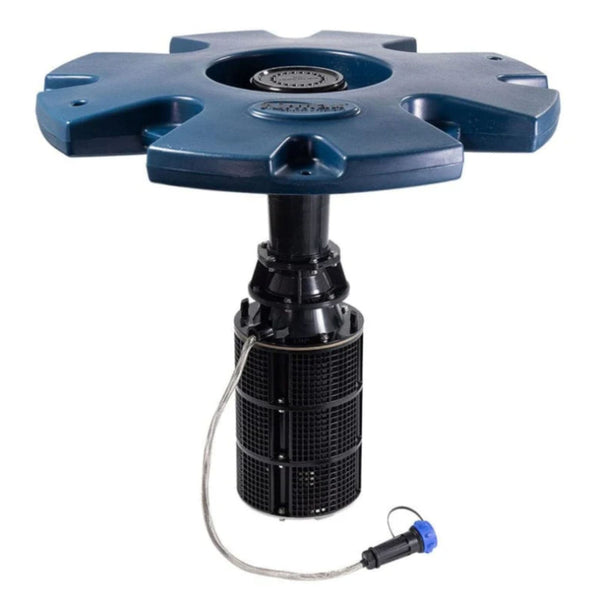
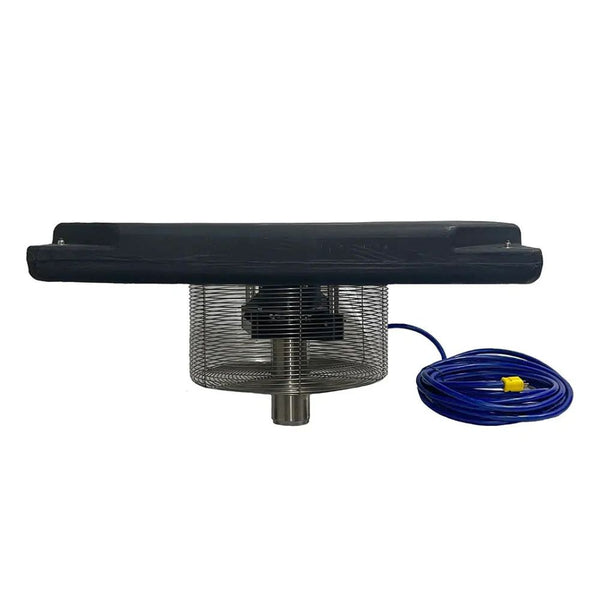
- a floating motor and nozzle assembly in one unit
- interchangeable brass nozzles on the Triad (Gusher, Skyward and Cambridge), and five on the Great Lakes
- a power cord, with the length set per model
Scott Aerator describes the Triad and Jet Stream with oil-free, stainless steel motors. Cord length, electrical setup and lighting options are not the same on every unit, so confirm them on the product page.
Not sure which one you need?
Send PondHaven the pond's surface size, its depth, the shape of the shoreline, and the distance from power to the water. We can tell you which spray patterns fit and which models to compare.
No page change, it expands right here
Frequently asked questions
Quick answers to the most common questions about our 1/4 acre pond fountains.
Is a floating fountain alone enough to handle algae in a small pond?
No single fountain treats a whole pond on its own. A fountain helps keep surface algae, scum and odors in check by moving water, but it acts on the top layer. For deeper ponds or heavier organic buildup, a bottom-diffused system may be worth adding. See do fountains aerate ponds.
What spray pattern works best in windy conditions?
Narrow vertical patterns hold their shape in wind better than wide misting displays. The Scott Aerator Gusher throws a tight vertical column, so less water drifts onto the banks on breezy days.
Can I leave the fountain in the pond over winter?
Some models are built for year-round submersed operation. The Triad is described as built to stay in the water all winter, while other fountains are easier to pull out and store. Read how to winterize a pond fountain for either approach.
How deep does my pond need to be?
Deep enough that the fountain intake stays clear of the pond floor, so it does not draw up sediment. The right depth depends on the model and the pond bottom, so see how deep should a pond be for a fountain.
Can I switch spray patterns later?
Yes, on the multi-pattern models. The Triad swaps between Gusher, Skyward and Cambridge brass nozzles without tools, and the Great Lakes offers five interchangeable brass nozzles. Single-nozzle models are fixed to one display.
Need expert help finding the right setup?
Contact Pond Haven Support