

Small Pond Fountains
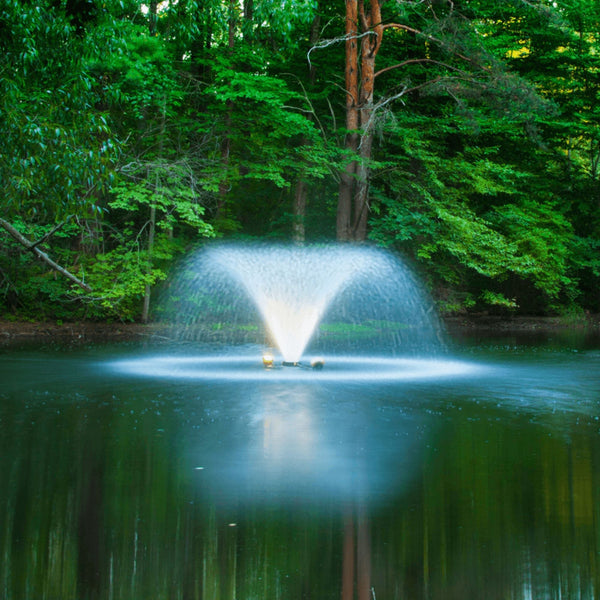
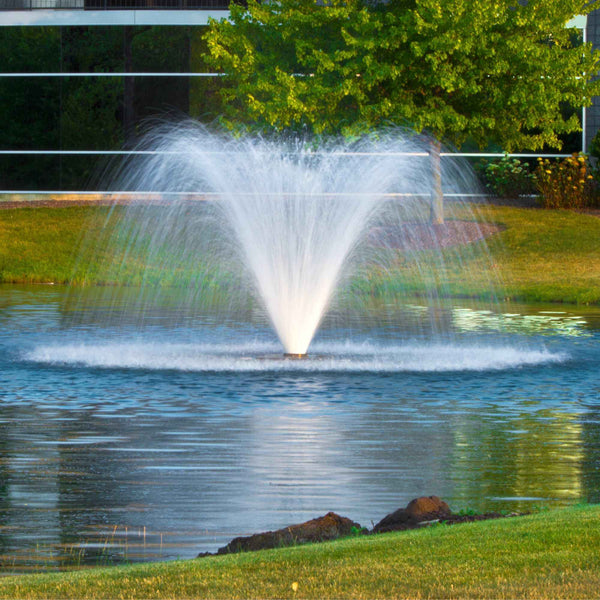
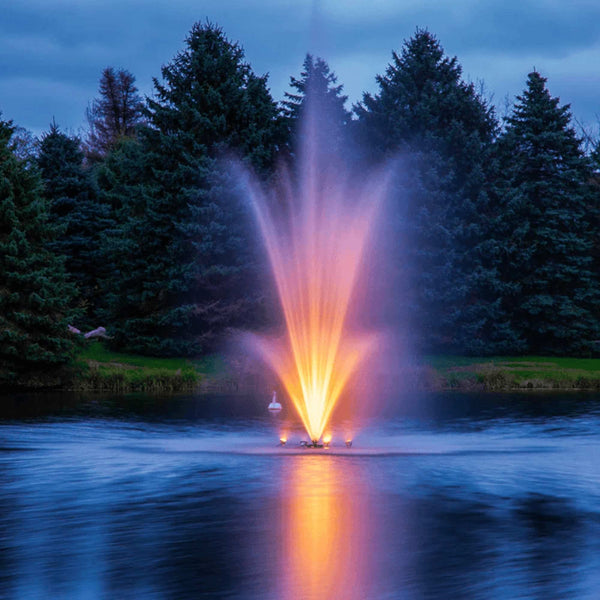
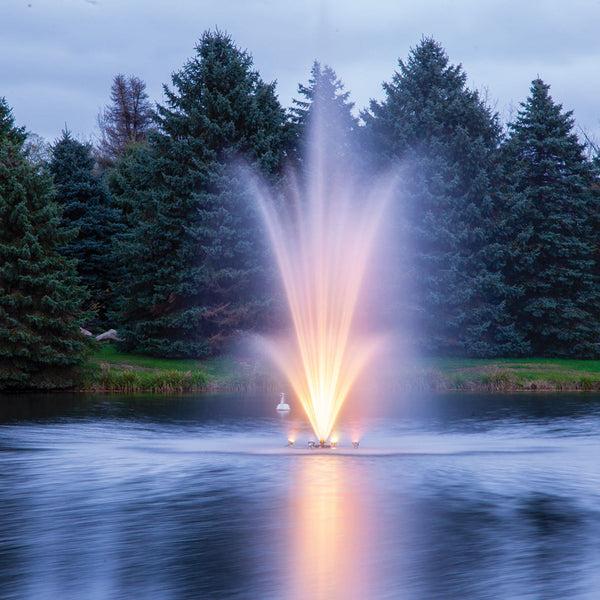












Guide & FAQ
How to choose the right fountain for a small pond
- 3 min overview
- Display style, sizing & power
- 5 common questions
Why put a fountain in a pond?
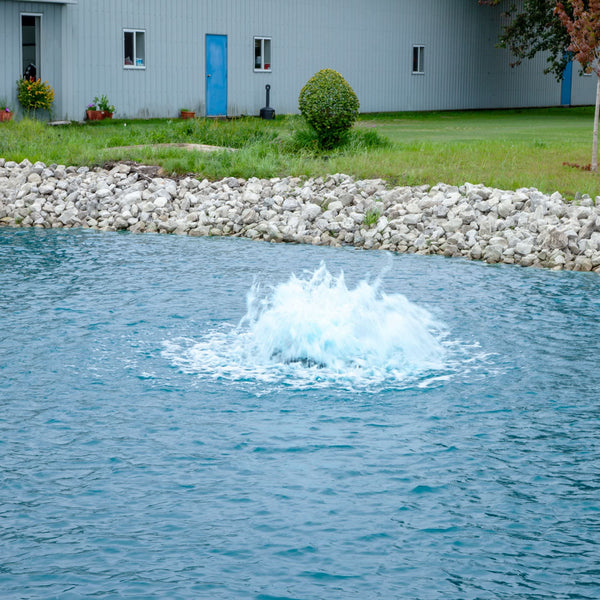
A fountain pulls water from below the surface and throws it into the air, where it picks up oxygen and falls back as circulation. That ongoing surface movement is what helps with the problems pond owners notice most.
A fountain can help with:
- stagnant water and the smell that comes with it
- floating surface algae and scum
- low oxygen that stresses fish, especially in warm weather
- mosquitoes breeding in still water
- the look and sound of a focal point in the landscape
A fountain works best as one part of a wider pond care routine rather than the only step.
Decorative, aerating, or multi-nozzle?
PondHaven carries three main styles of pond fountain, and the real difference is how much of the job is looks and how much is moving water.
Decorative display fountains
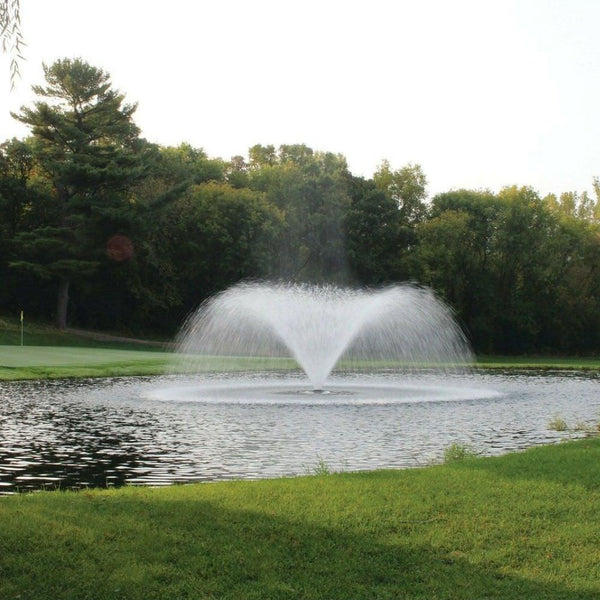
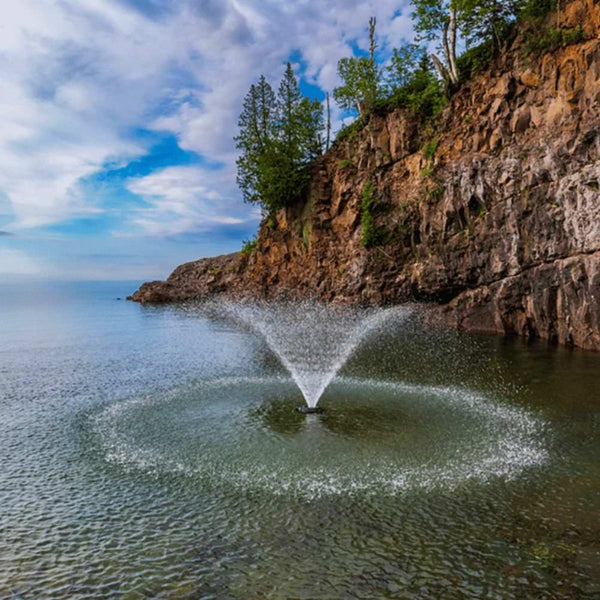
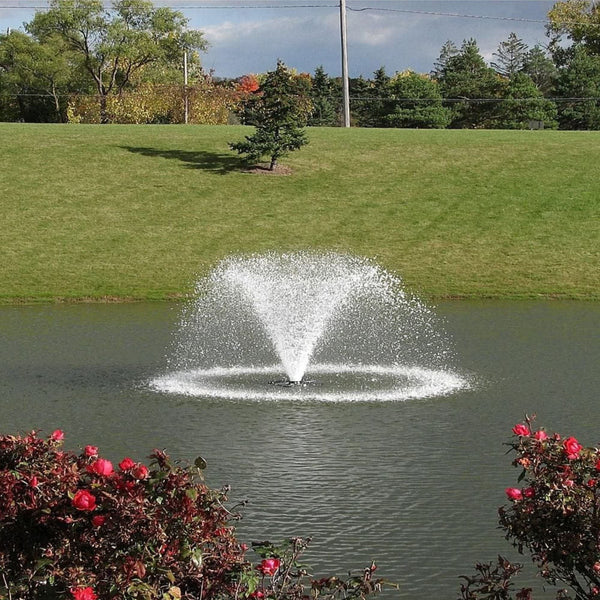
Choose a decorative display fountain when the shape of the spray is the main event. These are built around architectural patterns: tiered sprays, arching streams, multi-stream clovers, and tall columns.
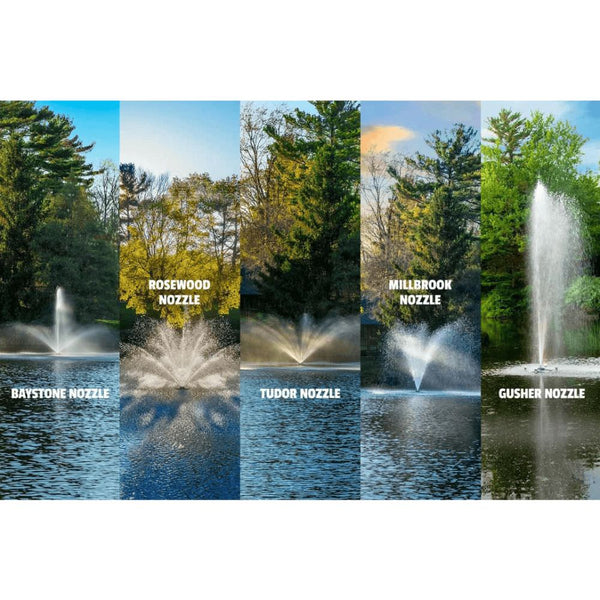
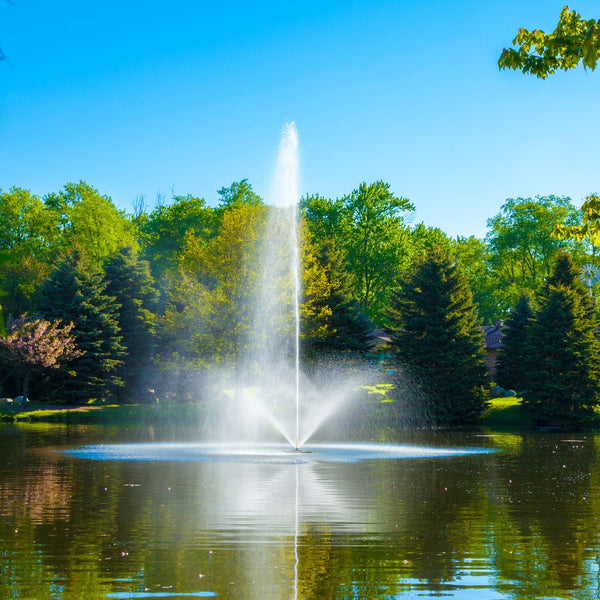
The Scott Aerator Amherst (multi-tiered), Clover (multi-stream), Cambridge (two-tier arching), Atriarch (vertical V-shaped cascade), Skyward (tall V-shaped), Gusher (vertical column), and Jet Stream (vertical jet up to 80 feet high) all sit in this group.
Aerating fountains
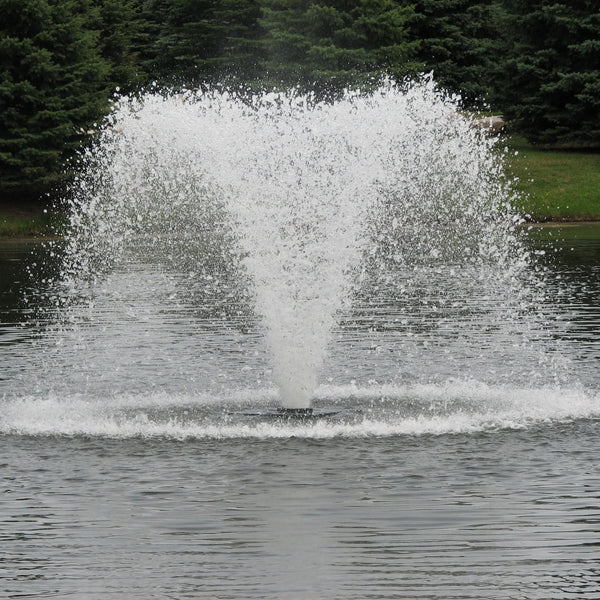
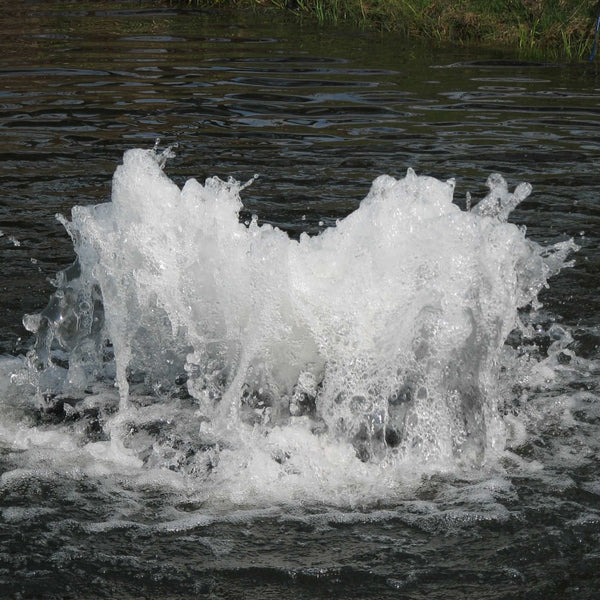
Choose an aerating fountain when pond health matters as much as appearance. These favor high-volume, frothy V- or cone-shaped sprays that turn water over quickly and carry oxygen down from the surface.
The Kasco VFX and the Scott Aerator DA-20 and North Star are aerating fountains. For a pond with fish or a lot of organic matter, this style usually does more circulation work than a tall, fine-sprayed display.
Multi-nozzle fountains
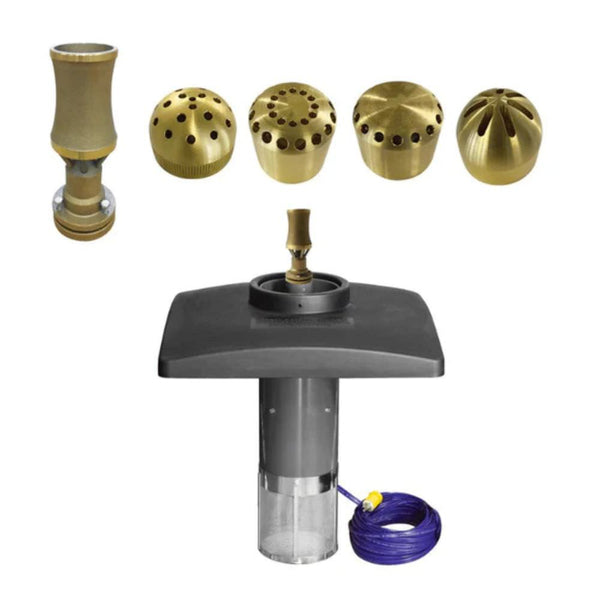
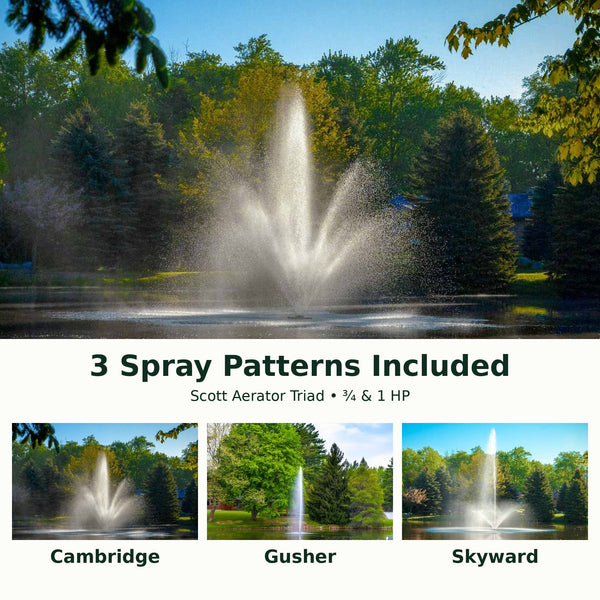
Choose a multi-nozzle fountain when you want to change the display for different seasons or events. The Scott Aerator Triad includes three brass nozzles (Gusher, Skyward, and Cambridge) that swap without tools. The Scott Aerator Great Lakes includes five interchangeable brass nozzles.
Surface aerators
Choose a surface aerator when you want water movement and oxygen with little decorative height. The Scott Aerator Boilermaker sits in this group. If appearance is not a factor at all, a dedicated pond aerator is usually the better fit, and PondHaven's pond aerators collection covers those units.
How to choose the right size and pattern
Start with your pond's dimensions rather than the motor size. The spray needs room to land in the water instead of on your bank.
The main factors are:
- Spray height and width against pond size. Leave room around the display so wind drift does not carry water onto turf or shorelines.
- Display versus aeration. A tall, fine pattern looks dramatic; a frothy V-pattern turns more water over.
- Motor size. The Kasco VFX is listed with pump sizes from 1/2 HP to 5 HP, so one display family can suit different pond volumes. Match the size to your pond's surface area and depth.
- Nozzle options. Fixed patterns keep things simple, while multi-nozzle kits let you change the look between seasons or events.
Power and winter care
A floating fountain needs power near the pond, and the run from your panel affects the setup. Winter handling depends on the model and your climate.
- Power. The distance from your panel to the pond matters for how you bring power down to the water. Our guide to running power to a pond fountain covers the practical options.
- Winter. The Scott Aerator Triad is built to stay in the water all winter. For seasonal care of your model, see our guide to winterizing a pond fountain.
Not sure which one you need?
Send us your pond's surface dimensions, average depth, and the distance to the nearest power source, plus which matters more to you, the display or the water movement. We can point you to the models that fit.
No page change, it expands right here
Frequently asked questions
Quick answers to the most common questions about our small pond fountains.
Do pond fountains actually aerate the water?
Yes, a floating pond fountain aerates as it sprays by pulling water from below the surface, throwing it into the air, and sending it back as circulation. That helps improve oxygen levels in the upper water and reduces stagnant areas. For a closer look at how much work a fountain does compared with other systems, see our article on whether fountains aerate ponds.
How do I keep the spray from blowing onto my lawn?
Leave room between the display and the shoreline so wind drift lands back in the water. Match the spray height and width to your pond's dimensions before choosing a model. If your pond is compact or exposed, ask us which patterns sit lower and tighter.
What power supply does a floating fountain need?
It depends on the model and where your panel sits relative to the pond. Check the product page for the power details of the unit you are considering. Our guide to running power to a pond fountain walks through the choices.
Can I leave my fountain in the pond over winter?
It depends on the model and your climate. The Scott Aerator Triad is built to stay in the water all winter, while handling for other units varies. Check the product page for your model, and see our winterizing guide for seasonal care.
Are these the small pumps used in patio bowls and birdbaths?
No. The fountains here are floating units for backyard ponds, basins, and small farm ponds, not the tiny submerged pumps made for container water gardens and birdbaths.
Need expert help finding the right setup?
Contact Pond Haven Support