
How to Keep a Pond From Freezing
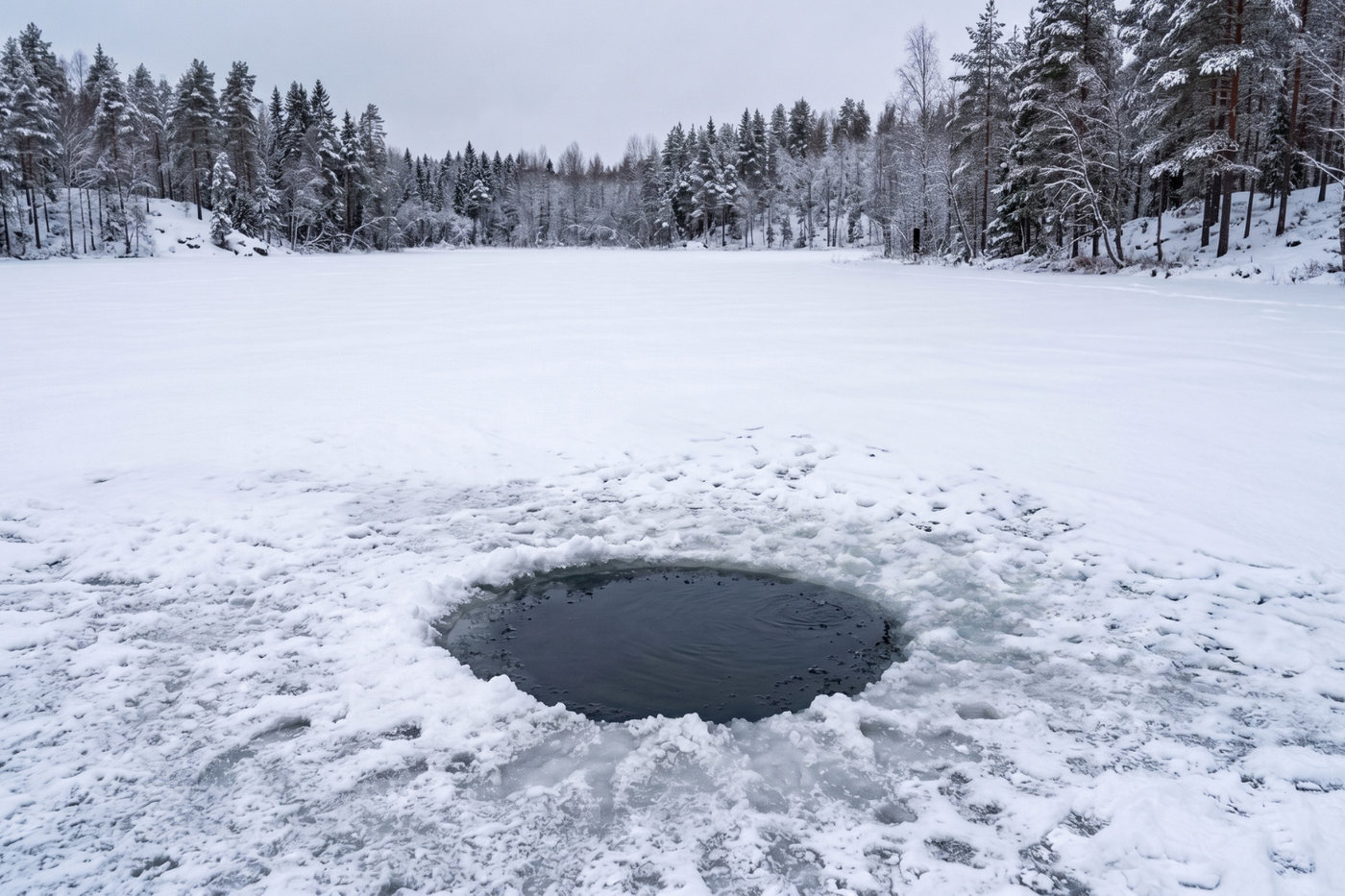

You can keep a pond from freezing over by maintaining one controlled opening with a de-icer, aerator, or carefully planned combination. This opening supports gas exchange with the air while fish settle into lower winter activity and require less oxygen. Without it, gases from decomposing material build up under the ice and dissolved oxygen falls, which is how winter fish kills happen even in ponds that look fine from shore.
Pond depth, average low temperature, fish load, and required open-water coverage determine which system and output range suit the site. Installing the equipment before sustained ice forms gives you time to confirm its placement, flow direction, and electrical connection properly.
During winter, check the opening after heavy snowfall, temperature changes, or power interruptions, because each condition can change de-icing performance. If the surface has already frozen, use warm water to melt an opening gradually. Never strike or break the ice by force, because the shock waves travel through the water and can stress or injure fish sheltering below.

Decide How Much Open Water Your Pond Needs
A fish pond usually only needs an opening for gas exchange rather than an entirely ice-free surface. The required area becomes larger when winter plans cover docks, pilings, boats, or livestock access. Defining the protected area first keeps the equipment recommendation connected to its purpose and prevents unnecessary coverage – and unnecessary running costs, since a larger opening means a larger motor running all winter.
A fish pond may need one compact opening, while a freezing pond beside a dock may need circulation along the structure. Irregular shorelines can divide coverage into areas one current cannot reach, requiring angled placement or multiple units.
Account for Site Conditions Before Choosing Equipment
Pond depth, surrounding structures, and available power determine which winter method can operate effectively at the site. The pattern of pond freezing also changes with wind exposure, snow cover, and the shape of the shoreline.
Farm ponds
Pond purpose, shoreline access, and circulation requirements determine how to keep a farm pond from freezing during winter conditions. A fish pond needs open water for gas exchange, while livestock access requires a broader area animals can reach safely.
Compatible circulating de-icers can create circular coverage vertically or direct flow toward a shoreline when angled. Long or irregular ponds may need multiple units to reach separated coves or livestock access points.
Shallow ponds
Shallow ponds provide less depth for a de-icer to draw from, so prolonged cold can reduce the open area it maintains. Choose the deepest location in shallow water that still meets the unit’s operating range and bottom-clearance requirements.
Uniform water temperatures can limit performance throughout a shallow basin, so a larger motor may not deliver coverage predicted for deeper sites.
Ponds without grid power
Winter sunlight and battery capacity are important elements of how to keep a pond from freezing without electricity during cloudy periods and overnight.
A direct-drive solar aerator runs when sunlight reaches the panels, while battery-backed equipment can circulate water during overcast periods or after sunset—in most winter climates, the shorter, cloudier days make battery backup the dependable choice for a stocked pond. Compare solar pond aerators rated for winter operation if the pond sits beyond practical reach of grid power.
Remove leaves and dying vegetation before winter, because decomposition continues beneath the ice and consumes available oxygen. Clear snow from accessible portions of the surface so light can reach submerged plants and support photosynthesis.
Compare Winter Pond Equipment
De-icers, aerators, and pond heaters manage different winter conditions, so the preferred system begins with the intended result. A combined setup can serve ponds that need both dependable open water and additional oxygen movement.
Circulating de-icers
A circulating de-icer moves water upward and toward the surface to delay ice formation in a defined area. These units use horsepower, depth, mounting position, and flow direction to describe performance because they move water rather than heating the full pond. The constant movement of slightly warmer water from below keeps the surface open, at a fraction of the electricity a true heater would draw.
Vertical suspension supports circular coverage around compatible units, while dock mounts aim water flow along protected shorelines. Floating mounts serve areas without attachment points but require stable water levels and winter access.
Scott Aerator’s de-icer line illustrates how those mounting choices work in practice: it comes in three styles—a Slinger suspended from a boat, dock, or pilings; a Floating model; and a Dock Mount—with 1/2 HP standard and other horsepower available.
The dock-mount version offers an optional programmable oscillator that rotates the unit in 20° increments to sweep a wider protected area, and an optional adjustable thermostat (0°F–80°F) lets the unit run only when water temperature actually demands it. Kasco de-icers are carried alongside Scott’s and follow the same sizing logic shown in the coverage table below.
Winter aeration
Winter aeration moves water upward through rising bubbles and supports oxygen transfer near the surface. Position the diffuser at a shallower or mid-depth location to preserve deeper water, because aeration supports oxygen instead of broad dock protection—running a diffuser at the deepest point all winter pulls the pond’s warmest water away from exactly where fish are holding.
Combined systems
A combined system uses a de-icer to maintain open water while an aerator supports oxygen movement elsewhere in the pond. This arrangement can suit longer freezes, heavier fish loads, or greater organic buildup beneath the ice. Plan each unit separately so overlapping currents preserve deeper fish habitat and keep equipment accessible for winter monitoring.
Full pond heating
Pond volume, target temperature, and heat loss determine how to heat a pond in winter and how much electrical capacity the system requires. Full heating may suit managed koi ponds, warm-water species, or specialized systems that require continued temperature control. For most outdoor ponds, though, pond heaters and de-icers are really about ice control, not warm water.
Heating capacity also depends on exposed surface area and wall heat loss, while larger loads may require 230-volt hardwired service.
Choose the Right Pond De-Icer Size
Expected low temperature, water depth, and required coverage determine the best pond de-icer for winter conditions at a site. Total acreage provides context, although circulator sizing begins with the area that must remain open.
Required coverage
Size the de-icing system around the water that must remain open rather than the pond’s total surface area. A fish pond may require one modest opening, while a dock, livestock area, or irregular shoreline may need broader or directed coverage.
Measure the required length and width, then identify pilings, boats, coves, and other features that may interrupt circulation. The protected area’s shape also affects whether one vertically mounted unit, an angled installation, or several positioned units will provide suitable coverage.
Average winter temperature
Average low air temperature determines how much open water each motor size can maintain, because coverage contracts as temperatures fall. Match the required opening diameter to the site’s average low temperature before choosing between 1/2, 3/4, and 1 horsepower.
| Average low air temperature | 1/2 horsepower | 3/4 horsepower | 1 horsepower |
|---|---|---|---|
| 20° to 34° Fahrenheit | 65-foot diameter | 85-foot diameter | 90-foot diameter |
| 0° to 19° Fahrenheit | 50-foot diameter | 70-foot diameter | 80-foot diameter |
| Minus 20° to minus 1° Fahrenheit | 35-foot diameter | 50-foot diameter | 65-foot diameter |
| Below minus 20° Fahrenheit | 30-foot diameter | 45-foot diameter | 55-foot diameter |
The temperature and horsepower coverage figures apply to vertical installations in unobstructed water deeper than 4 feet. Shallow water, docks, boats, natural currents, and wind can reduce the maintained opening below the listed diameter.
Water depth and obstructions
Water depth determines whether the unit can maintain bottom clearance and reach enough water for the required opening. Boats, pilings, and natural currents can redirect flow, reducing expected coverage in divided or obstructed areas.
Mounting position and flow pattern
Vertical suspension creates circular coverage around compatible units, while angled mounting produces elongated flow along a dock or shoreline. Select the mounting position by protected shape, attachment points, and nearby obstructions, with mooring lines spaced widely enough to stabilize the motor.
Motor output and electrical service
Horsepower describes mechanical output, while volts, amperes, and watts describe different parts of the electrical load. Match the motor configuration to the available service and factory cord distance before ordering the unit.
Longer runs may favor a 230-volt configuration when the manufacturer offers one, although final wiring depends on the model’s amperage and installation instructions. A licensed electrician can confirm circuit capacity, ground-fault protection, and hardwired connections for the selected equipment.
Install the De-Icer Before Ice Forms

Install the de-icer before ice develops so you can measure the water depth, adjust its mounting angle, and test the resulting coverage from stable access.
Select the position
Measure the water depth at each possible installation point, then choose a location that provides enough clearance beneath the motor. For compatible suspended circulators, position vertical units 4–6 feet deep, place angled units slightly shallower, and maintain at least 1 foot of bottom clearance.
Place the unit upstream where natural currents can carry moving water through the intended area. When protecting shallow water, position the unit in an adjacent deeper section and angle its flow toward the shallower target.
Secure the unit
Anchor two suspension lines to stable cleats, pilings, or structural attachment points spaced at least 8 feet apart. Wider spacing keeps the unit stable during startup and reduces the chance of the lines twisting around the electrical cable.
Tie each line securely, then adjust one attachment point when the compatible model supports angled suspension. Use the suspension lines or mounting assembly when raising the unit, because the power cable can’t support the motor’s weight.
Connect the power
Confirm that the circuit voltage matches the motor nameplate and that the circuit can support the unit’s operating amperage. Connect the de-icer to a properly grounded circuit protected by a ground-fault circuit interrupter (GFCI), with every connection positioned away from standing water—and never through an extension cord, which causes voltage drop that can damage the motor and void the warranty.
Inspect the complete power cable for cuts, crushed sections, or damaged insulation before energizing the unit. Test the GFCI after installation and each reinstallation, then continue monthly testing throughout the full operating season.
Mark and test the opening
Start the de-icer only after the motor and propeller sit fully underwater, then observe the direction and reach of the surface current. Disconnect the power before changing the depth, suspension lines, or mounting angle when the current misses part of the target area.
Mark the boundary around open water and thin ice so people can recognize the hazard from the shoreline. Inspect the opening daily when possible and after snowfall, power interruptions, or temperature drops that may alter coverage.
Calculate the Running Cost
Monthly operating cost depends on input wattage, daily runtime, billing days, and the local electricity price. Convert watts to kilowatts, multiply by operating hours, then multiply the result by the utility’s price per kilowatt-hour.
For a de-icer rated at 840 watts, 30 days of continuous operation would consume 604.8 kilowatt-hours. At a hypothetical rate of $0.15 per kilowatt-hour, that runtime would cost about $90.72 before taxes or utility fees.
A thermostat changes that math considerably: a unit with an adjustable thermostat cycles on only when the water temperature demands it, so mild stretches in early and late winter cost far less than the continuous-operation estimate suggests.
Maintain the Pond Through Winter
Removing autumn debris and monitoring open water are practical winter pond care tips for limiting oxygen demand and responding to changing conditions. Inspect the motor, mount, propeller, and power cable before installation, then continue monitoring the system throughout winter.
Observe the opening after storms, outages, and rapid freezes, because coverage can change as wind and snow alter surface conditions. Clear accessible snow without stepping onto the ice, and disconnect power before handling equipment near the water.
Adjust fish feeding according to water temperature and species requirements, because digestion slows as conditions cool. Remove uneaten food promptly so it doesn’t add organic material that continues decomposing beneath winter ice.
Find Suitable Winter Equipment at Pond Haven
Selecting a de-icer becomes clearer when you compare the required opening, available depth, winter temperatures, mounting location, and electrical service together. Pond Haven carries circulating de-icers across several horsepower, voltage, and mounting configurations for fish ponds, farm ponds, docks, and waterfront structures. Share your pond dimensions, depth, average winter temperature, and desired coverage area so the Pond Haven team can help narrow down the available options.
FAQs on How to Keep a Pond From Freezing
How do fish survive in a frozen pond?
Fish survive beneath seasonal ice by reducing their activity as water temperatures fall and settling into deeper, more stable water. Lower activity reduces oxygen demand, while an open surface area supports continued gas exchange throughout the colder months.
Will fish survive if the pond freezes completely?
Fish survival under complete ice depends on freeze duration, snow cover, water volume, fish load, and the amount of decomposing material. Longer coverage and heavier organic loads can reduce dissolved oxygen before spring thaw reopens the surface.
How do I prevent ice damage to my dock or boat in winter?
Position a de-icer so its current keeps water moving around the pilings, hull, or boathouse—ice can’t lock onto a structure when the surrounding water stays open. Expanding ice sheets exert enormous pressure, and repeated freeze-thaw cycles can lift pilings out of the bottom over successive winters, a process called ice jacking. A dock-mounted unit directs flow along the structure, while a suspended unit protects a slip or moored boat; the coverage table above sets the horsepower for your climate.
Should the de-icer be stored in water over the off-season?
Check the manual for your specific model—storage requirements differ even within one brand. Scott Aerator’s de-icer, for example, must be stored with its pump submerged in a 5-gallon bucket of water if removed from the pond to keep the pump seals from drying out. That’s the opposite of what owners expect from Scott’s summer fountains and aerators, which are designed to stay in the pond year-round with no winterization at all, so don’t assume one product’s routine applies to the other.
Can a cement pot for fish remain outdoors during winter?
A cement container holds less water than an in-ground pond, while its exposed walls lose heat from several directions. Winter suitability depends on frost resistance, container depth, local temperatures, and the cold tolerance of the fish species.
Back to Top: How to Keep a Pond From Freezing, and What Size De-Icer You Need