

Floating Pond Aerators
 View product
Guide & FAQ
How to choose the right floating pond aerator
- 3 min overview
- Display vs. churner, sizing & power
- 5 common questions
Why put a floating aerator on a pond?
A pond with little circulation tends to hold odors, surface scum and pockets of low oxygen, and warm weather can leave gases trapped in deeper water. A floating aerator moves surface water and adds oxygen as it works, which can help ease those conditions.
It tends to help most on ponds with:
- fish and other pond life
- heavy organic matter or muck
- little natural circulation
- recurring surface algae or odors
- shallow to medium depths
Circulation is one part of pond upkeep. Other water-quality problems may still need other treatment.
Display aerator or surface churner?
Both styles move and oxygenate water at the surface. The difference is how much of that work you see and hear.
Display aerators
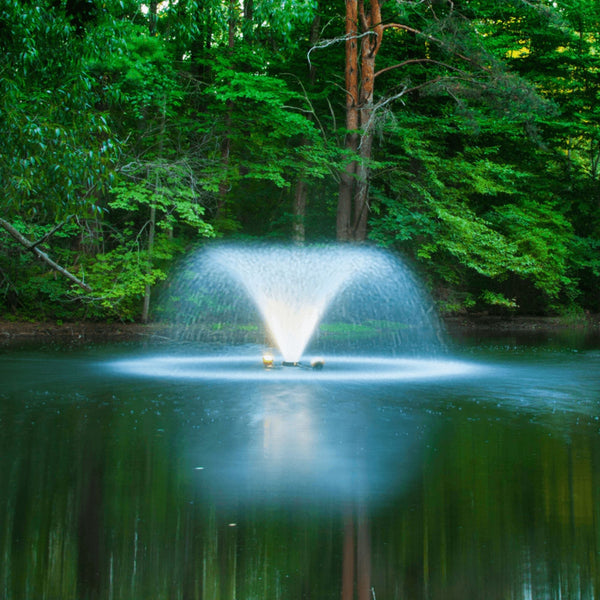
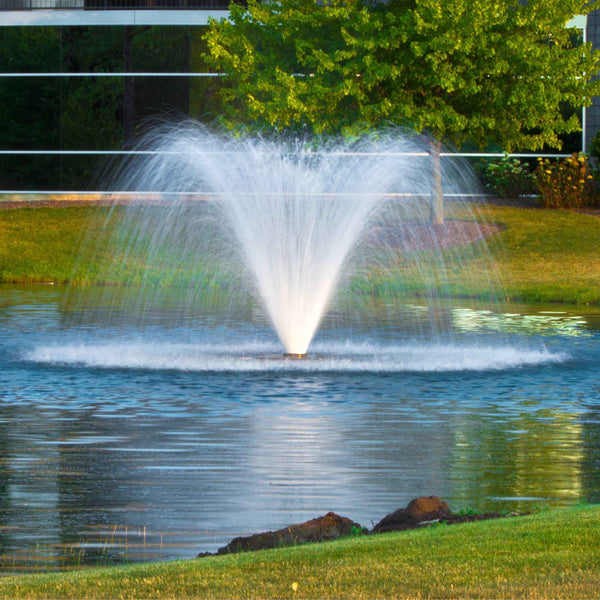
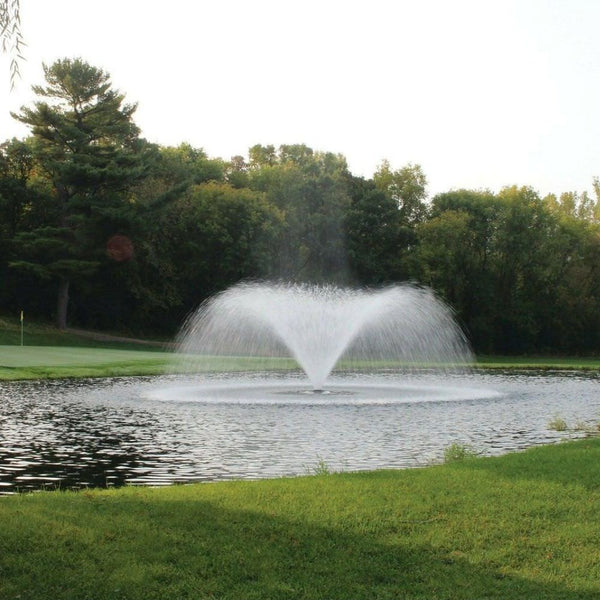
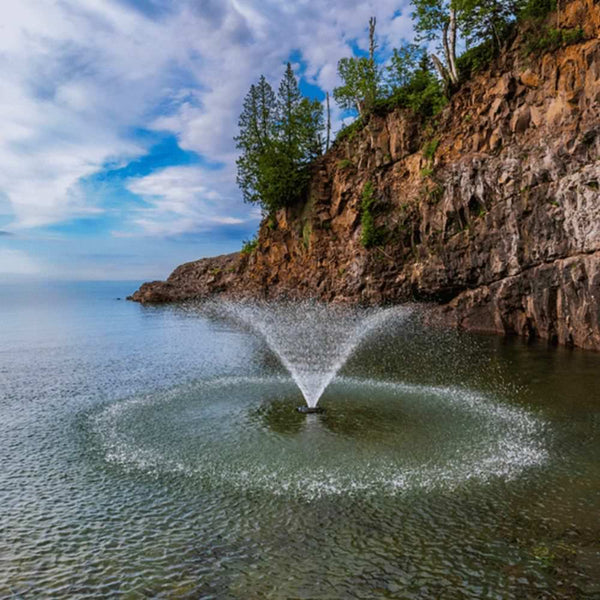
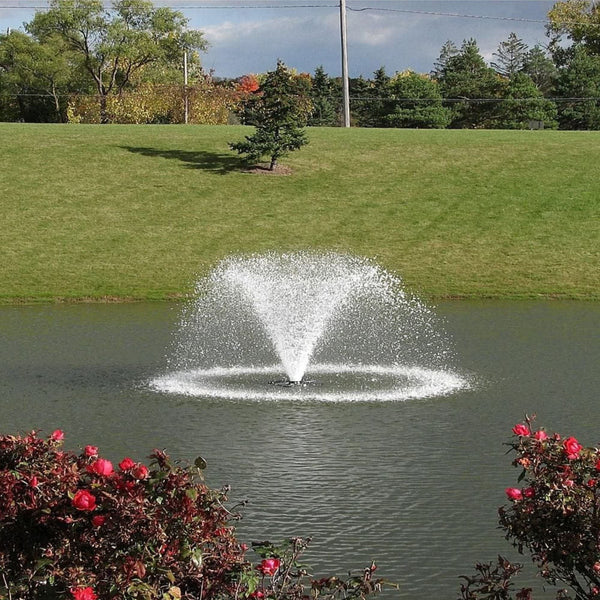
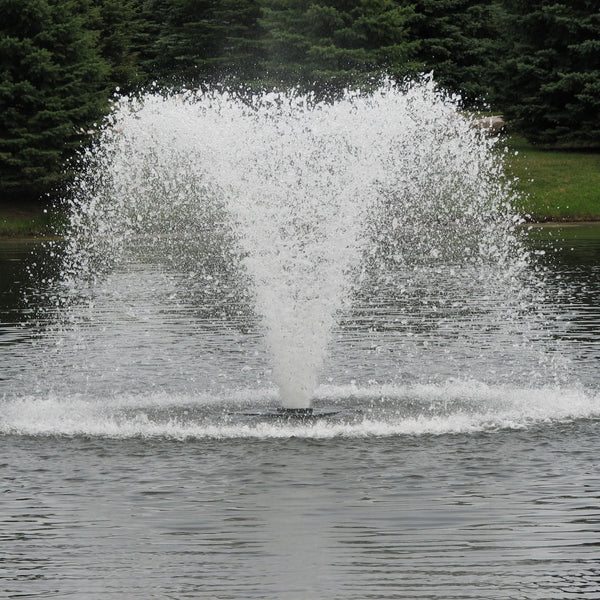
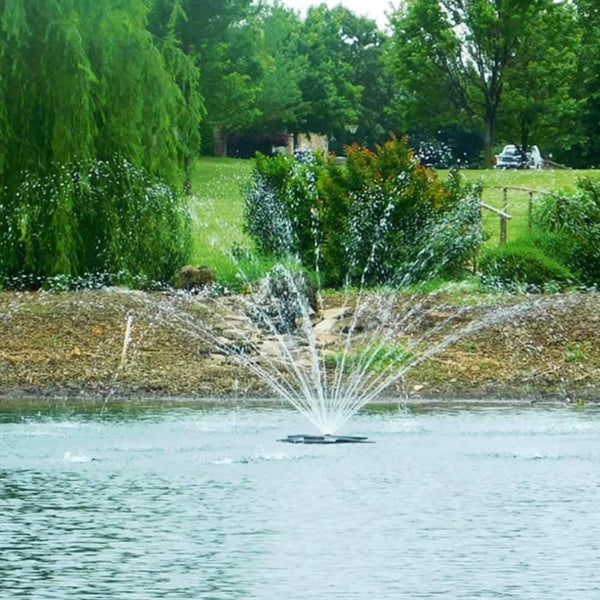
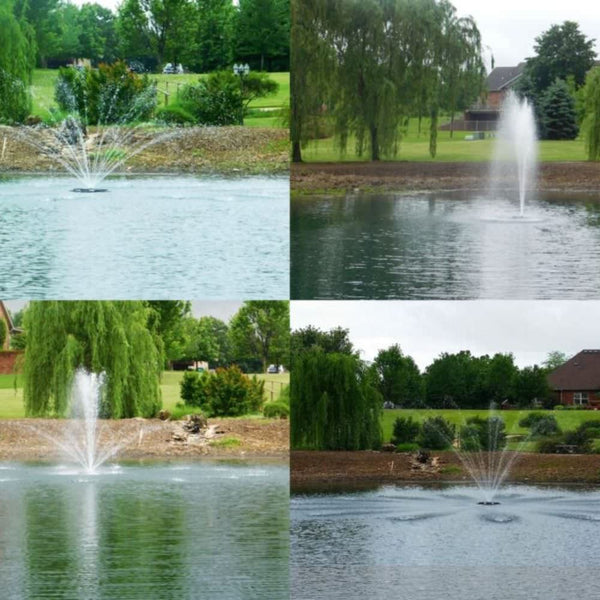
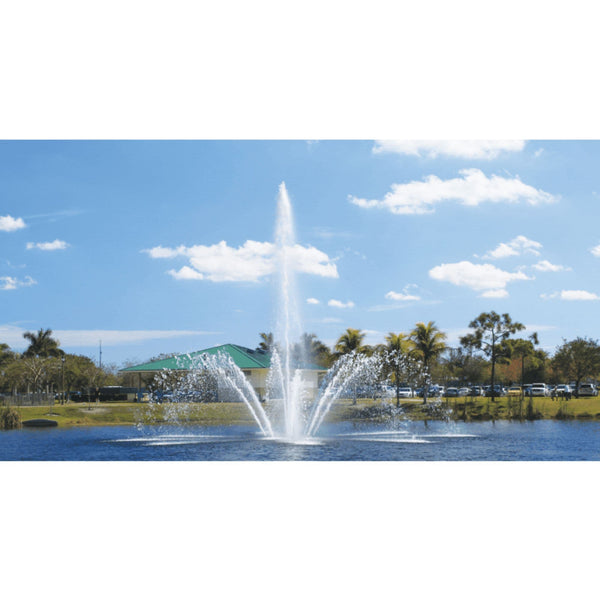
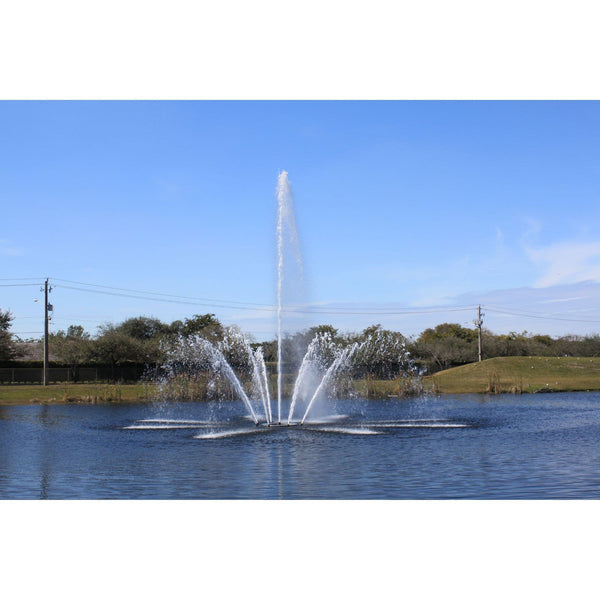
A display aerator throws a shaped spray while it aerates. The Scott Aerator DA-20 forms a trumpet pattern, the Scott Aerator North Star throws a tall narrow V, and the Kasco VFX creates a V-shaped display.
Choose a display aerator when the look and sound of the spray matter as much as the water movement.
Surface churners
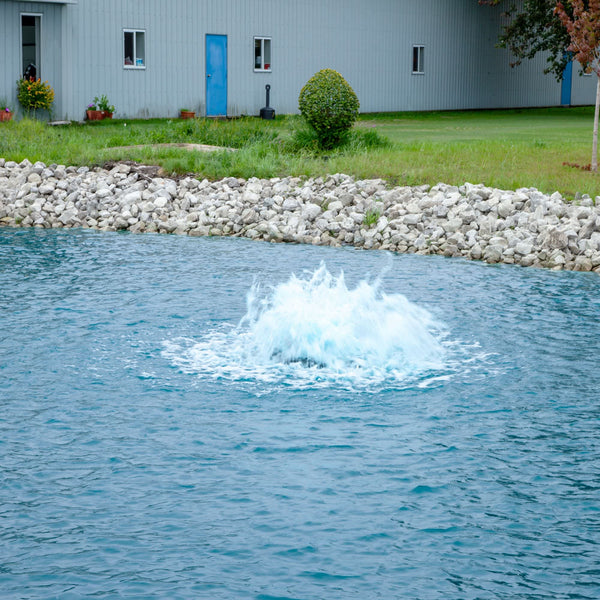
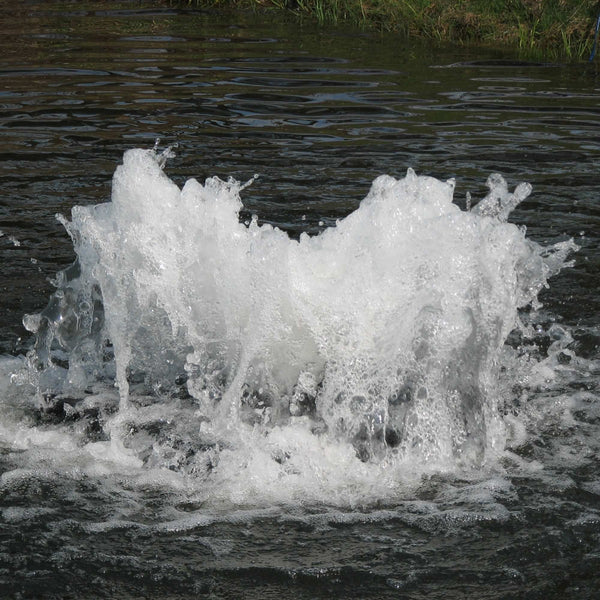
The Scott Aerator Boilermaker moves a large volume of water at the surface without a tall decorative plume.
Choose a surface churner when oxygen transfer and muck movement are the main goals, or when a tall spray would drift in the wind or sit near a flight path.
Choose a bottom-diffused aeration system instead when the pond is deep and separates into layers, since that approach moves the lower water directly. Our article on whether fountains aerate ponds compares the two approaches, and PondHaven's bottom-diffused aeration systems cover deep-water cases.
How to choose the right size or model
Start with three details about your pond.
- Surface area. More open water needs more motor and more throw to move water across the whole pond. The Kasco VFX is offered with pump sizes from 1/2 HP up to 5 HP, so there is room to match the unit to the water in front of you.
- Depth. Floating aerators suit shallow to medium water. In deeper ponds, check whether surface circulation alone will reach the lower layers.
- Shape. Long, divided or irregular ponds may need more than one unit to move water in every corner.
Exact coverage and horsepower vary by model, so read the individual product page before ordering.
Power, placement and winter use
Where the float sits and how you power it affect which model will work.
- Power. These units run from shore power, and the distance from your electrical panel to the water's edge matters. Longer cable runs and larger motors may call for a higher voltage supply, so check the cord length and voltage listed on the product page.
- Water clearance. The float needs enough water beneath it that the unit does not pull up sediment, weeds or muck.
- Mooring. Plan on shoreline tie-offs or weighted anchors to hold the float in position.
Winter use depends on the model and on preparation before freeze-up. Read our notes on winterizing a pond fountain and confirm the details for your unit.
Not sure which one you need?
Send us your pond's surface area, average depth and where your power source sits relative to the water. We can tell you whether a display aerator or a surface churner suits it better, and which size to look at.
No page change, it expands right here
Frequently asked questions
Quick answers to the most common questions about our floating pond aerators.
How is an aerating fountain different from a decorative pond fountain?
An aerating fountain is built to move a large volume of water for oxygen transfer, while a decorative fountain is usually chosen for the pattern it creates. If water quality is the reason for the purchase, compare aerating units rather than ornamental displays.
Should I pick a display aerator or a surface churner like the Boilermaker?
Choose a display aerator when you want the spray seen and heard, and a surface churner when you want water movement without a tall plume. Wind exposure, neighbors and how much the look matters usually settle it.
What horsepower do I need?
The right horsepower depends on your pond's surface area, depth and shape. The Kasco VFX is offered with pump sizes from 1/2 HP up to 5 HP. Send us your pond's dimensions and we can point you to a size.
Do I need 115V or 230V power?
The right voltage depends on the model and on how far the power source sits from the water. Check the power details on the product page, and tell us the length of the cable run if you are unsure, since voltage drop over a long run can affect performance.
Can a floating aerator stay in the pond over winter?
It depends on the model and on the preparation done before freezing weather. Our guide to winterizing a pond fountain covers what to do, and we can confirm the details for your unit.
Need expert help finding the right setup?
Contact Pond Haven Support