
Best Time of Day to Run a Pond Aerator
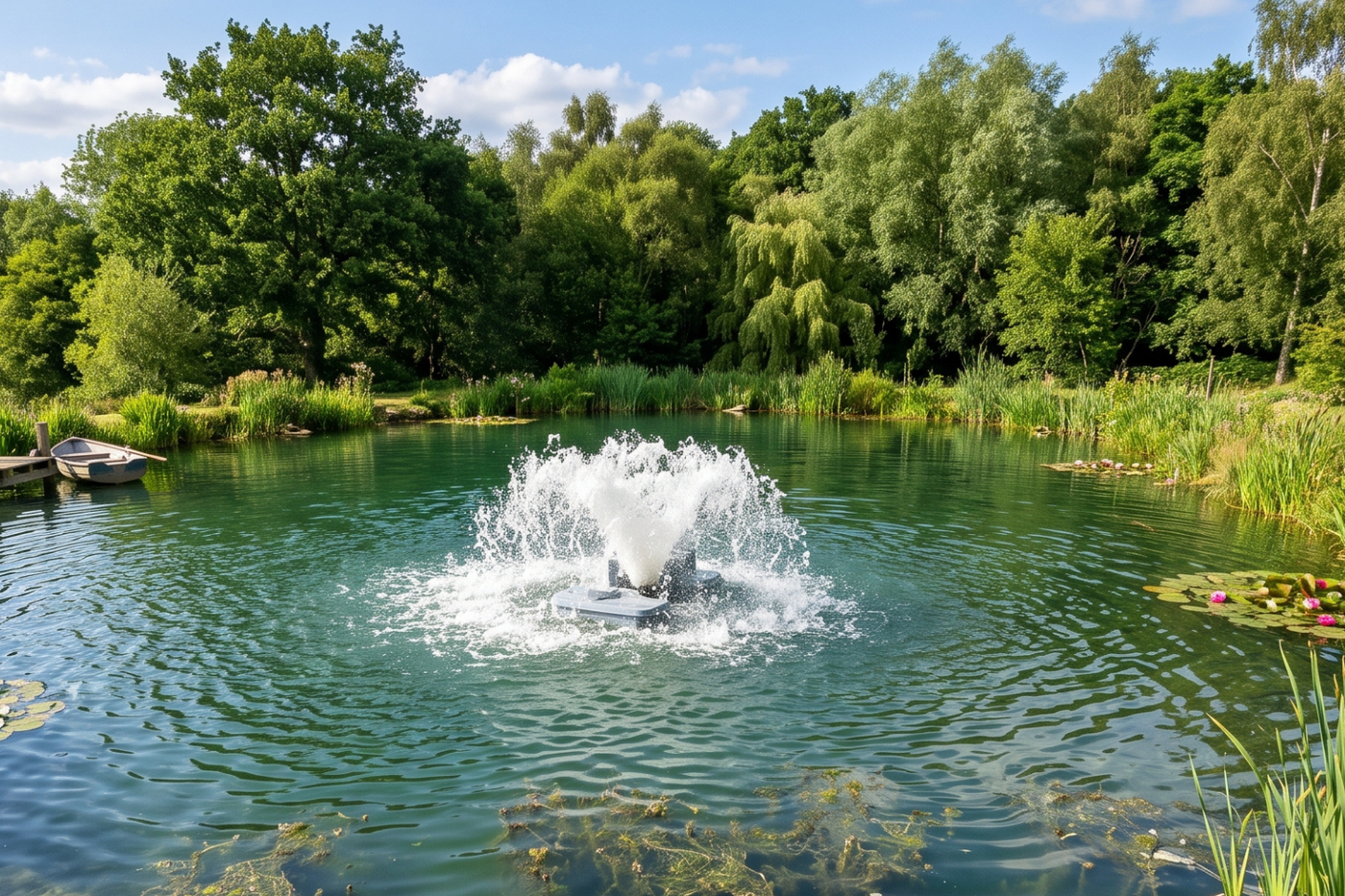

Whether you’re managing a backyard pond or setting an operating schedule for a larger water feature, aerator timing affects how water circulates as oxygen conditions change. Most properly sized electric systems can operate continuously, but the best time of day to run pond aerator equipment on a limited schedule spans dusk through early morning.
Aquatic plants and algae produce oxygen during daylight, and respiration continues after sunset. Dissolved oxygen can fall throughout the night, reaching its lowest level near dawn. Water temperature and biological demand can intensify that decline, so the right schedule depends on your pond conditions and equipment capacity. A suitable schedule should reflect both the daily oxygen cycle and seasonal pond changes.
What Is the Best Time of Day to Run a Pond Aerator?

Nighttime is the best time to run pond aerator equipment when you can’t operate it continuously. Plants and algae stop producing oxygen without sunlight, but respiration continues throughout the pond. Fish, plants, and microorganisms therefore draw from a supply that receives no support from photosynthesis until daylight returns.
The decline becomes more pronounced when warm water or decaying organic material raises oxygen demand. Fish gasping near the surface in the early morning can indicate that the overnight supply has fallen too low. Operating from dusk until after sunrise covers the period with the least natural oxygen production.
Should you run a pond aerator continuously?
Continuous operation suits many ponds because it maintains circulation as oxygen conditions change. A properly sized pond aerator can move water throughout the day, provided its duty rating and output suit the pond.
Some ponds require a more selective approach because their fish populations respond differently to full-depth circulation. Cold-water fish may depend on deeper, cooler habitat during hot weather, and winter aeration can change temperatures beneath ice. Equipment specifications and pond conditions should guide any departure from continuous operation.
Is nighttime aeration enough?
Nighttime operation may suit a lightly stocked pond with moderate oxygen demand. On a restricted schedule, begin around dusk and continue beyond sunrise, so the system covers the entire natural low. A timer provides consistency without accounting for every change in pond conditions.
Early-morning dissolved oxygen readings provide a clearer basis for adjusting runtime. Calm, cloudy weather can reduce photosynthesis while respiration continues, increasing the likelihood of overnight depletion. The best time to run pond aerator equipment may then expand into continuous operation until the pond stabilizes.
How Many Hours a Day Should a Pond Aerator Run?
A properly sized system can generally run 24 hours a day when the manufacturer rates it for continuous duty. If you need to limit operation, prioritize the period from dusk through early morning. Although nighttime aeration can support warm-season pond management, local conditions determine how long that operating window should remain.
Use this hierarchy when setting the daily schedule:
- Continuous operation: Run the system throughout the day when consistent circulation is the goal and the equipment supports that duty cycle.
- Limited operation: Cover the full nighttime period before reducing additional daytime hours.
- Higher demand: Extend operation during warm weather, cloudy conditions, or periods of increased biological activity.
Extending runtime can’t correct an undersized system that lacks the capacity to circulate enough water for the pond. A small pond aerator pump may operate continuously without moving enough water for a deep or heavily stocked pond. Compressor output can also fall when diffuser depth creates more backpressure than the equipment can handle.
Runtime measures how long the system operates, and pond turnover describes water movement through the system. Because no single turnover target suits every pond, general figures can misrepresent the circulation a particular water body requires. Depth, shape, and diffuser performance influence circulation, so the equipment manufacturer should confirm whether a system can meet the intended schedule.
How Should You Start a Pond Aerator After a Long Shutdown?
After prolonged inactivity, restart a bottom-diffused system gradually so the water column can adjust as circulation increases. Warm-season stratification can separate oxygenated surface water from deeper water where decomposition continues. Bottom water may lose its dissolved oxygen because it receives little sunlight or mixing from the surface.
Immediate full-time circulation can move that low-oxygen water through the pond faster than conditions can stabilize—fast enough, in a long-stratified pond, to stress or even kill fish. A cautious pond aeration starting schedule begins with a limited operating period, followed by gradual increases. A common manufacturer-recommended pattern starts at about 30 minutes on the first day, then roughly doubles the runtime each day until continuous operation begins around day seven. The exact increments depend on pond depth, seasonal conditions, and the manufacturer’s instructions.
Observe fish during each stage, pausing the system and requesting a professional water evaluation if they show unusual surface activity or distress. The pond aeration starting schedule should ultimately reach the intended daily runtime without forcing a rapid change in a long-stratified water column.
How Should Your Pond Aerator Schedule Change by Season?
Seasonal schedules follow changes in water temperature, available daylight, and biological activity throughout the year. The same pond aerator may run continuously in summer, follow a cautious restart in spring, and use a shallower diffuser position during winter.
Spring pond aeration
Spring provides an opportunity to inspect the compressor, airline, and diffusers before oxygen demand rises. Restore restricted airflow before following a gradual pond aeration starting schedule for equipment returning after winter shutdown.
As water warms, greater fish activity and faster decomposition can raise oxygen demand, making longer operation appropriate. Ponds that operated throughout winter may need maintenance without a complete restart.
Summer pond aeration
Summer commonly requires the longest operating schedule because warm water holds less dissolved oxygen than cooler water. Fish and microorganisms continue consuming oxygen, while decomposition raises demand and thermal layering can isolate deeper water.
Continuous operation provides steady circulation for properly sized systems throughout changing summer conditions. When you must reduce runtime, nighttime remains the priority because natural oxygen production stops after sunset. The summer schedule should cover dusk, the overnight decline, and the early-morning low point.
Specialized cold-water ponds require additional care because full-depth circulation can reduce the cooler habitat some fish use during hot weather. Water temperature and dissolved oxygen measurements should guide schedule changes for those ponds.
Fall pond aeration
Falling temperatures can mix water layers that remained separated during summer, while leaves add organic material that consumes oxygen during decomposition. Continued circulation supports a gradual transition as surface and deep-water temperatures move closer together.
Rather than choosing a shutdown date from the calendar, base the decision on water temperature, fish activity, and local weather. Inspect the system before freezing weather so winter adjustments don’t interrupt circulation unexpectedly.
Winter pond aeration
Mild climates may allow year-round operation without major seasonal changes to the equipment schedule. In freezing regions, winter aeration focuses on gas exchange while preserving deeper overwintering water.
Place the winter diffuser in shallower water, commonly around 6–8 feet where the pond’s profile allows, rather than at the deepest point. A diffuser left at the lowest spot pulls the pond’s warmest water away from where fish are holding.
Repositioning a diffuser for winter operation can limit deep-water cooling while maintaining the circulation needed for seasonal gas exchange. The suitable position depends on the pond’s depth and fish habitat, while detailed siting belongs in the separate placement guide.
Open water and thin ice around an operating diffuser create a serious hazard, so mark the area and keep people or animals away. Recreational ice requires a separate winter plan because continued aeration weakens the frozen surface.
Should a Pond Fountain Run All the Time?
A pond fountain doesn’t always need continuous operation because its purpose determines the most suitable daily schedule. Its schedule depends on whether the unit mainly provides a visual display, contributes surface aeration, or serves both purposes. Decorative operating hours may follow the times when people view the fountain, and an aeration schedule must reflect the pond’s oxygen demand.
Fountains and bottom-diffused systems perform different jobs within a managed pond or decorative water feature. A decorative fountain sprays relatively small volumes of water for visual effect, while diffused systems circulate water upward through rising bubbles. An aerating fountain sits between the two—it delivers meaningful surface aeration alongside its display—but even then, a daytime-only fountain schedule leaves the overnight oxygen decline unaddressed.
Check the model’s duty rating before leaving it on for extended periods, using its control panel timer to support planned operating hours. Because debris can reduce performance, regular equipment observation and scheduled cleaning can reveal changes before buildup interferes with normal operation.
A fountain pump and pond aerator pump shouldn’t be treated as interchangeable equipment. The pond’s depth and the unit’s intended function determine whether a fountain can provide meaningful aeration.
How Do Solar and Off-Grid Aerators Affect Runtime?
Solar availability and battery capacity determine when an off-grid system can operate. A solar-powered pond aerator may stop after daylight or continue with sufficient storage, so confirm its configuration before planning overnight operation. Pond Haven’s solar pond aerators include both configurations.
Direct-solar operation
A direct-drive solar aerator operates when its panels receive enough sunlight. Cloud cover, shade, and shorter winter days can reduce its daily operating window. A direct-drive solar pond aeration system may therefore stop during the same nighttime period when oxygen production from photosynthesis has ended—exactly when a stocked pond’s oxygen falls fastest.
System sizing must account for achievable operating hours, because a solar-powered pond aerator needs enough output for that window. A direct-drive off-grid pond aerator also needs an operating plan for prolonged cloud cover.
Battery-backup operation
Battery storage can extend a solar aerator schedule beyond daylight, but runtime depends on stored capacity and equipment demand. A battery-supported solar pond aeration system also needs enough daylight to replenish the energy used overnight.
Review the expected runtime under ordinary and low-sun conditions before relying on battery support for overnight operation. An off-grid aerator serving a stocked pond should not rely on a general battery label: compressor draw, usable battery capacity, and seasonal charging conditions determine how long it can continue.
Evaluate any solar aerator by its configuration
A brand name or product label alone doesn’t show whether a particular solar aerator can operate after sunset. Product specifications must confirm the system’s power arrangement and expected runtime under the conditions where it will operate. A daylight-only solar aerator follows a different schedule from a battery-backed solar pond aeration system.
A second off-grid unit or another backup source may provide added coverage where uninterrupted operation supports fish. The final setup should reflect pond demand rather than ideal sunlight assumptions.
How Much Does It Cost to Run a Pond Aerator?
Operating costs depend on equipment wattage, daily runtime, and the local electricity rate. Use this calculation to estimate the daily amount:
- Daily cost \= watts ÷ 1,000 × daily operating hours × electricity rate per kilowatt-hour
A hypothetical 200-watt system running for 24 hours uses 4.8 kilowatt-hours per day. At an assumed rate of $0.16 per kilowatt-hour, continuous operation would cost about $0.77 per day. Running the same equipment for 12 hours would use 2.4 kilowatt-hours and cost about $0.38 per day.
You can find the equipment wattage on its product label or published specification sheet before calculating operating cost. Amperage alone may not provide a reliable wattage figure, because other electrical characteristics affect actual power use. The pond aerator pump and any cabinet equipment can also contribute to total consumption.
Monthly estimates should use the rate on your utility bill rather than a national figure. Weather, timer settings, and equipment condition can change energy use, while a shorter schedule must still meet the pond’s circulation requirements.
When Should You Change the Aeration Schedule?

Change the schedule when pond conditions shift or the current runtime no longer maintains suitable circulation. The best time to run pond aerator equipment may remain overnight, but the system may need additional daytime hours as demand rises.
Watch for conditions that support a schedule review:
- Early-morning fish behavior: Fish gathering or gasping near the surface may indicate low dissolved oxygen.
- Lower dawn readings: Dissolved oxygen measurements can show whether the overnight schedule provides enough support.
- Changing weather: Hot, calm, or cloudy conditions can reduce oxygen availability or natural production.
- Heavier organic load: Algae, plants, and decomposing material can increase oxygen consumption.
- Reduced airflow: Restricted tubing or dirty diffusers can lower output even when runtime remains unchanged.
- Winter ice: Open-water patterns may require a different diffuser position or operating period.
Longer operation can’t correct blocked airflow or unsuitable equipment that limits circulation throughout the intended area. Inspect the system’s components before assuming that the existing operating schedule caused the change. A properly maintained pond aerator still needs enough capacity for the pond it serves.
Find an Aerator That Fits Your Operating Schedule
Aerator capacity determines whether a proposed schedule can circulate enough water for your pond’s conditions. Pond acreage and depth shape the initial requirements, and fish population and available power refine the final system choice. Pond Haven carries continuous-duty diffused systems and surface aerators from Scott Aerator, Kasco Marine, EasyPro, and other trusted brands, and the team can help match one to your intended schedule.
For an economical continuous-duty example, the EasyPro PA34 Pond Aerator is built for 24/7 operation, with a manufacturer-estimated operating cost of $0.40 per 24 hours at $0.09 per kilowatt-hour. Actual costs vary with local electricity rates, operating conditions, and runtime. Browse the pond aerator collection by acreage, depth, and power source, or contact Pond Haven with your pond’s details and planned schedule for equipment guidance.
FAQs on When Should You Run a Pond Aerator?
Should I run my pond aerator 24/7?
You can run many continuous-duty systems 24 hours a day when their capacity suits the pond—and steady operation is easier on a continuous-duty motor than frequent stop-start cycling. Winter conditions and temperature-sensitive fish may require a different schedule or diffuser position.
Is it better to aerate a pond during the day or at night?
Nighttime takes priority when you must limit operation, because natural oxygen production stops after the available sunlight disappears. The best time of day to run pond aerator equipment covers the period after photosynthesis stops and continues through the early morning oxygen low. Daytime-only schedules leave the pond unsupported during exactly the hours oxygen falls.
When should I turn off my pond aerator?
Turn it off when seasonal management or manufacturer instructions call for shutdown. Climate, fish habitat, and water conditions provide better guidance than a single calendar date.
Can I turn off my pond aerator during winter?
Some ponds can remain aerated through winter, and others use seasonal shutdown. Freezing ponds may use a diffuser around 6–8 feet where conditions allow, keeping it away from the deepest overwintering area.
Does continuous operation damage a pond aerator pump?
A continuous-duty pond aerator pump is designed for extended operation within its published limits. Follow the manufacturer’s maintenance schedule and investigate unusual pressure, airflow, or operating noise.
Can you run a pond aerator too long?
Runtime can become unsuitable when the system is oversized or full-depth mixing disrupts cold-water habitat. System capacity and pond conditions matter more than a universal hourly limit.
Back to Top: When Should You Run a Pond Aerator?