
Pond Turnover: Causes and Science Explained
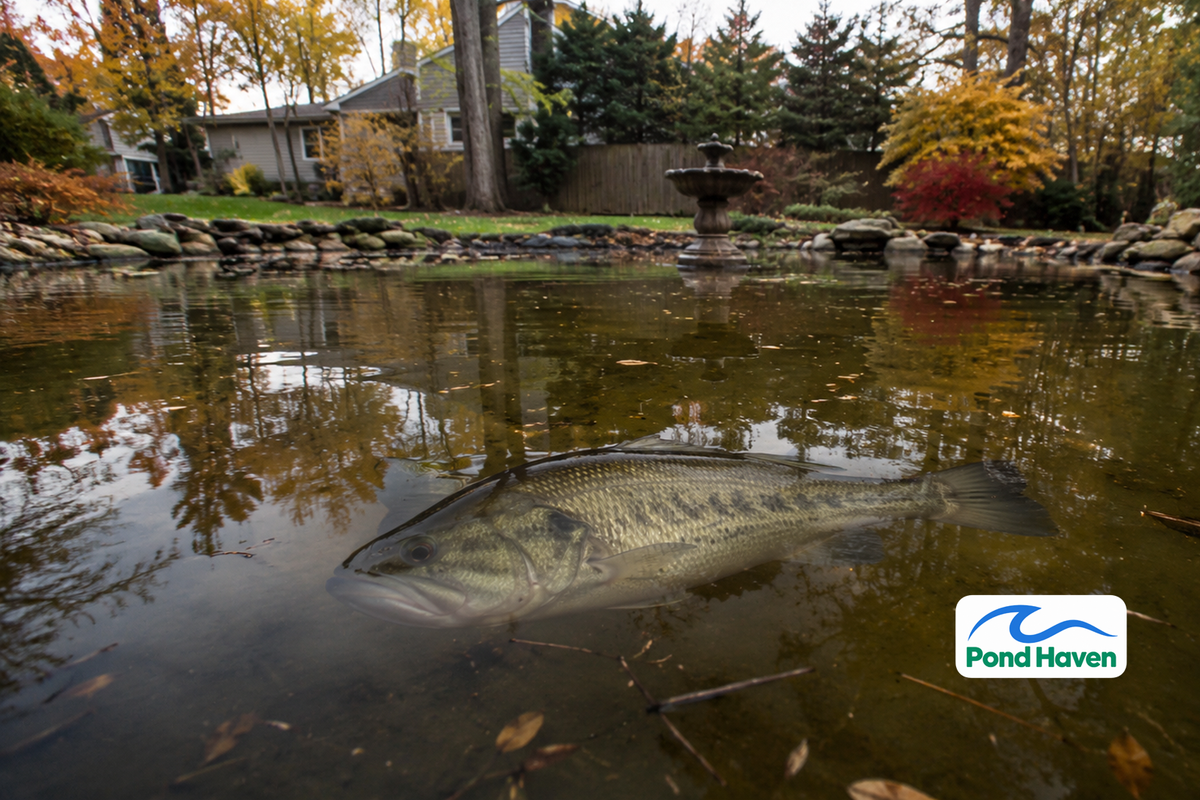

If you woke up to find your pond water suddenly murky, smelling like rotten eggs, and your fish gasping at the surface, you are likely dealing with pond turnover. It is one of the most common causes of sudden fish kills in backyard ponds and small lakes. The good news? It is preventable.
- Pond turnover happens when stratified water layers mix, bringing oxygen-depleted bottom water to the surface.
- It is most common in spring and fall, but cold rain or strong winds can trigger it any time of year.
- Bottom diffused aeration run continuously is the most effective prevention.
- Signs include sudden murky water, a sulfur smell, and fish gasping at the surface at dawn.
- If turnover is happening now, run aeration, stop feeding fish, and expect recovery in 3-7 days.
What Is Pond Turnover?
Pond turnover is the rapid mixing of a pond's water layers. To understand it, you need to know how a pond behaves in summer.
During warm months, ponds deeper than about 8-10 feet stratify into three layers:
- Epilimnion: the warm, oxygen-rich surface layer
- Thermocline: a thin middle band where temperature drops sharply
- Hypolimnion: the cool, dense bottom layer, often starved of oxygen
This layering happens because warm water is lighter than cool water. The warm surface water floats on top and stays there all summer. Meanwhile, the bottom layer sits in the dark, receiving no oxygen from the surface. Bacteria and decomposing organic matter consume what little oxygen remains, often driving it below 2 mg/L, sometimes to nearly 0 mg/L.
Turnover happens when something breaks that layering apart. The cool, oxygen-poor bottom water rises and mixes with the entire water column. In a matter of hours, oxygen levels across the whole pond can crash.
What Causes a Pond to Turn Over?
Temperature-Driven Turnover (Spring and Fall)
The most common triggers are seasonal temperature changes.
Spring turnover: When ice melts, the surface water sits at 32-39°F (0-4°C). Water is densest at 39°F (4°C), so as the surface warms toward that temperature, it becomes heavier than the bottom water and sinks. This sets off a full mixing event.
Fall turnover: The reverse happens in autumn. As air temperatures drop, the warm surface layer cools and becomes denser than the warmer water below it. That dense surface water sinks, and the pond mixes again.
Both events are natural and happen in most ponds deeper than 8-10 feet across USDA zones with distinct seasons. The mixing itself is not the problem. The problem is that the mixing brings up water with almost no dissolved oxygen.
Weather Events That Trigger Sudden Turnover
Turnover does not wait for the calendar. Sudden weather can trigger it at any time.
- Cold rain: A heavy, cold rain cools the surface water rapidly. If the temperature difference between the surface and bottom becomes great enough, the layers mix.
- Strong winds: Sustained winds over open water push surface water across the pond, creating circulation that can break the thermocline. This is more likely on larger ponds and lakes with long fetch.
- Rapid temperature drops: A 10-15°F drop in air temperature over 24-48 hours can cool the surface enough to initiate turnover, even in midsummer.
These events are why you can lose fish in July, not just in April and October.
Shallow Pond Turnover
Ponds under 6 feet deep usually do not stratify strongly. The water column is shallow enough that wind and normal circulation keep it mixed. But shallow ponds are not immune.
Heavy rain or a strong wind event can still stir up bottom sediments and trigger a partial turnover. And because shallow ponds hold less total water volume, they have less buffer. A sudden oxygen drop hits them harder and faster than a deeper pond.

How Does Pond Turnover Affect Oxygen Levels?
The numbers tell the story.
In a stratified pond, the bottom layer often holds dissolved oxygen below 2 mg/L. In ponds with heavy organic buildup, it can sit near 0 mg/L for months. When turnover mixes that water upward, oxygen levels across the entire pond can drop below 3 mg/L within hours.
Here is what those numbers mean for your fish:
| Dissolved Oxygen Level | Effect on Fish |
|---|---|
| Above 5 mg/L | Normal, healthy range |
| 3-5 mg/L | Stress; fish become lethargic, stop feeding |
| 2-3 mg/L | Severe stress; fish gather at the surface |
| Below 2 mg/L | Fish kills begin for most species |
Largemouth bass (Micropterus salmoides) and bluegill (Lepomis macrochirus) are the most common pond species affected in the US. Larger fish die first because they need more oxygen per pound of body weight. That is why a turnover kill often takes the biggest bass in the pond while smaller fish survive.
What Are the Signs of Pond Turnover?
Turnover is not silent. If you know what to look for, you can catch it early.
- Sudden drop in water clarity. The water turns murky or brown as bottom sediments and organic matter mix upward.
- Floating debris. Leaves, twigs, and partially decomposed organic matter rise from the bottom.
- A sulfur or rotten egg smell. This is hydrogen sulfide, a gas produced by bacteria in oxygen-free bottom sediments. When it reaches the surface, you will smell it.
- Fish gasping at the surface. Fish gather at the surface and appear to be gulping air, especially in the early morning when oxygen levels are at their daily low.
- Dead fish. Larger fish typically die first.

How to Prevent Pond Turnover
Prevention is straightforward: keep the water column mixed so stratification never forms. If the pond never stratifies, there is no oxygen-depleted bottom layer to turn over.
Aeration Systems
Bottom diffused aeration is the most effective prevention. An air compressor pushes air through tubing to diffusers placed on the pond bottom. Rising bubbles carry oxygen-poor bottom water to the surface, where it absorbs oxygen. Run continuously, this keeps the entire water column mixed year-round.
Sizing guidelines from Pond Haven's aeration product line:
- Diffusers: 1 diffuser per acre of pond surface, placed at the deepest point
- Compressor: 1/4 HP to 1 HP, depending on pond depth and surface area
- Runtime: Run continuously through summer and winter
Browse Pond Haven's aeration systems to find the right setup for your pond size and depth.
If your pond has been stratified all summer, do not turn on a full-size aeration system at full capacity. Start with short cycles over several days to mix the layers slowly and avoid shocking the fish.
Surface Fountains
Fountains are popular and visually appealing, but they are not a substitute for bottom aeration. A fountain mixes only the upper few feet of water. It adds oxygen to the surface layer but does not break the thermocline. The cool, oxygen-poor bottom water stays put.
Use a fountain as a supplement to bottom aeration, not a replacement. Check Pond Haven's fountain selection if you want both aesthetics and surface oxygenation.
De-Icers (Winter Only)
De-icers keep a small area of open water in winter. They do not prevent spring turnover, but they help maintain oxygen exchange during ice cover. This reduces the severity of the oxygen crash that can follow ice-out.
Sizing guidelines from Pond Haven's de-icer line:
- Wattage: 750-1,500 watts for ponds up to 1 acre
- Placement: Near the deepest point for best circulation
View Pond Haven's de-icer options for winter protection.
What to Do If Your Pond Is Turning Over Right Now
If you are reading this because your pond smells like sulfur and fish are at the surface, here is your action plan.
- Run any aeration equipment you have immediately. Even a fountain that only mixes surface water helps.
- Stop feeding fish. They will not eat during an oxygen crash, and uneaten food adds to the oxygen demand.
- Do not add chemical treatments. Algaecides, dyes, and other treatments stress fish further during turnover. Wait until oxygen levels recover.
- Expect recovery in 3-7 days. As water temperatures equalize, oxygen levels will gradually climb back to normal.
- Plan for prevention before the next seasonal change. Install bottom aeration before the next spring or fall turnover window.
What Helps During Turnover
- Running bottom aeration or any mixing equipment
- Stopping fish feeding until oxygen recovers
- Waiting 3-7 days for natural recovery
What Hurts During Turnover
- Adding chemical treatments or algaecides
- Feeding fish during the oxygen crash
- Turning on full aeration suddenly on a stratified pond

Pond Turnover vs. Summer Fish Kills: What's the Difference?
Many pond owners confuse turnover with summer fish kills. They have different causes and need different prevention strategies.
| Factor | Pond Turnover | Summer Fish Kill |
|---|---|---|
| Timing | Spring and fall, or after cold rain/wind | Mid-summer, during hot calm weather |
| Trigger | Temperature-driven density mixing | Oxygen depletion from algae die-off and decomposition |
| Water temperature | Rapid change, often 10°F+ | Stable, warm (75-85°F) |
| Oxygen pattern | Sudden drop across all depths | Gradual decline, worst at night |
| Prevention | Year-round aeration | Aeration plus algae management |
Summer fish kills happen when a heavy algae bloom dies off and bacteria decompose it, consuming oxygen faster than it can be replaced. The water stays warm and calm, so there is little mixing to replenish oxygen. The result is a slow oxygen decline that bottoms out at night.
Turnover, by contrast, is a sudden event. The oxygen crash happens in hours, not days.
For more on keeping oxygen levels stable through the hottest months, see Pond Haven's guide to summer pond oxygen management.
Frequently Asked Questions
How long does pond turnover last?
Most turnover events last 3-7 days. The mixing itself can happen in a matter of hours, but oxygen levels take several days to recover as the water column equalizes. In severe cases, especially in shallow ponds, recovery can take up to two weeks.
Can pond turnover kill fish?
Yes. When turnover brings oxygen-depleted bottom water to the surface, dissolved oxygen across the pond can drop below 2 mg/L, which is lethal for most fish species. Largemouth bass and bluegill are the most commonly affected. Larger fish typically die first because they need more oxygen.
How deep does a pond need to be to turn over?
Ponds deeper than 8-10 feet are most likely to stratify and experience full turnover. Ponds under 6 feet usually stay mixed naturally. However, shallow ponds can still experience partial turnover after heavy rain or strong wind, and they are more vulnerable to oxygen depletion because they hold less water volume.
Will a fountain prevent pond turnover?
No. A fountain mixes only the upper few feet of water and does not break the thermocline. It adds oxygen to the surface layer but leaves the oxygen-poor bottom water undisturbed. Bottom diffused aeration is required to prevent stratification and turnover.
When is the most dangerous time for pond turnover?
Spring and fall are the highest-risk windows because seasonal temperature changes naturally trigger mixing. However, a cold rain or a 10-15°F temperature drop can cause turnover at any time of year. Ponds in northern climates face the highest risk at ice-out in early spring.