

External Pond Pumps


Guide & FAQ
How to choose the right external pond pump
- 3 min overview
- Types, sizing & power
- 5 common questions
Why run an external pump?
An external pump runs dry outside the water and pushes pond water through filters, skimmers, and features. Because the motor sits outside the pond, it is serviced without reaching into the water and helps keep motor warmth out of the pond during hot weather.
External pumps are a common choice for:
- koi ponds that run circulation around the clock
- systems feeding pressurized bead filters or UV clarifiers
- long pipe runs and elevated waterfalls
- ponds where routine service should not involve reaching into the water
Variable-speed pump or pre-plumbed skid?
Two formats cover most setups here, and each suits a different job.
Variable-speed external pumps
A variable-speed pump lets you dial flow up or down to suit the task. The GCTek WunderMax uses a toggle switch with 3 speeds and was designed with koi ponds in mind.
Choose a variable-speed pump when you backwash a bead filter, want to tune a stream or waterfall, or would rather turn flow down for winter instead of shutting the water off.
Pre-plumbed filtration skids
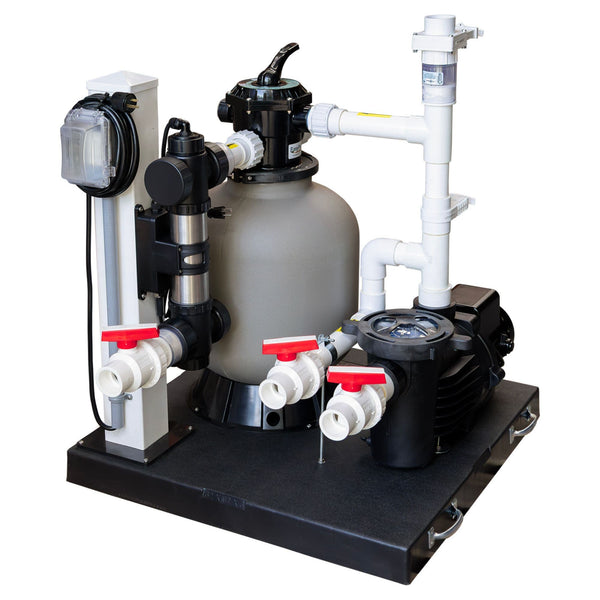
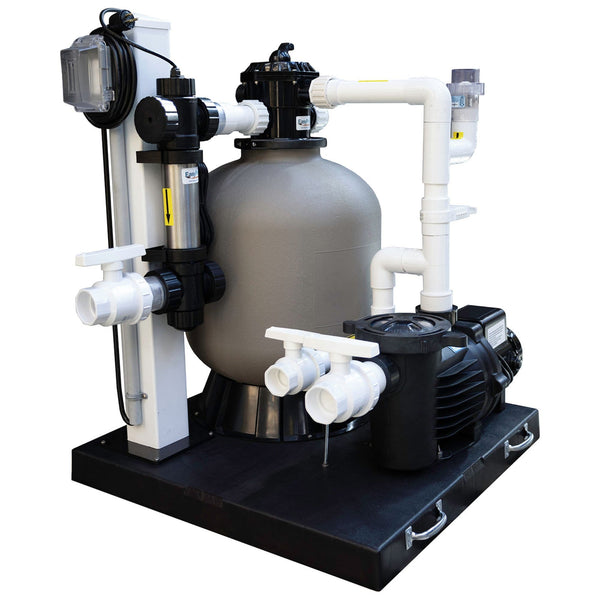
The EasyPro Skid Mount system arrives pre-assembled and pre-plumbed with an external pump, mechanical and biological filtration, a UV clarifier, a valved bypass, and a control head on one skid. It is rated for ponds up to 10,000 gallons.
Choose a skid system when you want the pump, filter, and plumbing worked out for you rather than selecting and connecting each part separately.
Filters and packages that pair with a pump
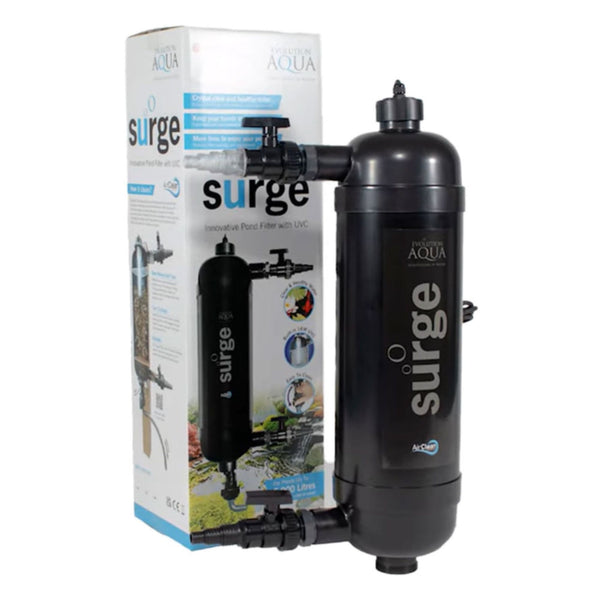
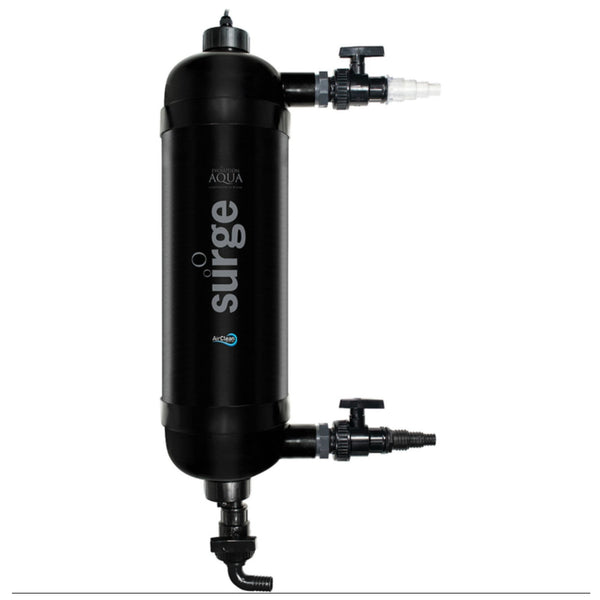
Some listings in this grid are not pumps by themselves. The Evolution Aqua Surge Filter is a standalone external filter with an 18-Watt UVC and K+ Media, meant to pair with a pump you select. The Aquascape Recreational Pond Kit 19x24 is a full swim pond package with a 10' x 22' wetland filter and its own circulation system.
If the pump will live in the water rather than beside it, compare our pond pumps instead. For spray patterns and display, see our pond fountains.
How to choose the right size and model
Flow is what you are really buying, and it has to hold up under load.
Total dynamic head
Pump output falls as resistance rises. Total dynamic head is the vertical lift plus the friction from pipe, fittings, bends, and filters between the pump and where water returns. Compare flow at that figure, not at open discharge.
Turnover
Many koi keepers look for a full pond turnover roughly once every one to two hours. Heavier fish loads lean toward the faster end.
Speed control and strainer capacity
Multi-speed control is worth having if you backwash filters or run a waterfall. A large strainer basket also matters: the WunderMax basket stands over 12 inches tall, so it holds more debris between cleanings and shields the impeller.
Installation, power, and placement
An external pump needs a dry, level spot such as a pit, vault, or shed that stays clear of flooding.
- Most external pumps perform best with flooded suction, meaning the pump sits below the pond's water level so water feeds it naturally.
- Above the water level, you will generally need a self-priming pump pot and a check valve to hold prime.
- Check the power available at the pump location before ordering. The EasyPro skid includes a 115V power outlet post.
- Match pipe size to the pump's intake and discharge ports to keep flow smooth and avoid starving the pump.
Not sure which one you need?
Send PondHaven your pond volume, the distance and lift from the pump to the return, and what the pump needs to feed (filter, waterfall, or both). We can help narrow it to the right pump or system.
No page change, it expands right here
Frequently asked questions
Quick answers to the most common questions about our external pond pumps.
How do I calculate total dynamic head when choosing an external pump?
Total dynamic head adds the vertical lift from the water surface to the highest return plus the friction loss from pipe, bends, fittings, and filters. Add both figures and compare pump flow at that total, since flow drops as head rises.
Does an external pump need to sit below the pond water level?
Most external pumps are happiest with flooded suction, which means the pump sits below the pond's water level and fills on its own. If it must sit above the water, plan for a self-priming pump pot and a check valve to hold prime.
What does a variable-speed external pump do that a single-speed one does not?
A variable-speed pump lets you change flow for the task at hand, such as running high to backwash a bead filter and low for daily circulation or winter operation. A single-speed pump runs at one fixed flow all the time.
Do I need a priming pot or a check valve?
Only if the pump sits above the pond's water level. With flooded suction, the intake stays full of water on its own, so a priming pot and check valve are usually not needed.
How do I winterize an external pond pump?
Shut it down, drain the pump, the volute, and any exposed plumbing so nothing holds water, and store the pump somewhere that stays above freezing. Keep it dry until spring startup.
Need expert help finding the right setup?
Contact Pond Haven Support