

Outdoor Fountains













Guide & FAQ
How to choose a garden fountain
- 4 min overview
- Basin type, sound & materials
- 5 common questions
Why add a fountain to a garden?
Moving water gives an outdoor space a sound and a visual anchor. Most people shop for one of three reasons:
- softening traffic and neighbor noise with steady water sound
- giving a bed, courtyard, or entry walk a focal point
- drawing songbirds and pollinators to moving water
A fountain can support those goals, but it is a small water feature rather than a fix for anything else in the yard. It works best as part of a planting and seating plan.
The main types of garden fountain
PondHaven carries five broad types. The material and the water movement are what separate them:
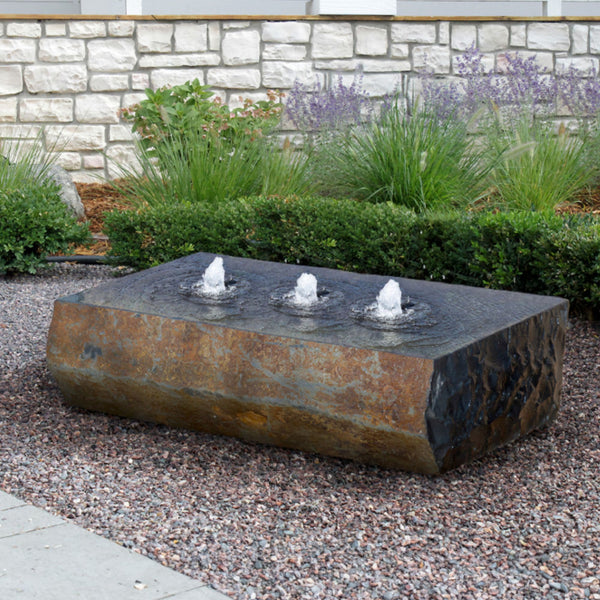
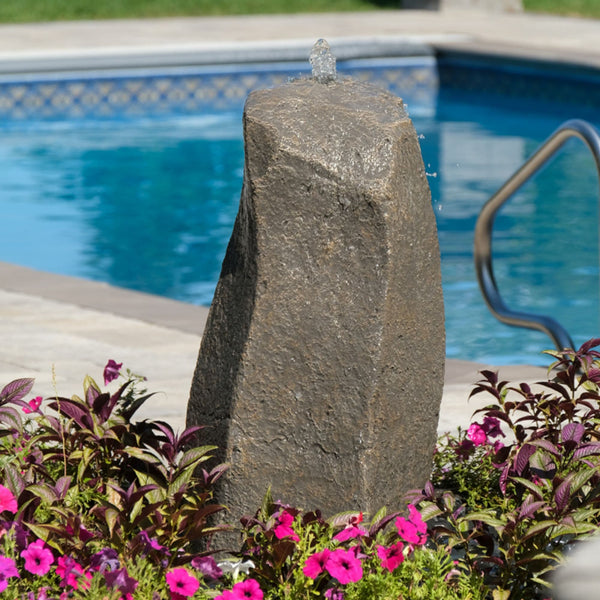
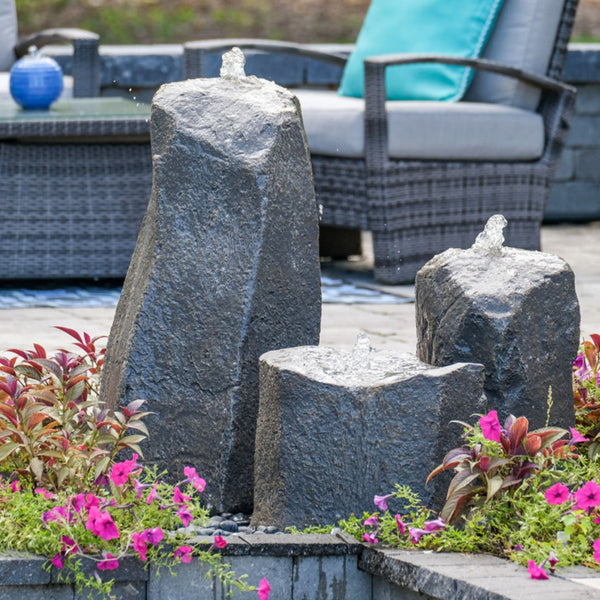
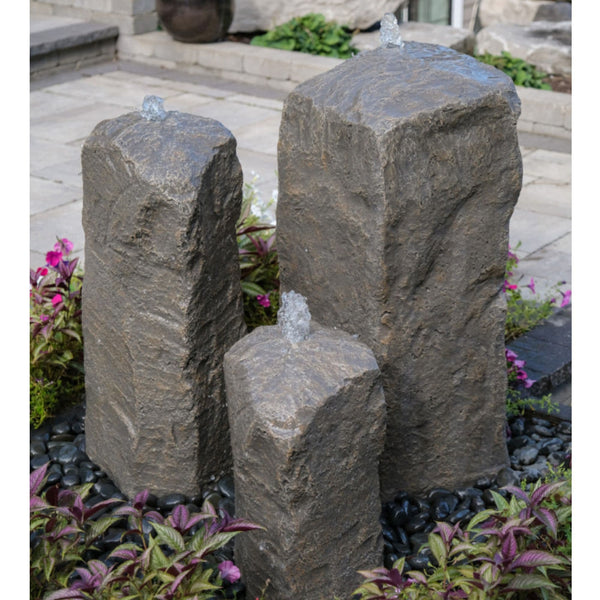
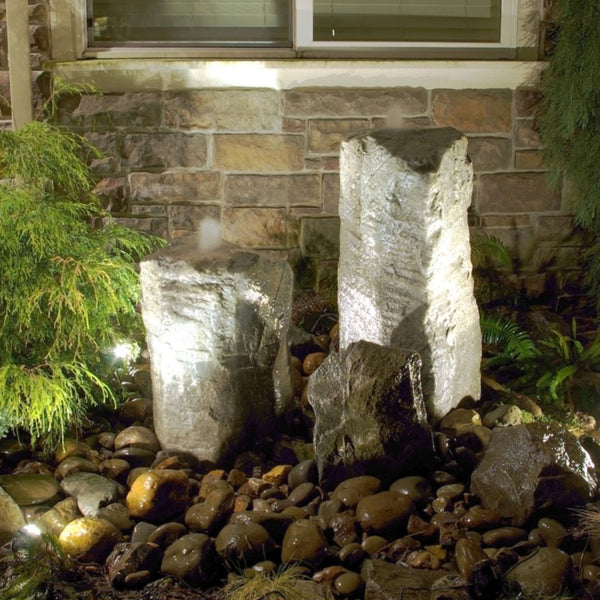
- natural stone and boulder bubblers
- modern geometric and sphere fountains
- tiered and cascade fountains
- statue and wall fountains
- sugar kettles and weathered metal
Natural stone and boulder bubblers
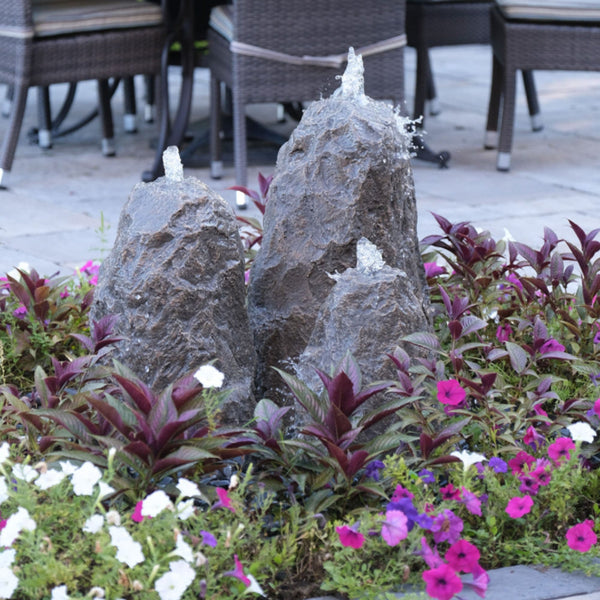
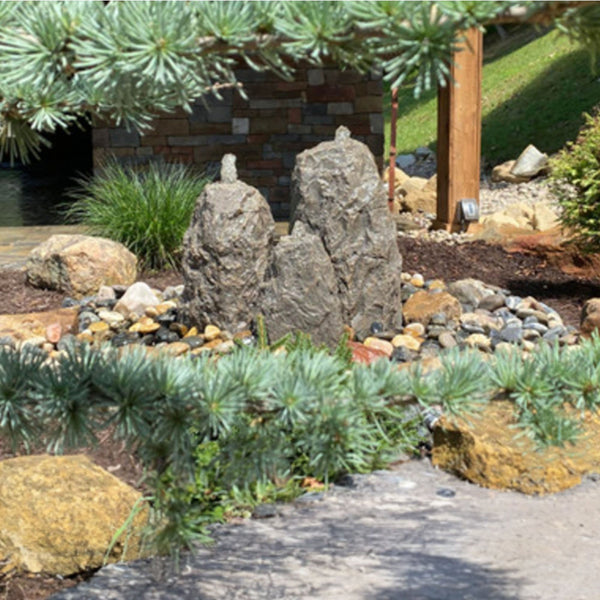
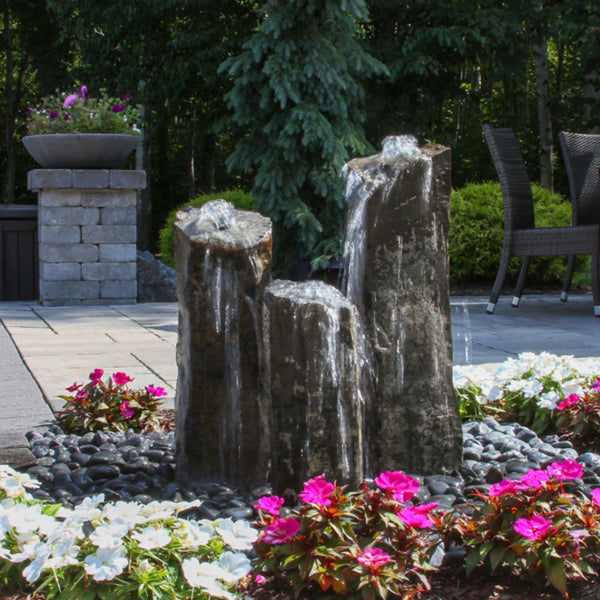
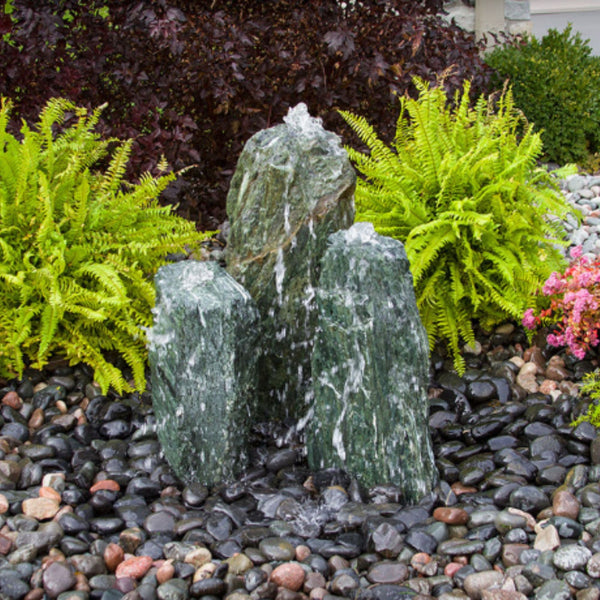
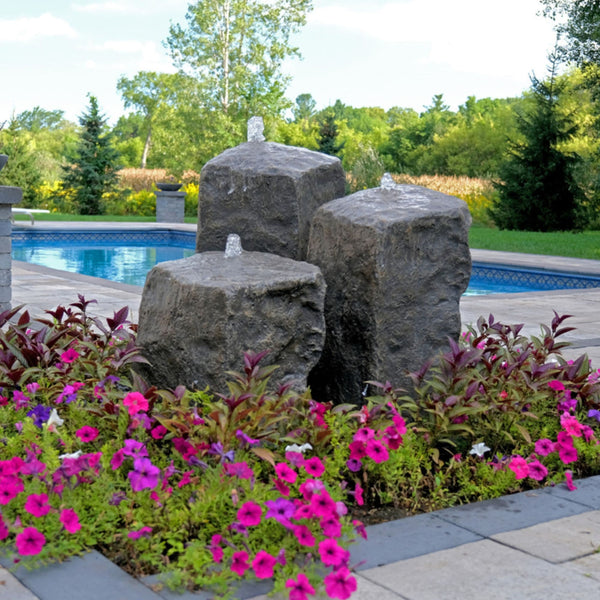
Drilled basalt columns, raw and polished granite, and molded rock shapes where water bubbles at the top and runs down the natural texture. Blue Thumb makes these in real basalt and granite as well as GFRC, which stands for glass fiber reinforced concrete.
Choose a boulder or column bubbler when the planting is naturalistic and you want a soft gurgle with little splash, close to a seating area.
Modern geometric and sphere fountains
Cast pedestals, cubes, and orbs, such as the GIST Oblique, Rubix, Linear, Vortex, and Ball designs. Water usually sheets over flat faces or wraps a sphere.
Choose a geometric piece when the hardscape is modern and you want clean lines. For these in one place, see Modern Outdoor Fountains.
Tiered and cascade fountains
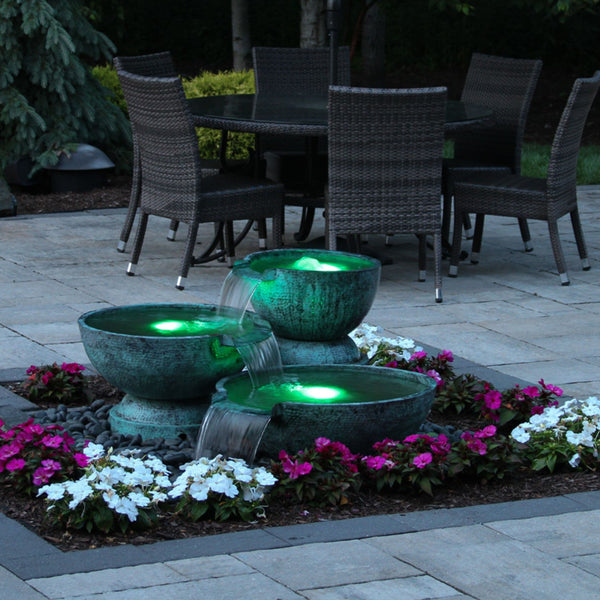
Water spills over stacked levels, bowls, or a spillway edge. GIST builds tiered geometric designs, and Blue Thumb offers spillway stone bowls.
Choose tiered or spillway work when you want more visible movement and more sound, particularly to help cover street noise at the edge of a property.
Statue and wall fountains
Sculptural faces and figures, including the GIST Buddha Head and Lion Wall fountains, with some designed to sit against a wall.
Choose a wall or statue fountain when the footprint is narrow, such as a wall line, a boundary bed, or a courtyard corner.
Sugar kettles and weathered metal
Powder-coated cast iron sugar kettles and Corten steel urns, including the Blue Thumb Rustic Sugar Kettle and Triple Corten Steel models, which take on a weathered surface over time.
Choose cast iron or Corten steel when the setting is farmhouse, rustic, or historic and a warm aged finish suits it.
We do not stock lightweight tabletop ceramic pieces or plastic spitters here. For help matching a type to your space, see How to Choose an Outdoor Fountain.
How to choose the right size and model
Four things decide the right model:
- how the fountain holds its water, as a basin or a disappearing design
- how much sound you want, from a quiet bubbler to a loud spillway
- scale, both height and footprint
- material and weight, which affect the base and the unloading
Basin or disappearing
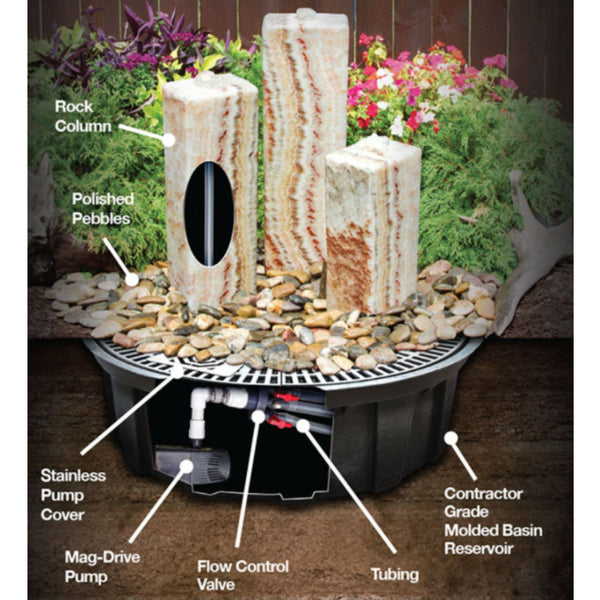
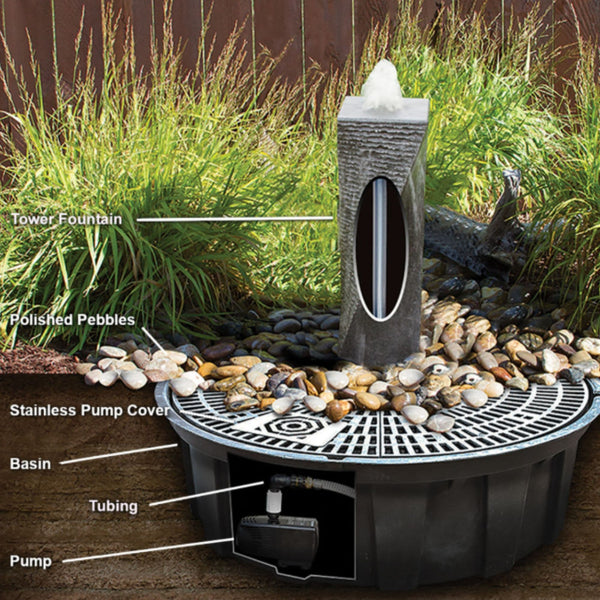
Fountains with an integrated basin sit on flat, level hardscape and hold their own water. In our filters, these carry the label Has Pool/Basin.
Models labeled Doesn't Have Pool/Basin are disappearing designs. The water reservoir sits below ground, usually under a bed of gravel, so the stone or sculpture is all you see.
Choose a self-contained basin for a patio, deck, or paved corner. Choose a disappearing design for a planting bed or lawn where you want the plumbing hidden.
Sound level
Our filters rate sound as Bubbler, Soft, Medium, and Loud, which is the quickest way to sort the grid.
Bubbling columns give a low, steady gurgle that sits well near a table or chairs. Tiered drops and spillways move more water and make more noise, which is useful near a road.
Scale and material
Heights run from compact pieces under 24 inches up to the 9-foot GIST I With Ball fountain, so the grid covers small nooks and estate entries alike. Check the footprint as well as the height before you narrow it down.
Real basalt, granite, and cast iron hold up well outdoors but carry real weight. GFRC gives the look and texture of boulder rock at a lower handling weight.
Placement, power and seasonal care
A few practical points affect which model will work on your site.
- Surface. Self-contained basins want a level, compacted surface such as pavers or concrete. Disappearing designs need excavation for the underground reservoir.
- Power. These fountains run on a recirculating electric pump, so plan the site around an outdoor GFCI outlet and keep the piece within cord reach of it.
- Water. Evaporation and wind drift lower the level over time, so keep a garden hose route to the fountain for regular top-offs.
- Weight and delivery. Listed weights vary by model. The GIST Lady is documented at 270 pounds and the GIST I at 396 pounds, and solid stone and cast iron pieces are heavy in the same way. Check the listed weight for the piece you want, confirm the surface can carry it, and plan for help at offloading.
- Cold weather. Before the first hard freeze, drain the pump and reservoir and cover the piece. Cast iron, Corten steel, and stone weather the cold fine once the water is out.
Not sure which one you need?
Send PondHaven four things and we can point you to the right models: your surface type (paved or planting bed), the space you have open, how much sound you want near your seating, and how close the nearest outdoor outlet is.
No page change, it expands right here
Frequently asked questions
Quick answers to the most common questions about our outdoor fountains.
Do garden fountains need a permanent water line?
No. A garden fountain recirculates the same water from its own reservoir, so the only regular task is topping it off with a garden hose as evaporation lowers the level.
What is the difference between a fountain with a basin and one that does not have one?
A fountain with an integrated basin holds its water above ground and sits on a flat, level surface. A model marked Doesn't Have Pool/Basin in our filters sends water into a reservoir buried below ground, usually under gravel, so nothing shows but the fountain itself.
Can these fountains stay outside during freezing weather?
Not without some preparation first. Drain the pump and reservoir before the first hard freeze and cover the piece. Stone, cast iron, and Corten steel handle cold weather well once standing water is removed.
How do I choose between a quiet bubbler and a louder cascading fountain?
Choose a bubbling stone or column when you want gentle sound next to seating, and a tiered or spillway design when you want louder water to help cover traffic or neighbor noise.
Can a patio or deck hold a heavy stone fountain?
Check the surface first, because solid stone and cast iron pieces weigh hundreds of pounds. Listed weights vary by model, with the GIST Lady at 270 pounds and the GIST I at 396 pounds, so confirm the deck or paver base can carry the load and arrange help at delivery.
Need expert help finding the right setup?
Contact Pond Haven Support