

Koi Pond Kits


Guide & FAQ
How to choose the right koi pond kit
- 3 min overview
- Kit types, depth & filtration
- 5 common questions
Why a koi pond needs its own setup
Koi grow large and produce more waste than goldfish, so the filter has to manage a heavier biological load than a typical garden pond asks for. The pond itself also needs enough depth for fish to hold over winter and stay out of reach of predators.
A pond built for koi usually leans on three things:
- biological filtration sized for the fish load as well as the water volume
- depth for fish to overwinter in, with 3 feet or more as a common guideline
- extra oxygen in warm weather, when water holds less of it
A waterfall moves and aerates water near the surface. For deeper ponds or heavier stocking, a bottom-diffused aeration system adds circulation lower in the water column.
Which type do you need?
A kit is what builds the pond. Liner rolls and aeration systems cover jobs a kit does not, so they are usually additions rather than substitutes.
Complete pond kits
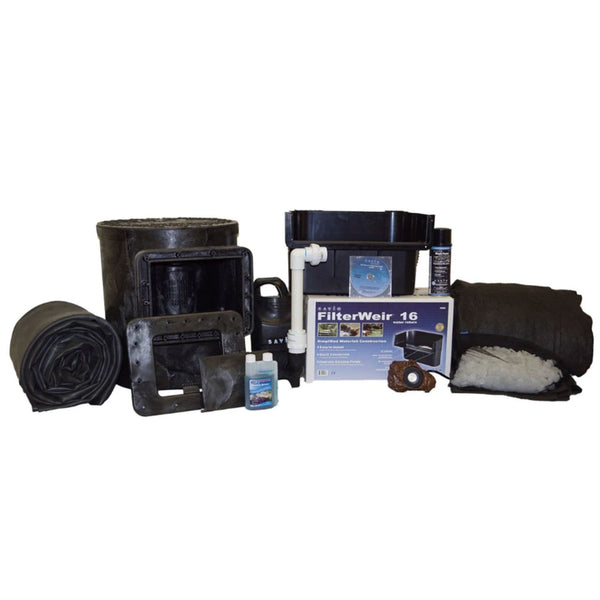
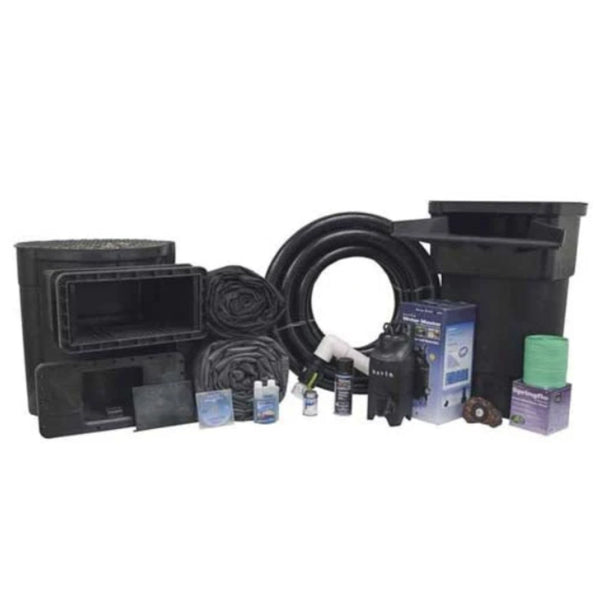
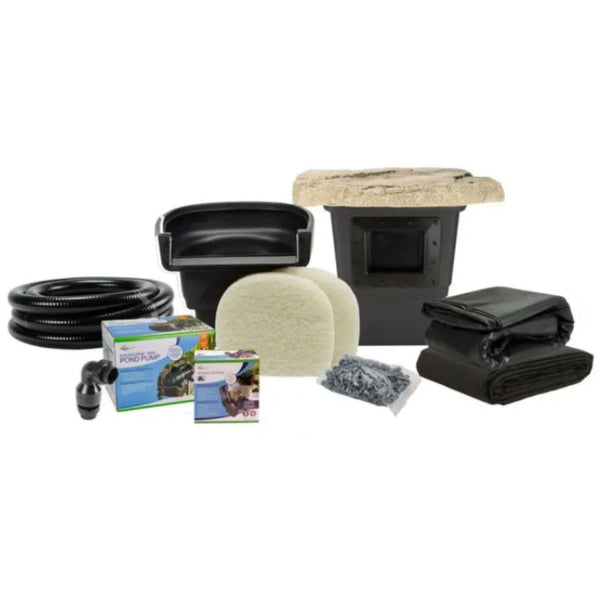
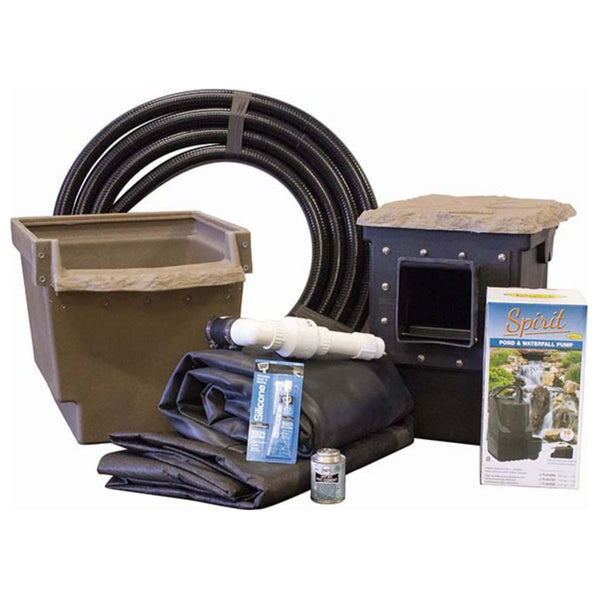
Choose a complete kit when you want the liner, skimmer, waterfall filter, pump, and plumbing matched in one package. The EasyPro Mini, Small, and Medium kits and the Blue Thumb Elite kit each bundle the pond components, so you are not sizing a pump against a filter yourself.
Standalone EPDM liner rolls
Choose an EasyPro DuraLiner roll when your pond shape, shelves, or streambeds fall outside what a kit liner covers. It is 45-mil EPDM rubber that flexes around curves and shelves and resists punctures and UV.
High-pressure aeration systems
Choose an EasyPro rocking piston system when the pond is deeper than normal, the compressor sits a long way from the diffusers, or the fish load is heavy. It adds oxygen and circulation to a pond that is already built, so it works alongside a kit rather than in place of one. The 2 hp SRC2002 compressor feeds 6 or 10 diffusers, with fittings for 3/8-inch or 1/2-inch Quick Sink tubing.
If you are building a lighter decorative pond without koi, the pond kits page covers more general-purpose options.
How to choose the right size or model
Start with the fish and the space. Four things decide the right kit.
- Fish load and filtration: koi waste puts most of the work on the skimmer and the biological waterfall filter.
- Footprint and depth: the liner sets how large and how deep you can build. Check the product page or ask us for the specifics of a kit.
- Oxygen demand: warm water and heavy stocking use up oxygen faster, which is when extra aeration earns its place.
- Liner material: 45-mil EPDM is used in the DuraLiner roll and in the EasyPro Small and Medium kits.
For ponds where koi stay in the water through cold weather, compare pond heaters alongside the kit.
Power, placement and plumbing
Pumps and compressors run continuously, so plan for a protected outdoor power source near the pond edge before excavation begins. Aeration compressors are normally given their own circuit at the equipment station.
The excavation itself sets the limit on depth. Because koi ponds are commonly dug 3 feet or deeper, a small yard may call for one of the smaller kits rather than a deeper hole than the space allows.
Long airline runs work best with tubing sized for the job. The EasyPro aeration systems include fittings for 3/8-inch or 1/2-inch Quick Sink tubing, so plan the compressor position against the run to the diffusers.
What comes in a koi pond kit
Contents vary by kit, but the descriptions list these parts:
- pond liner and underlayment
- skimmer (filter brushes on the Mini kit, a Pro-Series skimmer on the Small kit, a PS1FB skimmer on the Medium kit)
- waterfall filter (a Mini AquaFalls filter with a molded rock lip on the Mini kit, a Medium AquaFalls filter on the Medium kit)
- pump, tubing, and sealants
- lights on the Small kit
- liner, skimmer, biological waterfall filter, pump, and fittings on the Blue Thumb Elite kit
Parts differ between models, so check the product page of the kit you are considering before you order.
Not sure which one you need?
Send PondHaven your pond size, depth, planned fish, and what power is available at the pond edge. We can help you narrow it down to a kit, a liner, or an aeration system that fits the job.
No page change, it expands right here
Frequently asked questions
Quick answers to the most common questions about our koi pond kits.
How many koi can I keep in a pond built from these kits?
There is no fixed number, because stocking depends on the finished water volume, the filtration, and the depth you build. Adult koi produce a heavy waste load, so start with fewer fish than the pond seems to hold and let the filter mature. Ask PondHaven with your pond dimensions and we can talk through a sensible stocking plan.
What is the difference between a water garden kit and a koi pond kit?
The main difference is the biological load the filter has to handle. Koi grow larger and waste more than goldfish, so a koi pond leans harder on the skimmer and the biological waterfall filter and usually on more depth as well. A light decorative water garden can get by with less filtration.
Can a Mini or Small kit hold adult koi?
Adult koi can outgrow a small pond, so match the kit to the fish you expect to keep in a few years rather than the ones you buy first. If you are set on adult koi in a limited space, ask us before ordering.
Do I need a separate aeration system if my kit includes a waterfall?
Not always. A waterfall moves and aerates water near the surface, which suits many backyard ponds. A dedicated rocking piston system helps when the pond is deeper than normal, the diffusers sit a long way from the compressor, or warm weather and heavy stocking pull oxygen down.
What do I need to plan for on site?
Power near the pond edge, excavation space and depth, and, if you are adding aeration, a compressor position that keeps the airline run workable. Ask PondHaven before you start if you are unsure what a kit includes.
Need expert help finding the right setup?
Contact Pond Haven Support