
What Is a Pond?
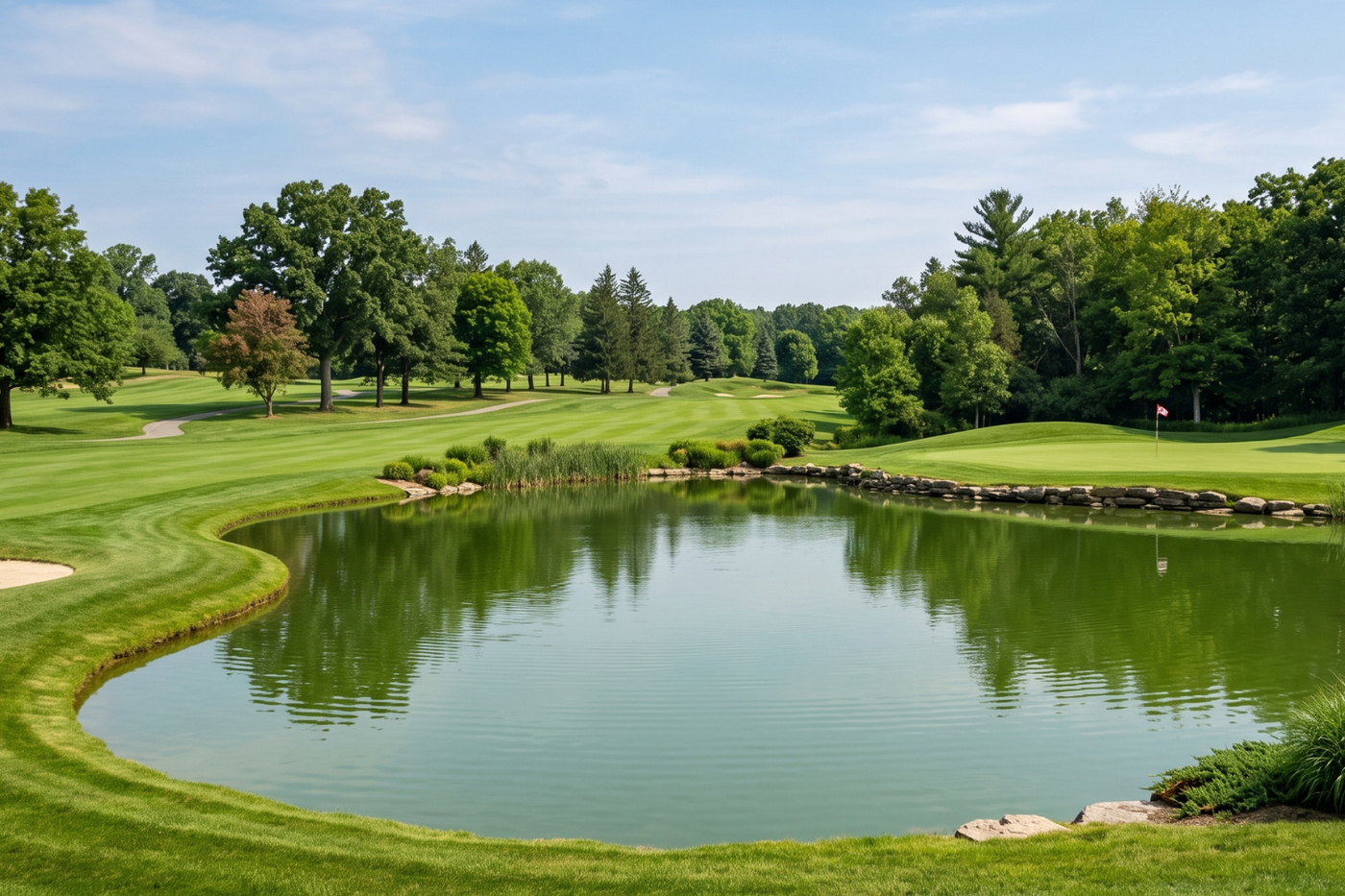

Whether you're managing your first backyard pond or evaluating a property water feature, understanding what a pond actually is shapes every equipment and care decision that follows.
A pond is a standing body of water with fresh or brackish conditions, contained within a natural depression or constructed basin. Rainfall or groundwater can supply a natural pond, whereas managed systems may use pumps to maintain their planned water level.
A review of more than 500 scientific papers found inconsistent definitions of ponds based on size or depth. One industry-standard definition places the maximum area at 5 hectares and the maximum depth at 5 meters. The same research-based definition limits emergent vegetation to 30% of the surface, separating ponds from plant-dominated wetlands.
What Are the Main Features of Ponds?
Pond conditions depend on how long water remains in the basin and how deeply light penetrates below the surface. Longer retention allows suspended particles to settle, whereas wind can still move nutrients between shallow areas and open water. Depth and turbidity define the illuminated zone where submerged plants can photosynthesize. Near the bank, the littoral zone provides shallow substrate for rooted vegetation and breeding habitat.
Standing water
Standing water remains within a basin instead of traveling continuously along a river or stream channel. Wind-driven currents can move nutrients and suspended material across the surface without changing the water body's pond classification. Some ponds have no surface outlet, whereas others release water through an overflow structure or seasonal connection. Water sources may include rainfall or groundwater, so the level can change as those inputs rise or fall.
Sunlight and depth
Sunlight can reach much of a shallow pond's bottom when the water remains clear enough for light penetration. Rooted plants can then occupy broader areas than they could in deep water, where darkness limits photosynthesis. Turbidity can reduce that illuminated zone, so shallow depth does not guarantee vegetation across the entire basin. Sediment and algae may block light before it reaches the deepest area.
Shoreline habitat
The shoreline connects open water with drier ground, creating shallow areas where rooted plants can establish. Dense plant growth provides shelter and feeding areas for insects or amphibians that use both aquatic and terrestrial habitat. The surrounding land matters because many pond animals leave the water during part of their life cycle. For example, turtles may feed in the pond but need dry ground for nesting.
What Types of Ponds Are There?

Pond types reflect how the basin formed and the job its water performs. A natural pond may support seasonal habitat, whereas a constructed basin can store irrigation water or control stormwater. Garden installations create another category because owners manage their appearance and water quality on a smaller scale.
Natural ponds
Natural ponds form where a ground depression collects enough precipitation or groundwater to retain water. Glacial activity created some kettle ponds by leaving depressions that later filled from local water sources. Other basins appear only during wet seasons, then dry as evaporation increases or groundwater levels fall. Seasonal drying does not remove their pond status under definitions that require water for only part of the year.
Temporary ponds can support species that need fish-free breeding habitat during part of their life cycle. Their changing water level favors organisms adapted to a predictable wet period rather than permanent open water.
Garden and koi ponds
Garden ponds are constructed with water features designed to fit a managed outdoor space. Their smaller footprint gives owners direct control over the liner and circulation system. A decorative garden pond may focus on plants or visual movement, whereas a koi pond must support a managed fish population. Fish load changes filtration demand because uneaten food and waste add material that the system must process.
Farm and irrigation ponds
Farm ponds store water for agricultural uses that may include irrigation or livestock operations, depending on local rules. Their design begins with the watershed because inflow must support expected withdrawals without exposing the basin during dry periods.
Soil conditions affect water retention, making site evaluation necessary before construction begins. A leaking basin cannot support dependable storage even when its surface area appears sufficient.
Wildlife ponds
Wildlife ponds provide breeding water and refuge for species that use both aquatic habitat and the surrounding land. Plant variety creates different cover levels, whereas open water gives animals room to reach the surface. A mix of sun and shade produces more temperature choices than uniform tree cover. Falling leaves can add organic material, so nearby vegetation needs planned management rather than complete removal.
Stormwater ponds
Stormwater ponds are constructed basins that retain a permanent pool during wet periods. Runoff from developed land can carry nitrogen into the basin, where excess concentrations may support heavy plant or algal growth. Sediment settles as water remains in the basin, and biological activity can remove some dissolved pollutants. Outlet structures regulate discharge, so these basins require engineered sizing rather than visual estimation.
What Is the Difference Between a Pond and a Lake?
The difference between a pond and a lake comes from combined physical and ecological behavior rather than one naming rule.
Ponds occupy smaller basins where light reaches more of the bottom. Lakes contain deep zones that receive little light and may develop stable temperature layers. Basin shape and exposure can prevent a shallow lake from stratifying or allow layering within a small deep pond.
| Comparison | Pond | Lake |
|---|---|---|
| Common depth pattern | Shallow areas often influence most of the basin | Deep areas may form separate conditions |
| Common light pattern | Sunlight may reach much of the bottom | Deep zones may remain below the illuminated layer |
| Possible temperature behavior | Wind may mix a larger share of the water | Stable thermal layers may develop during warm periods |
| Common vegetation pattern | Rooted plants may spread across broad areas | Rooted growth often concentrates near shallow margins |
| Management focus | Shape and fish load may influence circulation needs | Depth and stratification may affect system design |
The lake vs. pond comparison becomes clearer when depth receives more weight than the shoreline name. Light penetration supports rooted plant growth, whereas greater depth can produce separate temperature layers. A lake can have pond-like shallows near its edge, yet its deeper center operates under different light conditions.
When does a pond become a lake?
A pond does not become a lake at one universally accepted depth or surface area. Pond definitions vary across scientific literature and state monitoring programs. Expansion can create lake-like conditions when new depth produces dark zones or stable thermal layers. A larger surface area alone cannot confirm the change because a broad basin may remain shallow.
What Lives in a Pond?

A pond ecosystem contains connected plant and animal communities distributed by depth and distance from shore. Rooted vegetation occupies illuminated areas, whereas mobile species move between shelter and open water. Microscopic organisms process nutrients throughout the basin and support larger members of the food web.
Pond plants
Submerged plants grow below the surface where light reaches their leaves. Floating-leaved plants remain rooted in bottom sediment but place leaves at the surface. Emergent vegetation grows in shallow margins with stems extending above the water. Each growth form occupies a different position, so plant coverage can reveal how depth changes across the basin.
Plants provide structure for organisms seeking shelter or attachment surfaces. Excessive coverage can restrict open water and interfere with equipment, making identification important before removal. A single alga can form part of normal pond ecology, yet dense populations can create large oxygen swings between daylight and night.
Pond animals
Pond animals occupy four habitat zones shaped by depth and position within the basin. The shoreline zone contains rooted plants that provide breeding areas and cover for amphibians or insects. The surface film forms the air-water interface, supporting water striders and microscopic neustons. Open water contains free-swimming fish and drifting plankton, whereas bottom water supports burrowing crayfish or insect larvae. Frogs and salamanders may breed in the water before moving into surrounding terrestrial habitat.
Fish populations depend on suitable temperature and oxygen conditions for the species present. Birds visit shorelines for feeding, whereas turtles may use exposed logs or banks for basking. Wildlife presence does not mean every animal needs supplemental food from people.
What Do Pond Turtles Eat?
Pond turtle diets vary by species and life stage, so one food list cannot describe every turtle in every water body. Many aquatic species consume animal prey and plant material in proportions that change with available food. Wild turtles forage within the habitat instead of relying on scheduled meals. Captive turtles need species-specific care under guidance from a reptile veterinarian.
What do wild pond turtles eat?
Wild pond turtles may eat aquatic insects or small fish, depending on the species and its habitat. Turtles living in lakes eat the same broad food categories, although species and available prey determine the balance. Blanding's turtles eat mainly animal prey such as small fish and crayfish. Insects and frogs provide other animal food, with vegetation forming a smaller part of their diet. Eastern painted turtles consume animal matter and plant material, including seeds from aquatic plants.
Food availability changes with season and habitat structure, so turtles forage where prey or vegetation becomes accessible. Shallow margins can supply insects, whereas open water may provide fish or other mobile prey. Species identification matters because snapping turtles and painted turtles do not share identical feeding patterns.
What do you feed pond turtles?
If you're wondering what to feed turtles in a pond, wild turtles should continue foraging within their existing habitat. Supplemental feeding disrupts that natural balance by supporting more turtles than the pond's resources can sustain. In managed stormwater ponds, regular feeding can increase turtle numbers, bringing the animals into closer contact with people. Closer contact raises handling risks because turtles can carry Salmonella bacteria on their bodies.
Captive aquatic turtles have different dietary needs because they depend on people for controlled nutrition. Suitable foods and portions vary with the turtle's species and age. A reptile veterinarian can account for its health and housing conditions when developing a feeding plan.
How Does a Pond's Purpose Affect Its Equipment?
Equipment should support the pond's purpose instead of forcing every water body into one mechanical setup. Small garden systems may need packaged circulation and filtration, whereas larger ponds can require dedicated aeration. Fish load changes oxygen demand and waste production, adding another factor beyond surface area. Pond shape can then affect how well one device reaches distant coves.
Small garden ponds
Small garden ponds often use a liner to retain water and a pump to move it through a planned feature. Filtration becomes more important when fish add waste to a limited water volume. A complete pond kit can group compatible construction components and reduce uncertainty during product selection. Buyers still need the planned dimensions because pond volume affects pump and filtration requirements.
A decorative fountain adds surface movement and visual appeal, but it is not a substitute for a dedicated aeration system, even in a small pond, fish load and water health drive equipment choices separately from aesthetics. Owners should choose the display for appearance, and size water-health equipment for biological demand.
Fish and wildlife ponds
Fish ponds need equipment sized for water volume and biological load rather than shoreline length alone. Warm water holds less dissolved oxygen than cool water, which is why fish can be found gasping at the surface on hot summer mornings, or worse, dying overnight when oxygen levels crash. Aeration moves oxygenated water through more of the basin, but system performance depends on depth and diffuser placement. Filtration handles suspended material or biological waste through a separate process.
For ponds where visual appeal matters as much as water health, an aerating fountain delivers both: it provides meaningful water-column aeration while creating an attractive surface display, which is why it's a common recommendation for residential and HOA ponds. Explore pond aeration systems to compare configurations suited to your pond's size and depth.
Wildlife ponds need a lighter mechanical approach when habitat remains the main purpose. Strong circulation may disturb shallow breeding areas, whereas no movement can leave managed fish sections with limited oxygen. Separate habitat zones can balance those needs when the pond provides enough space. Equipment placement should protect vegetated margins and keep service access away from nesting areas.
Larger managed ponds
Aerator selection begins with maximum depth because depth determines how much of the water column a surface unit can actually reach, and sizing it wrong means the bottom of your pond stays oxygen-depleted even when the surface looks fine. Ponds under 6 feet deep often suit surface aerators, where mechanical agitation transfers oxygen near the air-water boundary.
At 6 to 8 feet, diffused aeration becomes viable because rising bubbles pull deeper water toward the surface, circulating the full column rather than just the top layer. Beyond 8 feet, a subsurface diffuser system is often the more efficient choice, surface agitation simply can't reach deep enough to prevent the dead zones where fish stress and muck build-up originate.
A long or irregular pond may require several mixing points even when its acreage fits one unit's stated coverage. Diffusers must reach separated coves because water follows the shortest circulation path around each station. Deeper placement increases backpressure, reducing compressor output at the diffuser compared with its surface rating. Available pond aeration systems include configurations that account for different depths and layouts.
Find Equipment Suited to Your Pond
Your pond's dimensions and purpose determine whether it needs a packaged kit or an aeration system designed for larger water volumes. For a smaller backyard build, Pond Haven's complete pond kits combine compatible components, reducing the sizing conflicts that separate purchases can create.
By contrast, larger managed ponds need aeration chosen by acreage and depth because deeper water requires more effective circulation. Before selecting equipment, speak with Pond Haven about your pond's geometry and intended use, so that each component matches its operating conditions.
FAQs on What Is a Pond?
How deep does water need to be to be called a pond?
There's no single universally accepted depth that defines a pond, but one widely cited research-based definition sets the upper limit at 5 meters (about 16 feet). More practically, depth matters because it determines how light and oxygen behave in the water. A basin shallow enough for sunlight to reach most of the bottom will function differently from one with dark, stratified zones, regardless of what it's officially called.
Can a pond exist without a natural water source?
Yes. Constructed ponds, including garden ponds, koi ponds, and stormwater retention basins, are typically lined to prevent seepage and filled or topped up by pumps, collected rainwater, or municipal supply rather than groundwater or a natural spring. The absence of a natural feed doesn't disqualify a basin from being a pond; what matters is that it holds standing water.
Do all ponds need aeration equipment?
Not all ponds require mechanical aeration, but fish-stocked ponds almost always benefit from it, particularly in summer when warm water holds significantly less dissolved oxygen. A wildlife or seasonal pond with no fish load can often sustain itself through natural processes. The trigger for equipment is usually biological demand: fish, high organic load (muck, algae), or a basin shape that limits natural circulation.
What's the difference between a pond fountain and a pond aerator?
A fountain is primarily an aesthetic feature; it creates a visual display on the surface and contributes a small amount of surface aeration as a side effect. A pond aerator is designed specifically for water health: surface aerators agitate the top of the water column, while subsurface diffuser systems circulate water from the bottom up. An aerating fountain does both: it produces a visual spray pattern while delivering meaningful aeration. Choosing the wrong type is one of the most common reasons pond owners end up dissatisfied with their purchase.
Can a pond dry out completely and still be considered a pond?
Yes, temporary or seasonal ponds that dry completely during part of the year are still classified as ponds under definitions that require water retention for only a portion of the annual cycle. These basins often support specialist species that depend on the absence of permanent fish populations, making them ecologically valuable despite their intermittent nature.
How do you know if your pond has an oxygen problem?
The most visible sign is a fish at the surface, especially in the early morning after a hot night, when overnight oxygen demand from decomposing organic matter can crash dissolved oxygen levels. Other indicators include persistent foul odors, heavy algae growth, and thick muck accumulation at the bottom. These are signs that the pond's oxygen balance is under stress, and that aeration equipment may need to be sized up or introduced.
Back to Top: What Is a Pond? Explained