
Pond Dye Colors
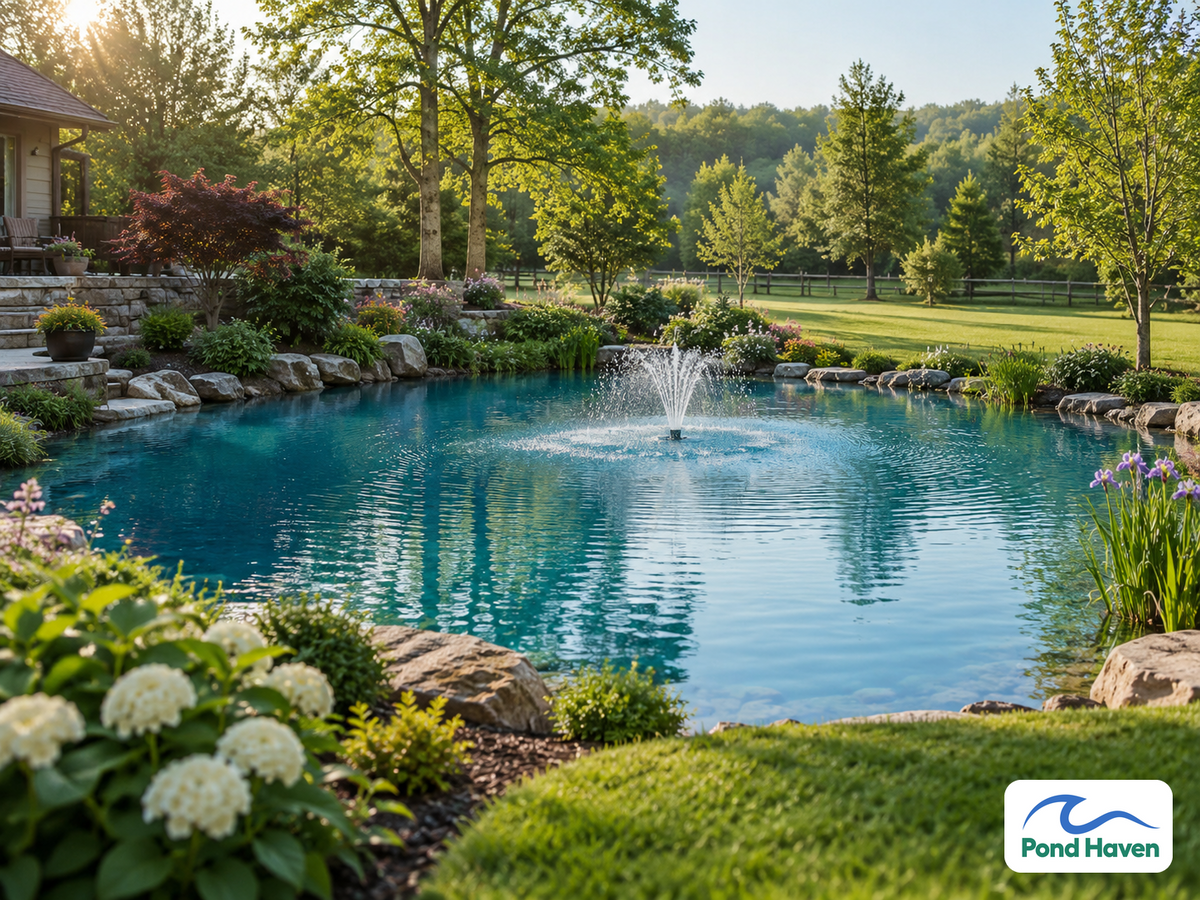

The color you pour into your pond does more than change the view from the patio. It controls how much sunlight reaches the water, which directly affects algae growth, water temperature, and how safe your fish feel from predators overhead.
Pond dye comes in three main shades: blue, black, and blue-black blends. Each has a distinct look and a distinct job. Pick the wrong one and you get a water feature that clashes with your landscape. Pick the right one and your pond looks natural, stays cooler in summer, and needs fewer algaecides.
This guide breaks down the visual and functional differences so you can match a color to your pond's setting and your goals.
- Blue dye gives a bright, resort-style look and is best for open, sunny landscapes and ornamental ponds.
- Black dye creates a mirror finish, blocks the most sunlight for algae control, and suits wooded or natural settings.
- Blue-black blends offer a natural deep tint that works in most landscapes without looking artificial.
- Dye is a preventative tool, not a cure. Apply in early spring before water temperatures pass 60°F.
- All pond dyes are safe for fish, livestock, pets, and irrigation when used as directed.
Pond Dye Color Comparison: Blue vs. Black vs. Blue-Black
The three standard colors serve different purposes. Here is how they stack up side by side.
| Color | Visual Look | Best For | Key Functional Benefit |
|---|---|---|---|
| Blue | Bright, clean "Caribbean" or tropical lagoon tone | Ornamental ponds, open sunny yards, formal water features | Strong UV blocking; lets you monitor fish while giving them cover |
| Black | Dark, mirror-like surface that reflects trees and sky | Wooded or naturalized settings, hiding bottom debris | Maximum light blocking for algae suppression; best predator protection |
| Blue-Black | Deep blue-green tint that reads as natural | Transition zones, ponds where pure blue looks fake | Balanced light reduction with a natural appearance |
Blue dye reflects the sky and creates that classic swimming-pool blue. In an open, sunny yard it looks intentional and clean. In a wooded setting it can look artificial, like someone dyed a forest pond for a photo shoot.
Black dye does the opposite. It absorbs light and turns the surface into a mirror. Trees, rocks, and clouds reflect off the water, which helps the pond blend into a natural landscape. It also creates the strongest "bottomless" optical effect, hiding whatever sits on the pond floor.
Blue-black blends split the difference. Brands like Airmax sell this as "Twilight Blue." It gives you a darker, more natural blue than straight blue dye, with better light blocking. Many owners mix their own at roughly 50/50 to dial in the exact shade they want.

How to Choose: Match Color to Your Pond's Needs
Your landscape and your goals should drive the decision. Work through these scenarios.
For a Natural or Wooded Setting
Choose black or blue-black.
A bright blue stands out against the browns and greens of a forest edge. Black mimics a deep, shaded natural pond. The water reflects the surrounding trees and blends into the landscape instead of fighting it.
This is the look most owners of acreage ponds want. The pond should feel like it belongs, not like a decorative afterthought.
For a Vibrant, Ornamental Look
Choose blue.
Blue delivers that classic "tropical lagoon" aesthetic. It maximizes the visual impact of the water feature from a patio, deck, or golf course fairway. If your pond is the centerpiece of a manicured yard, blue makes it pop.
One caveat: in bright, open sun, blue dye can look intense. Some owners find it artificial. If you want the color but not the shock, start with a lighter dose and build up.
For Maximum Algae & Weed Control
Choose black.
Black dye blocks the most sunlight. Algae and submerged weeds need light to photosynthesize, and less light reaching the pond floor means less growth. This is simple physics, not a chemical reaction.
Dye filters light in the 400 to 700 nanometer range, the exact spectrum plants use for photosynthesis. Black dye reduces that penetration more than blue.
For Fish Safety & Hiding
Choose black or blue-black.
Darker water gives fish cover from aerial predators like herons and kingfishers. It also reduces stress from perceived exposure. Bass and bluegill in darker water behave more naturally and are less skittish.
Dye does not harm fish. It only changes light penetration. The darker surface makes it hard for predators to gauge prey location or depth, which buys your fish critical seconds to escape.
If you want to watch your fish, go lighter. Blue dye lets you monitor fish health while still providing some cover. The trade-off is real: visibility for you means visibility for predators.
For Masking Murky Water
Choose blue-black or black.
Darker pigments do a better job of hiding suspended sediment and a muddy bottom. Blue dye can sometimes make murky water look greener or cloudier, especially in ponds with tannin stains from leaves.
A dark dye unifies the water's appearance. It makes the pond look deeper and cleaner than it actually is, which is why black is the go-to for ponds with sludge or debris on the floor.
What to Know Before You Apply
Getting the color right matters, but so does applying it correctly. Here is what you need to know.
Dosage by Pond Size
Most liquid dyes are applied at roughly 1 quart per surface acre for a pond 4 to 6 feet deep. For larger or deeper ponds, use the formula:
(Surface acres × Average depth in feet) ÷ 4 = gallons of dye needed
A 1-acre pond averaging 5 feet deep needs about 1.25 gallons. A half-acre pond averaging 3 feet deep needs about 0.4 gallons, or roughly 1.5 quarts.
Packets are pre-measured and simpler. One standard packet typically treats a quarter-acre. Airmax recommends 2 packets for up to a 1-acre pond at 4 to 6 feet deep. Check your specific brand's label, since concentrations vary. Some products are 4x concentrates, meaning 1 quart treats what a gallon of a standard formula would.
Application Method
Pour liquid dye directly into the pond near the pump, aerator, or fountain. The water movement disperses the color evenly. For ponds without circulation, pour from a slow-moving boat or along the shoreline in a grid pattern.
Toss water-soluble packets into the windward side of the pond. The breeze pushes the dye across the surface as the packet dissolves.
Wear gloves. Dye stains hands, clothing, and plant leaves. Dilute liquid dye with pond water before applying to avoid a concentrated slug of color settling in one spot.
How Long It Lasts
Expect color to hold 30 to 60 days. UV rays from the sun break down the pigment over time. Reapply as the color fades.
Heavy rainfall and water outflow shorten the window. A pond with a spillway that runs after every storm will flush dye out faster than a sealed pond with no outflow. Stream-fed ponds with high inflow and outflow rates can make dye treatment cost-prohibitive, since the color gets diluted and carried away continuously.
Safety
Pond dyes are safe for fish, wildlife, pets, livestock, and humans when used as directed. Water treated with dye can be used for recreation, fishing, and irrigation immediately after application.
Dye is not a herbicide. It works by shading out the plants, not by poisoning them. That is why it is safe for everything except the algae and weeds that need sunlight to grow.
Dye reduces light penetration, which can lower the effectiveness of algaecides and herbicides. Treat the bloom first, let it die off, then add dye to prevent regrowth.
When Dye Is the Wrong Tool
Dye will not fix every pond problem. Skip it if you have any of these situations:
- An active, established filamentous algae bloom. Dye traps the mat near the surface and can make the problem worse. Treat the bloom first.
- A pond fed by a stream or spring with constant outflow. The dye will flush out in days, wasting your money.
- Emergent weeds like cattails or floating plants like water lilies. Dye only affects submerged plants and algae that need light passing through the water column.
- A fishing pond where you rely on natural insect production. Heavy dye use reduces light levels that drive the aquatic food chain.

Frequently Asked Questions
Does pond dye harm fish?
No. Pond dye only filters sunlight. It does not change water chemistry or oxygen levels. Fish from dyed ponds are safe to eat, and the water is safe for swimming and irrigation once the dye is fully dispersed, usually within 24 hours.
How often do I need to reapply pond dye?
Most dyes last 30 to 60 days. Heavy rainfall, outflow over a spillway, and high water flow shorten that window. Reapply when the color noticeably fades, typically every 4 to 8 weeks.
Can I mix blue and black pond dye?
Yes. Mixing blue and black dye is a common way to create a custom shade. A 50/50 blend gives a deep, natural blue that avoids the artificial brightness of pure blue while providing better light blocking. Start with less dye than you think you need and add more to reach the desired tint.
Will pond dye clear up murky or muddy water?
Dye masks murky water visually, but it does not remove suspended sediment. Black or blue-black dye unifies the water's appearance and makes it look deeper and cleaner. For actual clarity, you need a flocculant or mechanical filtration to remove the particles.
When is the best time to apply pond dye?
Early spring, before water temperatures pass 60°F and before submerged plants begin their growth cycle. This gives you the best preventative effect for the 4 to 5 month growing season. Applying dye over an existing algae bloom will not clear it.

The Bottom Line
The right dye color comes down to your landscape and your goal. Blue for a bright, ornamental look in open sun. Black for maximum algae control, fish protection, and a natural mirror finish in wooded settings. Blue-black for a balanced approach that reads as natural almost anywhere.
All colors are safe and functional. The choice is about matching the visual outcome to your pond's setting and what you want from the water.
Decide your primary goal, look at your pond's surroundings, and pick the color that fits. Reapply every 30 to 60 days to maintain the effect. Browse our pond treatments collection to find the right dye for your water.