
Surface Aerator vs Bottom Diffuser
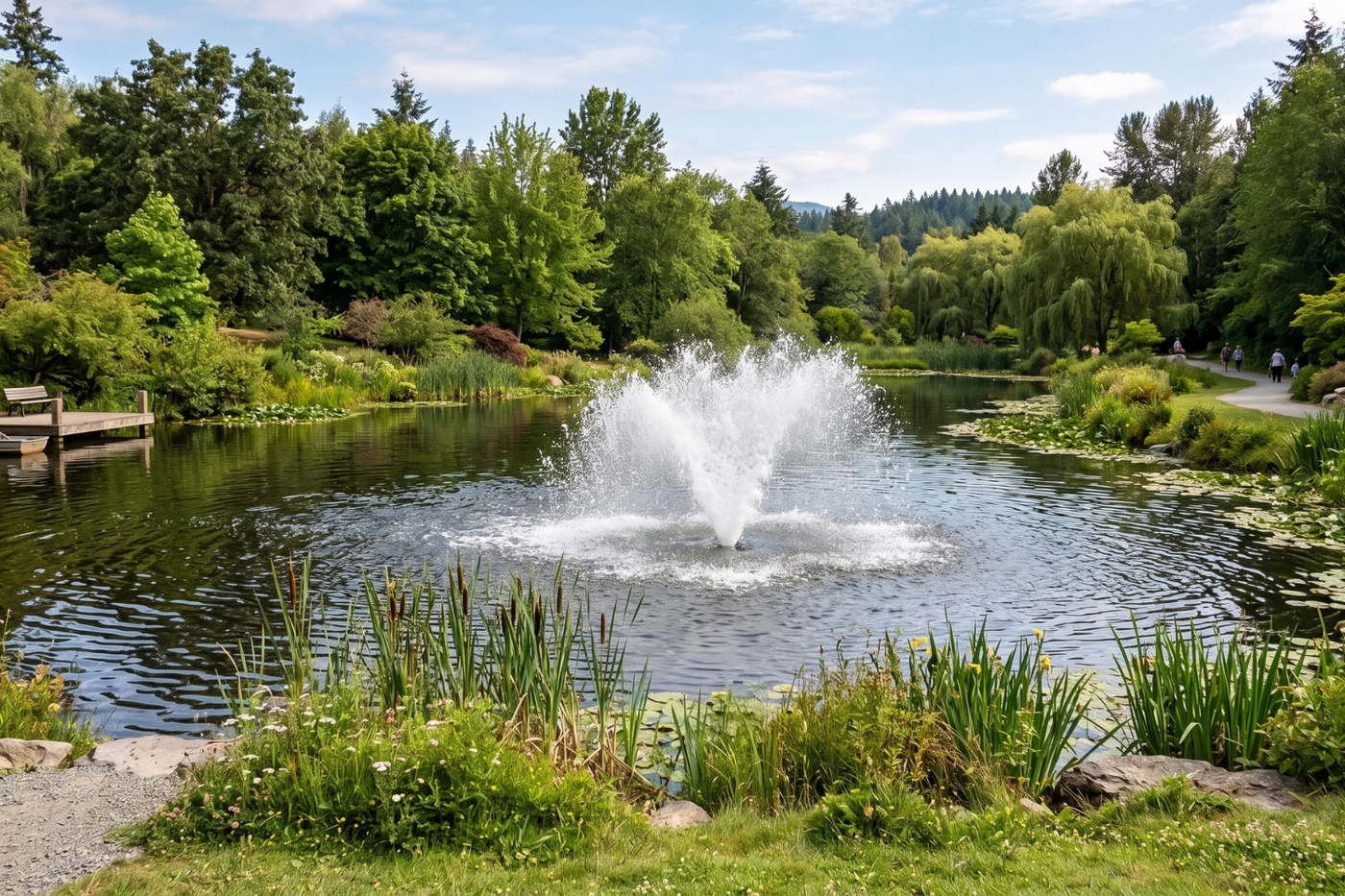

Pond depth sets the starting point for choosing an aeration system because surface aerators and bottom diffusers circulate different portions of the water column. Surface aerators suit ponds under 6 feet deep, while bottom diffusers become the stronger option as depth increases beyond roughly 8 feet. Ponds within the 6–8-foot transition range require closer assessment because acreage and basin shape can alter the circulation pattern each system creates.
A surface aerator concentrates its strongest movement near the surface, where its motor produces a visible boil or model-specific agitation pattern. A bottom diffuser begins moving water from the pond floor, using rising bubbles to carry deeper water toward the surface.
Acreage determines the required capacity after depth identifies the suitable aeration method, while electrical access affects the available model and voltage. Fish load and seasonal operation can change the final configuration once the pond’s physical measurements establish the starting requirements.
Choose Your Aerator by Pond Depth First
Ponds under 6 feet deep place most of their water close to the circulation created by a surface aerator. The shallow basin allows near-surface agitation to influence a larger proportion of the water column without requiring a long vertical circulation path.
Beyond roughly 8 feet, bottom diffusion provides stronger circulation from the pond floor, because each bubble plume lifts surrounding water toward the surface. Surface aerators continue moving near-surface water, although deeper sections receive less circulation from a floating unit, which is how a pond can look lively on top while its bottom stays oxygen-depleted.
| Measured Pond Depth | Primary Direction | Selection Context |
|---|---|---|
| Under 6 feet | Begin with a surface aerator | Confirm that the model’s minimum operating depth fits the selected installation area |
| 6–8 feet | Compare both aeration methods. | Use acreage, basin shape, and circulation demands to choose the final configuration |
| More than 8 feet | Begin with bottom-diffused aeration | Match compressor output and diffuser quantity to the measured depth and acreage |
Long, narrow, or divided ponds may need additional aeration points because water doesn’t circulate evenly into coves and separate basins. Irregular shorelines can also place isolated areas beyond the circulation pattern produced by one centrally positioned unit.
How Surface Aerators and Bottom Diffusers Move Oxygen
Surface aeration vs. bottom aeration begins with different water-movement patterns, which change the portion of the pond each system reaches. The mechanical differences explain why depth guides the initial choice without establishing one universal oxygen-transfer advantage.
How a surface aerator works
A pond surface aerator uses a floating, submersible motor and propeller to lift and agitate water at the surface. The resulting agitation increases contact between water and air while continuously moving water through the unit’s circulation zone.
Shallow water places the pond floor closer to this movement, allowing the aerator to influence more of the total water volume. Increasing depth leaves more water below the area where the unit creates its strongest agitation.
A surface aerator remains distinct from an aerating fountain because each category gives visual display a different role. A surface aerator produces a low-profile surface boil, while an aerating fountain pairs oxygen transfer with a fountain-style display.
Decorative fountains prioritize appearance, while aerating fountains combine a visible display with water movement designed to support aeration. Their nozzle-driven patterns serve a different purpose from the boil created by a functional surface aerator.
How a bottom diffuser works
A bottom-diffused aeration system uses a shore-based compressor to send air through weighted airlines to submerged diffusers. Fine bubbles leave each diffuser and rise through the water, drawing surrounding water into an upward-moving column.
As water rises above the diffuser, surrounding water moves inward to replace it, creating circulation that draws deeper water toward the bubble plume. Surface-exchanged water then moves through the pond as the circulation pattern continues.
One sizing detail matters more as ponds get deeper: a compressor’s rated airflow is measured at the surface, and delivered output falls as the diffuser sits deeper because the unit must push air against the water pressure above it. Deep ponds may therefore need more compressor capacity than acreage alone suggests.
Surface Aerator vs. Bottom Diffuser Comparison
The surface aerator vs. bottom diffuser comparison includes circulation area, equipment placement, and the visible effect each system creates. Installation difficulty and operating costs then depend on the selected model’s verified specifications.
| Factor | Surface Aerator | Bottom Diffuser |
|---|---|---|
| Circulation area | The unit concentrates agitation near the surface and throughout the upper part of the water column. | Each diffuser begins circulation near the pond floor and moves water upward. |
| Powered equipment | A submersible motor operates beneath the floating assembly. | The compressor remains on shore while a weighted airline enters the pond. |
| Visible effect | The unit creates a visible boil or model-specific agitation pattern. | Bubbles create localized surface disturbance above each diffuser location. |
| Physical setup | Mooring lines hold the floating unit within its planned operating area. | Weighted airline connects the compressor with each submerged diffuser. |
| Power route | A factory motor cord runs from the floating unit to the electrical supply. | Electrical service reaches the shore-based compressor while diffusers remain submerged. |
Oxygen transfer and circulation
Surface aerators create turbulence at the air-water boundary, making them well suited to agitating and aerating near-surface water in shallow ponds. Their strongest movement remains concentrated around the floating unit and its model-specific circulation zone.
Bottom diffusers use rising bubbles to lift deeper water toward the surface, where circulation and atmospheric contact support gas exchange. Each diffuser location creates a separate bubble plume, allowing multi-station systems to serve distinct areas within a larger basin.
Water temperature and fish load affect the amount of oxygen a pond requires from its installed aeration system. Biological activity also changes demand, while basin volume and operating depth determine how much water the equipment must circulate.
Running cost
Monthly operating cost depends on motor wattage and daily operating hours, followed by the local electricity rate. Divide watts by 1,000 to calculate kilowatts, then multiply by operating hours, operating days, and the rate per kilowatt-hour.
Compare electricity costs only between models with similar pond coverage and operating depth. Runtime and installation conditions must also remain comparable before the resulting figures provide a useful equipment comparison.
A correctly sized bottom diffuser may circulate a deep pond with a smaller compressor than the horsepower required for an equivalent surface unit. Actual savings depend on verified wattage and the number of operating hours rather than aeration type alone.
Winter use
Winter requirements vary by model, because freezing conditions affect floating assemblies and submerged aeration layouts differently. Scott Aerator equipment is designed to stay in the pond through winter with no removal or winterization, while many other brands’ floating units must come out before freeze-up to protect the motor and warranty—check the selected model’s instructions before the first hard freeze.
Bottom-diffused systems commonly run all winter to keep an opening in the ice for gas exchange. Winter diffuser placement depends on pond depth and the aquatic life occupying its deeper water. Many manufacturers recommend moving the diffuser to a shallower shelf so circulation doesn’t chill the deep water where fish overwinter. Follow the selected system’s instructions before moving a diffuser or changing its seasonal operating schedule.
Installation difficulty
Surface aerators involve fewer placement steps because the motor and float operate as one moored assembly. Bottom-diffused systems require equipment placement on land and within the pond, creating additional routing work during installation.
- Floating placement requires mooring: A surface aerator needs a secure float and mooring arrangement that holds the motor within its planned operating area.
- Shore-based equipment adds routing: Installing a bottom diffuser requires a protected compressor location and weighted airline extending to every submerged diffuser.
- Electrical scope changes with equipment: Surface units require ground-fault circuit interrupter (GFCI) protection and voltage-compatible wiring, while bottom-diffuser wiring must follow the selected compressor’s instructions.
What Maintenance Does Each Aeration System Require?
Maintenance requirements differ because surface and bottom-diffused systems place their mechanical components in separate locations. A surface aerator keeps its motor in the pond, so most checks happen at the water's surface. A bottom-diffused system keeps its compressor on shore, so routine service happens on land while the submerged components need only periodic attention.
Surface aerator maintenance
Inspect the intake area and propeller regularly, because accumulated debris restricts water movement through the unit before any visible change in the surface boil. Examine the power cord and mooring components during the same visit. A frayed line lets wind walk the unit toward shallow water, and a damaged cord is an electrical hazard that GFCI protection should catch but shouldn't be left to find. Test the GFCI monthly during the operating season.
Bottom diffuser maintenance
Replace or clean compressor air filters on the manufacturer's schedule, because a clogged filter forces the compressor to work harder for less delivered airflow—the same symptom an airline leak produces, so check accessible fittings when output drops.
Inspect diffuser membranes according to the maintenance schedule, since mineral buildup and biofilm gradually restrict bubble release. The shore-based compressor cabinet also needs unobstructed ventilation openings to keep the unit cool during continuous operation.
Which Aerator Fits Your Pond’s Depth and Acreage?
Depth identifies the suitable aeration method, while acreage determines the capacity required within that category. Basin shape then establishes whether one aeration point can circulate the pond or several locations need separate coverage.
| Pond Depth and Acreage | Recommended Aeration Method | Pond Haven Model Recommendations |
|---|---|---|
| Under 6 feet and up to ½ acre | Use a surface aerator with verified shallow-water clearance. | The ½-horsepower Kasco 2400AF covers up to ½ acre and operates in 15 inches of water. |
| Under 6 feet and up to 1 acre | Use a surface model with matching acreage coverage. | The 1-horsepower Kasco 4400AF covers up to 1 acre and operates in at least 19 inches of water. |
| Under 6 feet and 2–5 acres | Use a commercial surface aerator where the selected model has adequate clearance. | The Kasco 8400AF covers up to 2 acres in at least 20 inches of water. The 3.1AF covers up to 3 acres in at least 24 inches, while the 5.1AF covers up to 5 acres in at least 26 inches. |
| 6–8 feet and up to ½ acre | Compare either system using the required circulation pattern. | The Scott Aerator Bubble Pro covers ½ acre at depths of 5–8 feet. |
| 9–12 feet and up to 1 acre | Use bottom-diffused aeration. | The Bubble Pro covers 1 acre within this measured depth range. |
| 13–16 feet and up to 2 acres | Use a depth-rated bottom diffuser. | The Bubble Pro covers 2 acres within this measured depth range. |
| Deep ponds up to 8 acres | Use a larger multi-station bottom-diffused system. | The Keeton ProLake² 2.8 uses eight diffusers across ponds up to 8 acres and 50 feet deep. |
| Irregular or divided basins | Assess multiple aeration points. | Use separate points where basin features restrict circulation between pond sections. |
Electric or Solar Aeration
The aeration method comes before the power source, because solar and grid electricity can operate surface or bottom-diffused equipment. Depth still determines the required circulation pattern before electrical access shapes the available configuration.
- Grid power supports predictable runtime: Correctly sized electrical service can operate the selected compressor or floating motor on a continuous or scheduled basis.
- Direct-drive solar follows available sunlight: Solar production controls when a direct-drive system can operate, making site exposure part of the equipment decision.
- Battery storage extends operation: The Outdoor Water Solutions NightAir provides up to 20 hours of daily operation through integrated battery storage under typical conditions.
Solar pond aerators include direct-drive and battery-backed configurations for ponds without practical grid-power access. Ponds with sustained nighttime oxygen demand need a runtime plan that accounts for reduced solar production: dissolved oxygen falls to its lowest point in the pre-dawn hours, exactly when a daylight-only system has been idle the longest.
When a Pond Needs Both Systems

A combined system becomes appropriate when one aeration method cannot address separate circulation goals across the same pond. The primary method should still follow the pond’s depth before supplementary equipment addresses a distinct area.
- Deep water with a separate problem area: Bottom diffusion can circulate the deeper basin while a surface unit adds near-surface movement elsewhere.
- Display requirements above deeper water: An aerating fountain can provide visible spray while submerged diffusers circulate water from the pond floor.
- Several isolated circulation zones: Multiple diffuser locations may serve divided basins more effectively than mixing surface and bottom aeration methods.
Find the Right Pond Aerator for Your Water
Pond Haven carries surface aerators and bottom-diffused aeration systems for residential ponds and larger managed waters. Its range also includes solar aeration options for properties without practical grid-power access.
Browse the complete pond aerator collection or contact Pond Haven's team with the pond’s depth and acreage for model-specific guidance.
Surface Aerator or Bottom Diffuser FAQs
Should I use maximum or average depth when choosing an aerator?
Record both measurements, because maximum diffuser depth affects compressor backpressure, while average depth helps estimate total pond volume. Mark deep holes separately when the diffuser will sit above or outside the pond’s deepest location.
How many diffuser stations does an irregular pond need?
The required station count depends on how ridges and narrow channels divide the basin into separate circulation areas. Separate deep pockets or divided basins may need individual diffusers when water cannot circulate freely between them.
Can the bottom-diffuser compressor sit away from the pond?
A compressor can sit away from the shoreline when the system supports the required airline distance and operating pressure. Use the airline diameter and maximum run length specified for that compressor, because an undersized airline can reduce delivered airflow.
Does a surface aerator create a fountain display?
A surface aerator creates a boil or model-specific agitation pattern rather than a decorative fountain shape. Choose an aerating fountain when the installation needs visible spray alongside aeration.
Back to Top: Surface Aerator or Bottom Diffuser: Which One Your Pond Needs