

1/2 Acre Pond Aerators
Guide & FAQ
How to choose the right pond aerator for a half-acre pond
- 3 min overview
- Types, depth & power
- 5 common questions
Why pond aeration helps
Water that barely moves can lose oxygen in patches, most often in hot weather and in deeper layers that separate as the pond warms. Circulation helps move oxygen down through more of the water and gives fish and aerobic bacteria better conditions to work in.
Aeration tends to help most when a pond has:
- fish or other creatures living in it
- a muddy or organic bottom that builds muck and odor
- heavy algae or plant growth through the season
- little natural inflow or wind exposure
- ice cover through the winter
Circulation supports healthier conditions and can reduce stagnant areas, but it does not fix every water-quality problem on its own. Nutrient loading, runoff, and feeding still matter.
The main types, and when to choose each
The main decision is how you want to move the water and what you want to see above it.
Display aerating fountains
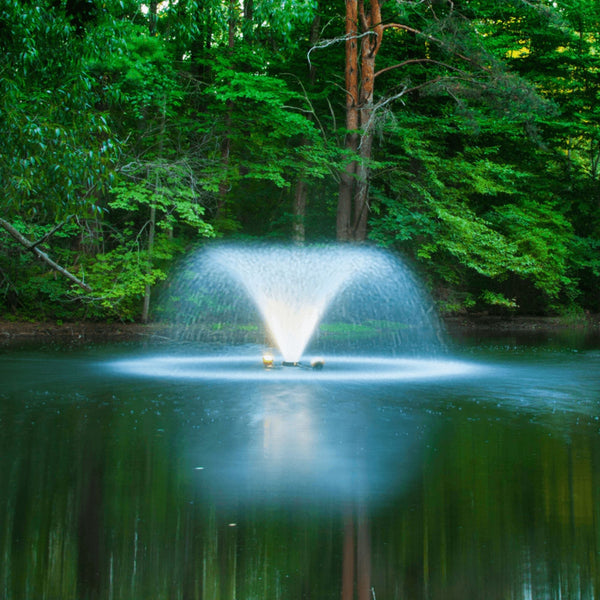
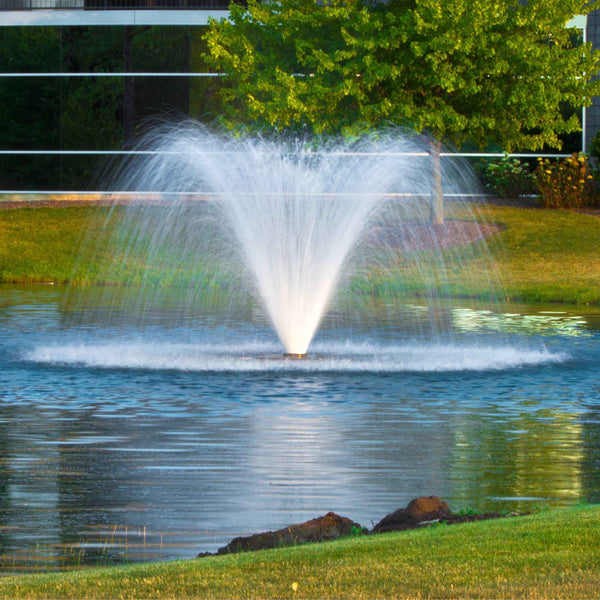
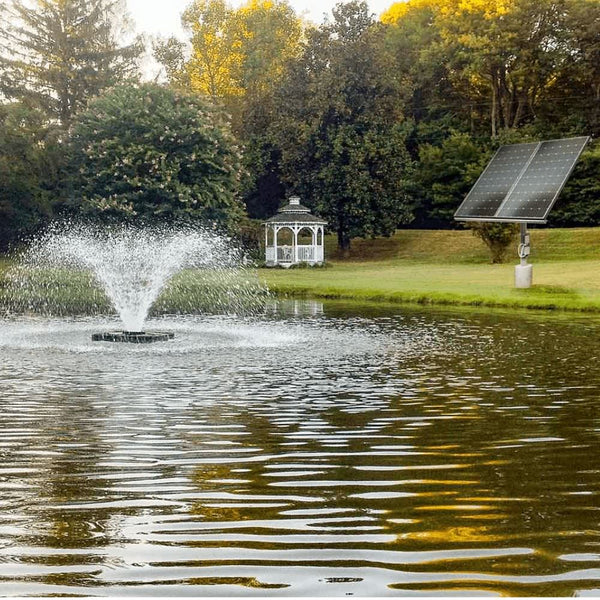
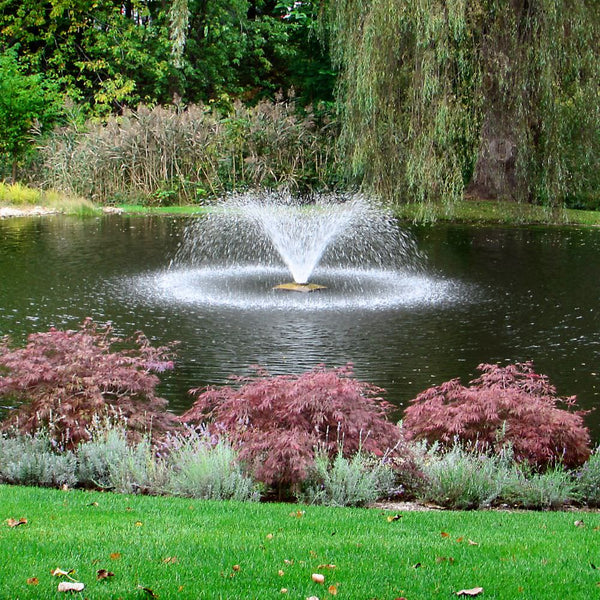
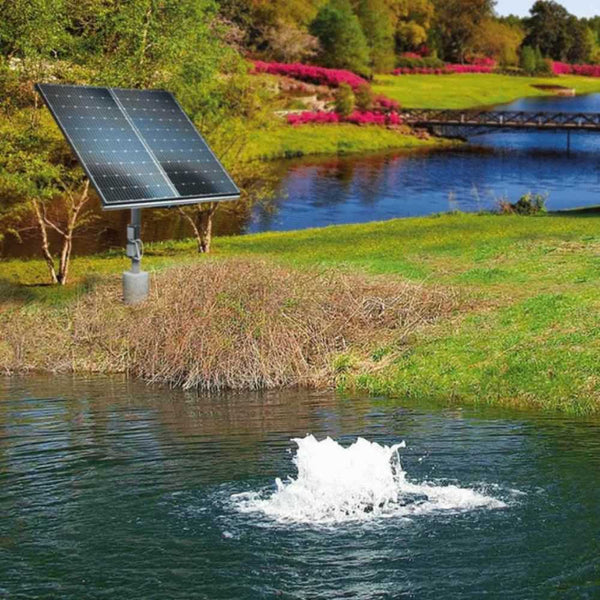
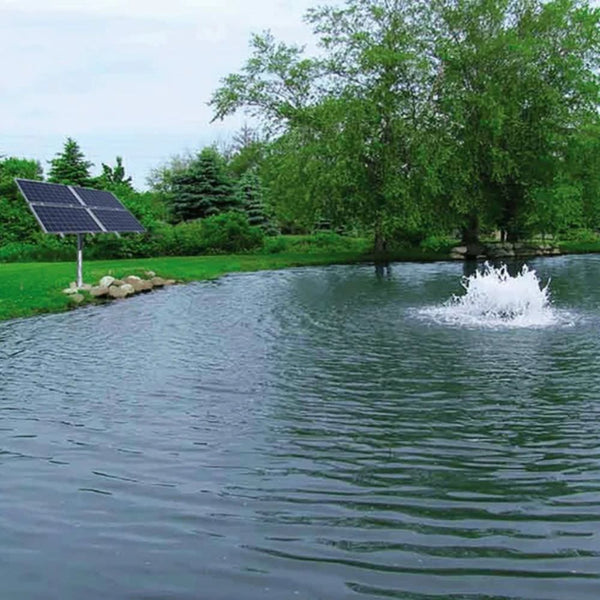
The Scott Aerator DA-20 Display moves water at the surface and throws it into the air in a trumpet pattern, mixing oxygen while giving the pond a fountain to look at. The solar DA-20 model's spray reaches up to 5 feet high and 20 feet wide.
Choose a display aerator when appearance matters as much as circulation. The DA-20 is available as a mains-powered unit and as a solar model. See our Scott Aerator fountains for both.
Surface bubblers
The Scott Aerator Boilermaker Solar Pond Aerator agitates the surface hard without a tall decorative spray, and it is built for all-season use including de-icing.
Choose a bubbler when you want surface oxygen transfer and a winter ice opening, and you would rather not have a spray pattern to aim or wind drift to manage. More options sit in our surface aerators.
Bottom-diffused systems
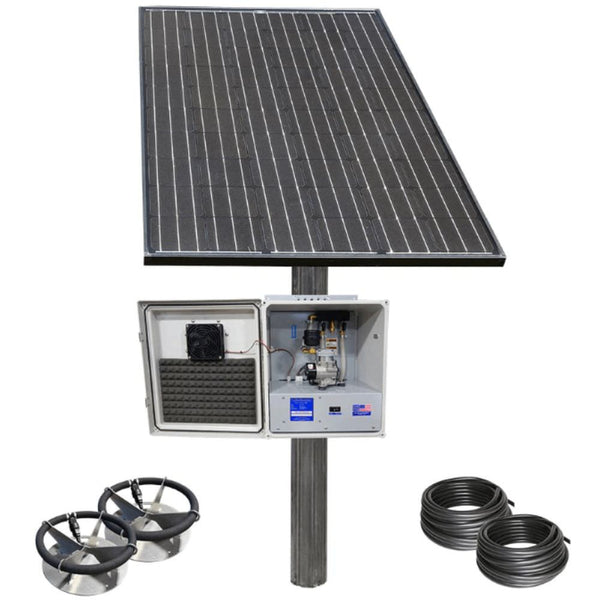
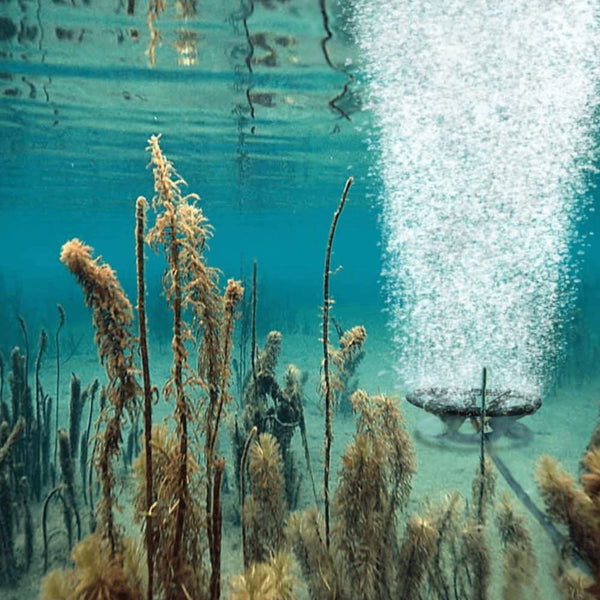
The Scott Aerator Solar Pond Aeration System pushes air from the bank down to diffusers on the pond floor. In these systems, rising bubbles lift deeper water and mix the water column from the bottom up.
Choose bottom-diffused when the pond is deeper and circulation matters more than looks. Compare our subsurface pond air diffusers, or read the surface aerator versus bottom diffuser comparison for the full trade-offs.
How to choose the right size and model
Once you are in the right size class, these factors decide the model.
- Depth. Surface units do their work at or near the top. Deeper ponds usually benefit from bottom-diffused aeration, which moves trapped bottom water upward.
- Appearance. Decide how much display you want: a trumpet spray, a low-profile bubbler, or no spray at all. Pond fountains and pond fountains with lights cover the decorative side.
- Power access. If a dedicated outlet reaches the pond, a mains unit is the simpler route. If not, look at solar pond aerators.
- Winter use. If you need an ice opening for fish and gas exchange, pick a unit built for all-season and de-icing duty rather than one you pull out each fall.
Pond shape matters too. A long or divided pond may not circulate well from a single point.
Power, placement and installation
Mains units need power near the pond and a cable run rated for underwater use. Solar units skip the trenching and the grid electricity, but the panels need unshaded bank space where they can sit.
Placement is simpler than it sounds: a surface aerator is held on station with rope or anchors, while a bottom-diffused system keeps the compressor on shore and runs weighted hose along the pond floor.
For a step-by-step walkthrough, see our pond aerator installation guide.
Not sure which one you need?
Send PondHaven your pond size, average and maximum depth, and how far the nearest power is from the water. We can help you compare the display, bubbler, and bottom-diffused options that fit.
No page change, it expands right here
Frequently asked questions
Quick answers to the most common questions about our 1/2 acre pond aerators.
Is a surface fountain or a bottom diffuser better for a 1/2 acre pond?
Depth and appearance decide it. A surface display like the DA-20 suits shallower ponds where you also want a fountain to look at, while a bottom-diffused system such as the Scott Solar Pond Aeration System is the better fit when the pond is deeper and circulation is the main goal.
Will a solar pond aerator still work in cloudy weather?
Yes, but output drops as the light weakens. Winter days with fewer daylight hours reduce it further, which is worth weighing if you rely on the unit for ice control.
Should I run the aerator all day, or use a timer?
Continuous operation is the common approach, especially in hot weather and in winter when an ice opening is wanted. Some owners back off in mild shoulder-season months, but the water benefits most when circulation is steady.
My pond is far from the nearest outlet. What are my options?
Go solar. The Scott Aerator solar models run without grid electricity, so there is no trenching and no electric bill. You will need clear, unshaded bank space where the panels can mount.
Can I leave a pond aerator running through freezing weather?
Several aerators here are built for all-season use and de-icing, including the Boilermaker Solar Pond Aerator. Check the individual product page before buying if winter operation is a priority, since not every aerator is set up for it. Pond de-icers are another option when an ice opening is your only winter need.
Need expert help finding the right setup?
Contact Pond Haven Support