
What Size Fountain for Your Pond
Choose the right pump, spray height, and flow rate for healthier water—without oversizing your display.
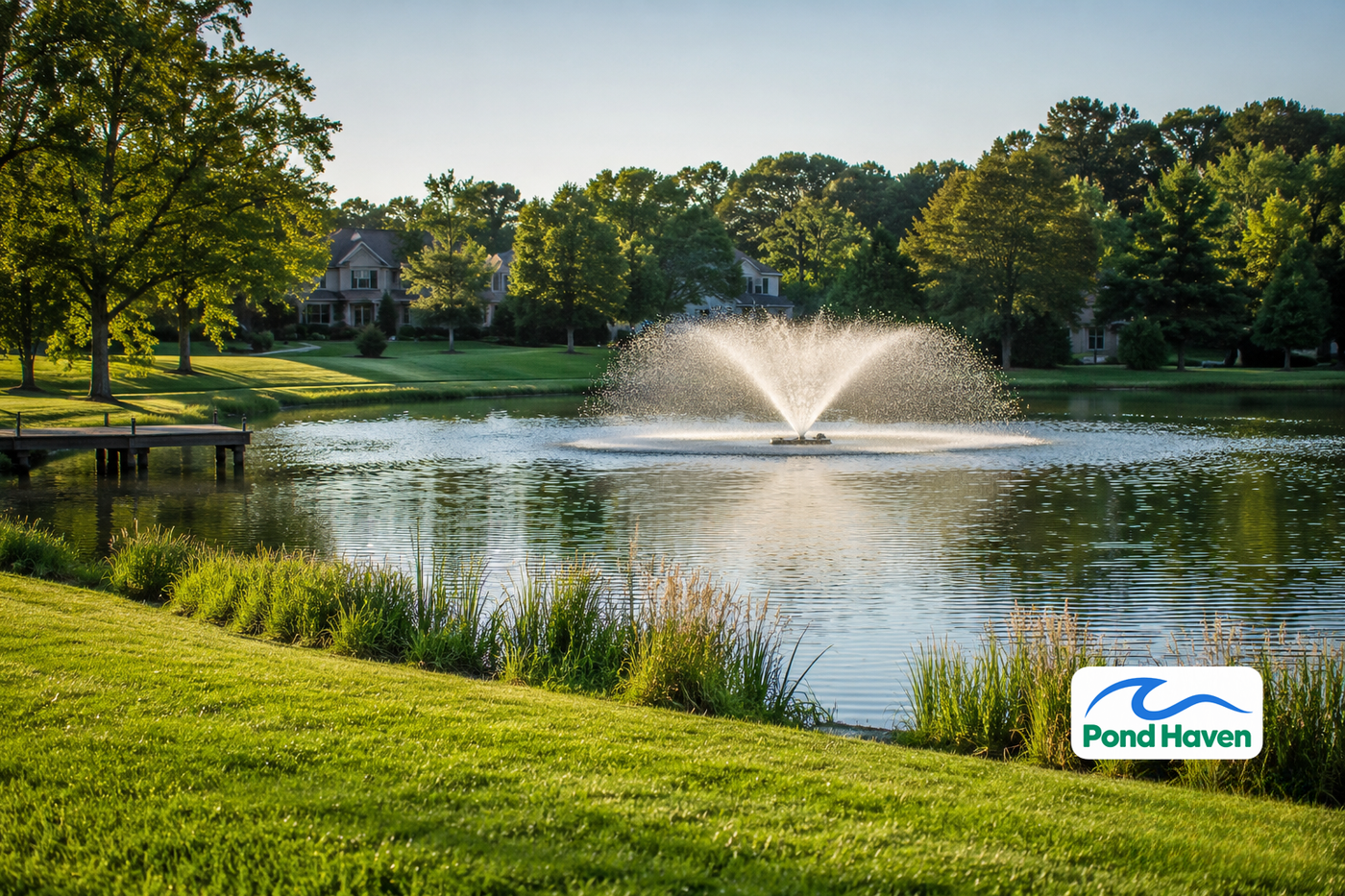
Flow first.
Height second.
A practical guide to circulation, spray scale & power

The short answer
Choosing the right fountain size keeps your display proportional and supports circulation and oxygen exchange. Start by matching pond fountains to your pond’s surface area and depth, , then pick a spray pattern that fits your space, including options like Kasco 3400 jf for balanced performance.
For larger ponds, step up in size for better coverage. If you want nighttime visibility, pond fountains with lights add impact after dark.
If your pond shows signs of low-oxygen stress (heat, high fish load, sluggish fish), pair the fountain with pond aerators for stronger oxygen support. When shoreline power is limited, consider solar pond fountains or solar pond aerators.
Factors to Consider
1. Pond Size
Pond size is the primary factor when selecting a fountain. As a general rule, the fountain’s flow rate (measured in gallons per hour or GPH) should circulate the entire pond volume at least once every two hours. For example, if your pond holds 1,000 gallons, you should select a fountain with a flow rate of at least 500 GPH.
Buyer decision point: If your pond is long or oddly shaped, focus on overall circulation and “dead spots” rather than total gallons.
2. Pond Depth
Pond depth also impacts your fountain choice. Deeper ponds require more powerful pumps to lift the water to the surface and create the desired display. Check the pump specifications to ensure it can handle the depth of your pond.
Buyer decision point: If your pond has a deep center with shallow shelves, confirm the intake location and minimum operating depth so the pump stays properly submerged.
3. Fountain Display Height and Pattern
Height and pattern both affect pump requirements and the display's appearance in your space. Taller displays require more powerful pumps and higher flow rates. The fountainhead or nozzle determines the display pattern, such as bell, jet, or tiered spray. Confirm the fountain you choose is compatible with your preferred display style.
Buyer decision point: Choose the pattern that fits your space. Taller is not always better if wind pushes overspray onto the shoreline.
4. Electrical Requirements
The size of your fountain will also affect its electrical requirements. Larger fountains with more powerful pumps consume more electricity. Make sure your outdoor electrical outlet or GFCI can handle the power requirements of the fountain you choose.
Buyer decision point: If power access is limited, consider a solar powered pond fountain or plan your install around safe, code-compliant outdoor power.
5. Aesthetic Balance
Visual balance matters too. A small fountain looks underwhelming in a large pond, and an oversized fountain overwhelms a smaller water feature. Aim for a fountain size that complements the overall scale and design of your pond and garden. For brand-specific sizing, compare available Kasco fountains by HP, spray height, and recommended pond size before choosing.
Buyer decision point: Think about the primary viewing angle (patio, dock, window). A moderate display that looks “right” from your main viewpoint often wins over maximum height.
Decision Table: Situation → Recommendation → Why
| Situation | Recommendation | Why |
|---|---|---|
| Small, ornamental pond where looks matter most | Smaller pond fountains with a modest pattern | Keeps spray proportional and reduces splash-out risk |
| Medium pond with occasional algae or stagnant corners | Fountain sized for steady circulation, plus consider pond filters | Movement helps, filtration supports clearer water and debris control |
| Large pond where you want impact and coverage | Larger pond fountains such as Kasco 8400 | More reach and stronger movement across a bigger surface area |
| You want a night feature for visibility and curb appeal | pond fountains with lights | Lighting adds nighttime presence without changing core sizing math |
| Limited access to power at the shoreline | Solar pond fountains | Avoids trenching and can reduce ongoing energy costs |
| Fish load, warm water, or oxygen concerns | Add or upgrade pond aerators | Aeration targets oxygen support, especially during stressful seasons |
Electrical and Placement Checks
- Use a GFCI-protected outdoor outlet and follow all local electrical requirements.
- Place the fountain where it can circulate the pond effectively, not just where it looks centered.
- In windy areas, select a lower, fuller pattern to reduce drift and shoreline overspray.
- If you are combining circulation and clarity goals, pair water movement with pond filters based on your pond conditions.
Common Mistakes to Avoid
- Choosing based on spray height alone instead of circulation needs
- Ignoring pond depth and assuming every pump can lift the same display
- Placing the fountain where it looks nice, but leaves stagnant corners untouched
- Oversizing the display in a small pond, which increases splash-out and water loss
- Underestimating wind impact, especially with tall, narrow patterns
- Forgetting to confirm power availability and a safe outdoor electrical setup
- Treating fountains as a substitute for aeration in oxygen-stressed ponds
Troubleshooting and Maintenance Table: Symptom → Likely Cause → What to Do
| Symptom | Likely Cause | What to Do |
|---|---|---|
| Spray height suddenly drops | Intake clog, nozzle debris, or restricted flow | Power off, clean the intake screen and nozzle, and re-test |
| Pattern looks uneven or spits | Nozzle obstruction or incorrect assembly | Inspect nozzle, remove debris, re-seat components |
| Fountain drifts out of position | Tethering is not secure, or changing water levels | Re-tether and verify placement depth and slack |
| GFCI trips | Moisture intrusion, damaged cord, overloaded circuit | Stop use and inspect the setup; confirm GFCI and circuit capacity |
| Excessive splash-out near shore | Pattern too tall or wind exposure | Lower the pattern, reposition, or choose a fuller spray style |
| Water looks clearer, but fish seem stressed | Oxygen is still low (especially in heat) | Add or upgrade pond aerators |
Conclusion
The right fountain size comes down to pond size, and depth, display height and pattern, electrical requirements, and aesthetic balance. Work through these factors and you'll end up with a fountain that looks right, runs reliably, and supports a healthy pond.
If you want a straightforward starting point, browse pond fountains and choose options that match your pond volume, depth, and preferred display
Frequently Asked Questions
How Big of a Pond Fountain Do I Need?
Size a fountain to your pond’s surface area, depth, and the spray style you want. Bigger ponds need more flow for coverage and circulation, but taller patterns can drift in the wind. Compare options in pond fountains and choose the smallest display that meets your circulation goal.
How to Tell if a Pond Has Enough Oxygen?
Common signs of low oxygen include fish gulping at the surface, sluggish behavior, and strong odors during warm, still weather. A dissolved oxygen test kit or meter gives the clearest answer. If oxygen is a concern, add pond aerators rather than relying on a fountain alone.
How Big of an Aerator Do I Need for a 1 Acre Pond?
Right-sizing depends on average depth, fish load, and whether the pond stratifies in summer. Many 1-acre ponds need an aeration setup built for full-pond circulation, not just surface movement. Start with pond aerators and choose a system rated for your pond size and depth profile.
How Many GPH Pump for a 1000 Gallon Pond?
A practical baseline is enough flow to circulate the pond about once every two hours, which is roughly 500 GPH for 1,000 gallons. Increase if your pond has dead spots, higher fish load, or warm-water stress. Always confirm the pump can maintain your chosen pattern at the operating depth.
Should You Leave a Pond Fountain on All the Time?
Many owners run fountains continuously in warm months to support circulation and oxygen exchange, then adjust seasonally. If your goal is oxygen support, continuous operation helps most during heat waves. For stronger oxygen performance, pair the fountain with pond aerators.
Can You Put Too Much Aeration in a Pond?
Too much aeration can create unnecessary turbulence or disturb shallow areas, especially if a system is oversized. The goal is steady mixing and oxygen support, not constant agitation. If you are unsure, start with appropriately sized pond aerators and scale up only if pond conditions demand it.