
Pond Water pH
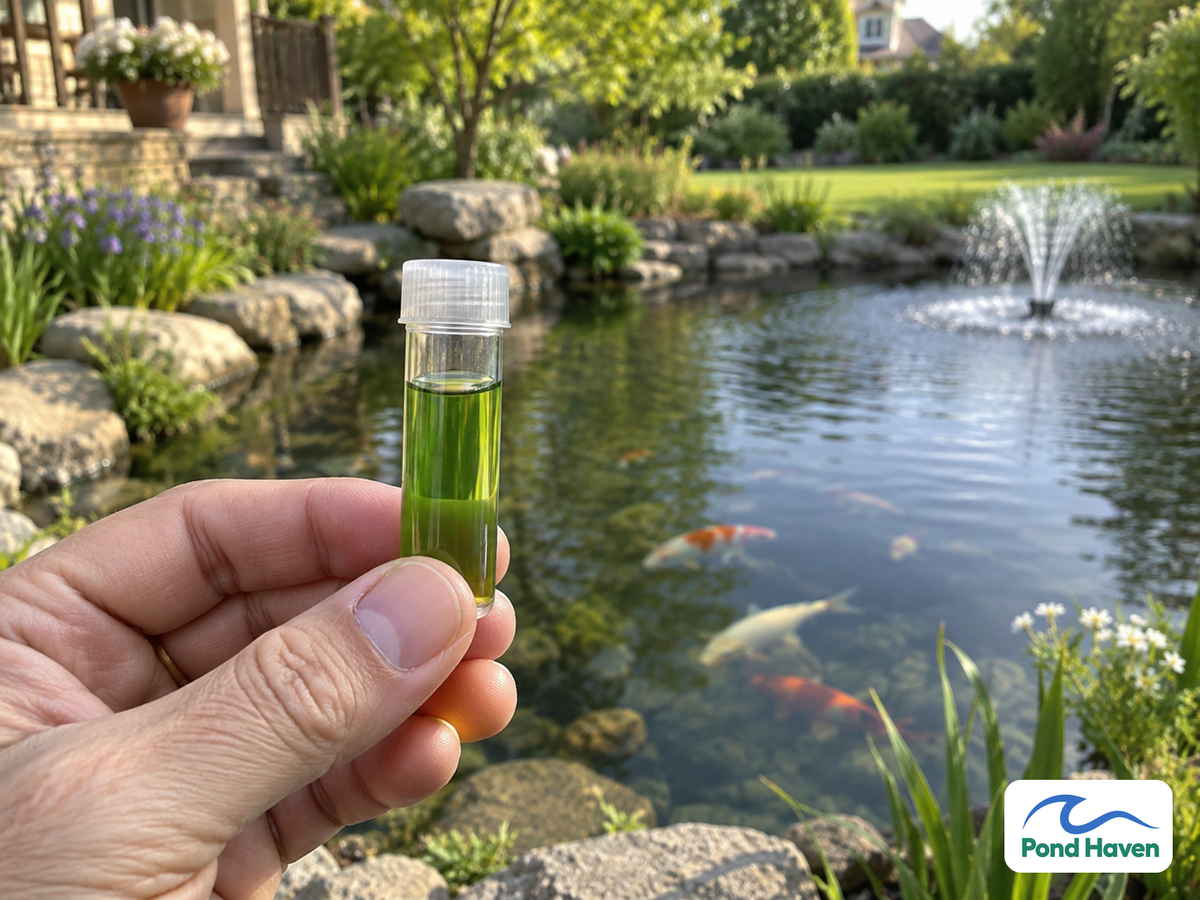

Pond water pH tells you how acidic or alkaline your water is, and it controls nearly everything else happening in your pond. It dictates how toxic ammonia becomes, how well your biological filter works, and how much stress your fish carry daily. A pH number is not just a reading. It is a warning system.
This guide explains what pH actually measures, what a healthy range looks like for a stocked pond, why your pH swings between dawn and dusk, and what each reading means for your fish. If you need the step-by-step fix for a specific problem, we cover lowering high pH separately.
- The safe range for a stocked pond is 6.5 to 9.0, but stability near 7.0 to 8.0 is the real goal.
- pH rises during the day as plants consume CO₂ and falls at night as respiration releases it. Test at both ends of the day to see your full swing.
- High pH converts relatively harmless ammonium (NH₄⁺) into toxic un-ionized ammonia (NH₃), which is over 100 times more deadly to fish.
- Alkalinity (KH) is the buffer that prevents pH swings. Keep it between 50 and 150 mg/L as CaCO₃.
- Treat the cause of a pH problem, not the number. Algae drives pH high; low alkalinity lets it crash.
What Is Pond Water pH?
pH stands for "potential of hydrogen." It measures the concentration of hydrogen ions (H⁺) in your water on a scale from 0 to 14. A pH of 7.0 is neutral. Below 7.0 is acidic. Above 7.0 is alkaline (basic).
The scale is logarithmic, which matters more than most pond owners realize. Each full unit change represents a tenfold change in acidity. Water at pH 8.0 is ten times more acidic than water at pH 9.0. Water at pH 6.0 is ten times more acidic than water at pH 7.0. A swing that looks small on paper is actually massive in chemical terms.
pH is the master variable in pond chemistry. It controls the toxicity of ammonia, the solubility of metals like aluminum and iron, and the efficiency of the nitrifying bacteria that run your biological filter. Get pH wrong and nothing else in the pond works right, regardless of how good your aeration or filtration is.
What Is the Ideal pH Level for a Pond?
The widely accepted safe range for pond life is 6.5 to 9.0. State fisheries agencies and university extension services, including Oklahoma State University Extension and the Purdue University Department of Forestry and Natural Resources, use this band for most freshwater organisms. Within that range, your target is stability near neutral.
| pH Reading | What It Means for Your Pond | First Action |
|---|---|---|
| Below 4.5 | Acutely toxic. Fish mortality is likely. Often from acid mine drainage or severe industrial runoff. | Do not stock fish. Test alkalinity and consult a professional for a liming plan. |
| 4.5 to 6.0 | Chronic stress. Fish immune systems suppress, biological filtration slows, and reproduction suffers. | Test alkalinity (KH). If low, raise it with agricultural limestone or baking soda. |
| 6.0 to 6.5 | Acceptable but on the low side. Most fish tolerate it, but the pond has little buffer against a crash. | Monitor alkalinity. Aim to raise KH into the 50 to 150 mg/L range for stability. |
| 6.5 to 8.0 | Ideal zone. Most pond fish, including koi and goldfish (Carassius auratus), thrive here. Nitrifying bacteria work efficiently. | Maintain current management. Test weekly during the main season. |
| 8.0 to 9.0 | Safe but watch closely. Ammonia toxicity rises sharply as pH climbs. Stable is fine; rising is not. | Test ammonia alongside pH. If fish are healthy and pH is stable, monitor. |
| Above 9.0 | Dangerous. Often caused by dense algal blooms stripping CO₂ from the water. Ammonia becomes highly toxic. | Identify and control the algae bloom. Test in the late afternoon for the peak reading. |
| Above 11.0 | Generally lethal to most freshwater organisms. | Emergency. Do partial water changes with lower-pH source water and address the root cause immediately. |
The ideal target for a stocked pond is 7.0 to 8.0. This range supports most fish species and keeps the nitrifying bacteria in your biological filter operating at full efficiency. Those bacteria slow down significantly below pH 7.0 and can stop completely, which allows ammonia to climb rapidly.
A stable 7.8 is far better than a daily swing from 7.0 to 9.0. Fish can adapt to a consistent pH at the edges of the safe range. They cannot adapt to violent swings. Stability is the goal, not a perfect 7.0.

Why Does Pond pH Change? The Daily Cycle
pH is not static. It follows a predictable daily rhythm driven by photosynthesis and respiration. Understanding this cycle is the single most important concept in pH management.
During the day, pH rises. Plants, algae, and phytoplankton consume carbon dioxide (CO₂) for photosynthesis. CO₂ reacts with water to form carbonic acid (H₂CO₃), which releases hydrogen ions and lowers pH. When plants remove CO₂ from the water, they remove that acid source, and pH climbs. The peak happens in the late afternoon, typically between 3 and 5 PM.
At night, pH falls. Photosynthesis stops, but respiration continues. All aquatic life, including plants, algae, fish, and bacteria, releases CO₂ through respiration. That CO₂ forms carbonic acid, which adds hydrogen ions back to the water and drives pH down. The lowest point comes at dawn.
A healthy, moderately planted pond might see a natural swing of 0.5 to 1.0 pH units over 24 hours. That is normal and harmless. The problem comes when the swing gets extreme.
Algal Blooms and pH Spikes
Dense algal blooms change everything. When algae populations explode, they strip CO₂ from the water so aggressively during the day that pH can spike above 9.5, sometimes reaching 10.0 or higher. This is not a subtle shift. It is a chemical event that can stress or kill fish within hours.
The green tint you see in productive water is chlorophyll, and it signals high algal biomass. More algae means higher daytime pH peaks. Late in the season, when nutrients have accumulated, the risk is greatest.
The fix for high pH is almost always algae control, not acid addition. Reduce the nutrients feeding the bloom, shade the water, and the pH problem resolves itself.
The Critical Link Between pH and Ammonia Toxicity
This is the most important concept in pond pH management, and it is the one most guides skip.
Ammonia exists in two forms in water:
- Ammonium (NH₄⁺): The ionized, relatively harmless form.
- Un-ionized ammonia (NH₃): The highly toxic form.
The proportion of deadly NH₃ increases dramatically as pH and temperature rise. At a pH of 7.0 and 20°C (68°F), only about 0.02 ppm of your total ammonia exists as toxic NH₃. At a pH of 9.0 and the same temperature, that jumps to 1.43 ppm for the same total ammonia level. That is a 71-fold increase in toxicity from pH alone, based on the ammonia equilibrium tables published by the Oklahoma State University Extension.
Here is a real-world scenario. Imagine your pond has 2.7 mg/L of total ammonia nitrogen. At dawn, with a pH of 7.0 and water at 28°C (82°F), the toxic un-ionized ammonia fraction is about 0.019 mg/L. That is safe. By late afternoon, photosynthesis has driven the pH to 9.0 and the water has warmed to 30°C (86°F). The toxic fraction is now 1.2 mg/L. That is lethal. A 63-fold increase in toxicity within a single day, driven entirely by the daily pH cycle.
This is why testing pH only in the morning gives you a false sense of security. You must test in the late afternoon, when pH is at its daily maximum, to assess the true ammonia danger.
The Stabilizing Force: Understanding Alkalinity
Alkalinity, also called carbonate hardness or KH, is the buffer that keeps pH stable. It measures your water's capacity to neutralize acid and resist pH change. Think of it as a shock absorber for pH.
pH and alkalinity are different things. pH is a scale from 0 to 14. Alkalinity is a measurement in mg/L (or ppm) of the water's acid-neutralizing capacity, expressed as calcium carbonate (CaCO₃). You can have high pH with low alkalinity, or low pH with high alkalinity. The alkalinity determines how easily the pH can move.
Recommended alkalinity range: 50 to 150 mg/L as CaCO₃.
| Alkalinity Level | What It Means | Risk |
|---|---|---|
| Below 20 mg/L | Essentially no buffer. pH can swing from 6.0 to 10.0 in a single day. | Extreme pH swings, ammonia toxicity spikes, fish stress. |
| 20 to 50 mg/L | Low buffer. Some stability, but vulnerable to crashes from heavy rain or high biological load. | Moderate pH swings, especially at night. |
| 50 to 150 mg/L | Ideal range. pH stays stable through the daily cycle. | Low risk. This is your target. |
| Above 150 mg/L | Strong buffer. pH is locked in place, usually on the high side (8.2 to 8.6). | Stable, but high pH increases ammonia toxicity risk. Monitor ammonia closely. |
Low alkalinity is common in soft-water regions and in new ponds built on acidic clay soils. The southern and southeastern United States are particularly prone to this. If your alkalinity is below 50 mg/L, your pH is vulnerable to dangerous swings regardless of what your current reading shows.
Managing alkalinity is the key to long-term pH stability. Stop chasing the pH number with chemicals and start building your buffer instead.

What Drives Pond pH High or Low?
Your pond's baseline pH comes from its water source, its soil, and what you put in it. Understanding these drivers tells you whether your pH problem is a one-time event or a permanent condition.
What Drives pH High
- Limestone and concrete: Rocks containing calcium carbonate and new concrete (blocks, hardscape, pond shells) leach minerals that raise pH and hardness. A new pond built with concrete or surrounded by limestone will run high for months or years.
- Algal blooms: Dense algae strip CO₂ from the water during the day, driving afternoon pH spikes above 9.5. This is the most common cause of high pH in established ponds.
- Municipal tap water: Many municipal water supplies run between 8.0 and 9.0. If you top off with tap water regularly, you are pushing your pond toward the alkaline end of the scale.
- High alkalinity source water: Well water drawn from limestone aquifers can carry high alkalinity and lock pH in the 8.2 to 8.6 range.
What Drives pH Low
- Acidic soil: Ponds built on clay soils with acidic bottoms leach acids into the water, keeping both pH and alkalinity low.
- Decaying organic matter: Leaves, dead algae, fish waste, and uneaten feed all decompose into acids. A pond with heavy organic loading consumes its alkalinity buffer over time.
- Rainfall: Rain is naturally acidic, and heavy rain events can temporarily drop pH, especially in ponds with low alkalinity.
- Oak tannins: Freshly cut oak wood releases tannic acids that turn water brown and lower pH. Do not add green oak logs or stumps to a pond.
- Acid mine drainage: In regions like Pennsylvania and Kentucky, acid mine drainage can keep pond pH persistently low. The remedy is liming to boost alkalinity.
How to Test Your Pond's pH Accurately
You have three main options for testing pH. Each has trade-offs.
| Test Method | Accuracy | Pros | Cons | Best For |
|---|---|---|---|---|
| Liquid Test Kit | Good, reads to 0.5 pH units | Accurate, cost-effective, measures both pH and KH | Requires following steps; subjective color reading | Most pond owners. The standard for reliability. |
| Digital pH Meter | Excellent, reads to 0.01 pH units | Precise, gives a direct number, no color matching | Requires calibration and proper storage; can be expensive | Serious hobbyists and large ponds |
| Test Strips | Fair, reads to 0.5 to 1.0 pH units | Fast and convenient | Least accurate; prone to error from moisture | Quick checks only, not for diagnosis |
For a stocked pond, a liquid test kit that measures both pH and alkalinity (KH) is the best investment. You need both numbers to understand your pond's stability.
The critical testing rule: Test in the late afternoon, between 3 and 5 PM, to capture the peak pH. This is the reading that matters for ammonia toxicity assessment. Test again at dawn to see your full daily swing. Test weekly during the main season, and daily when you are diagnosing a problem or have recently treated the water.
How to Manage and Stabilize Pond pH
The goal is not to hit a perfect number. The goal is stability, and stability comes from alkalinity. Before you do anything, test your alkalinity (KH). That single number tells you whether your pH is protected or vulnerable.
If Your pH Is Low
Low pH is almost always a symptom of low alkalinity. The fix is to add buffer, not to chase the pH number.
- Agricultural limestone: The standard, safe method for ponds. Calcitic limestone (calcium carbonate) or dolomitic limestone (calcium-magnesium carbonate) dissolves slowly, raising both pH and alkalinity gently. For a small pond, start with 1 to 2 pounds per 1,000 gallons, broadcast evenly. For larger ponds, a professional liming plan based on soil tests is worth the cost.
- Baking soda (sodium bicarbonate): A fast-acting emergency measure to prevent a pH crash. It raises alkalinity with minimal pH impact. Dose at 1 teaspoon per 100 gallons to raise KH by roughly 17 mg/L.
If Your pH Is High
High pH is usually a symptom of excess algae, not a chemical problem. Treat the cause.
- Control the algae bloom. Reduce nutrients by removing debris, using beneficial bacteria treatments, and cutting off fertilizer runoff. Add pond dye or surface plants like water lilies to shade the water. A UV clarifier will kill free-floating algae directly.
- Do partial water changes. If your source water has lower pH and alkalinity, a 20 to 30 percent water change can dilute high pH. Test your tap or well water first.
- Use peat moss. Placing peat moss in a mesh bag in your filter or skimmer releases mild organic acids that lower pH slowly. This works best in soft water.
The Real Stabilizer: Water Circulation
Water movement is the most underrated tool for pH stability. A pond with good circulation resists pH swings far better than a stagnant one. Here is why.
Circulation prevents stratification in ponds 8 feet deep or deeper. Stratified ponds develop distinct temperature and chemistry layers, and the bottom layer can become acidic and oxygen-depleted. When that layer mixes with the surface, pH can shift suddenly.
Circulation also helps off-gas excess CO₂. A pond that cannot release CO₂ builds up carbonic acid, which pushes pH down. Moving water releases that gas continuously.
For ponds deeper than 4 feet, a bottom diffused aeration system is the most effective choice. It lifts oxygen-poor bottom water to the surface and keeps the entire water column mixed. For shallower water gardens, a surface aerator or fountain provides adequate circulation.
Bottom diffused aeration suits ponds over 4 feet deep, where stratification is the real risk. Shallower ponds get enough mixing from a surface aerator or fountain. Running any aerator during the day also helps off-gas the CO₂ that algae produce, smoothing your afternoon pH peak.

When to Call a Professional
Some pH problems are beyond DIY correction. Seek expert help in these situations:
- pH is persistently below 6.0 or above 9.0 despite corrective measures.
- You have a pond larger than 1 acre and need a precise liming plan based on soil and water tests.
- You are experiencing repeated fish kills and cannot diagnose the water chemistry issue.
- Your alkalinity is below 20 mg/L and you need a tailored buffering strategy.
A professional can run comprehensive water tests, analyze your soil, and develop a liming or management plan specific to your pond. The cost is far less than replacing a fish population.
Frequently Asked Questions
How often should I test my pond's pH?
Test pH and alkalinity at least once a week during the main season. Test in the late afternoon for the most critical reading, and test at dawn to see your full daily swing. Test daily if you are treating a problem or after a major water change.
My pH is always at 8.4. Is that okay?
If your pH is consistently 8.4, your alkalinity is within the 50 to 150 mg/L range, and your fish are healthy, it is likely fine. Stability matters more than hitting a perfect 7.0. However, you must be extra vigilant about ammonia levels, because toxicity rises sharply at that pH.
Can rocks or concrete raise my pond's pH?
Yes. Limestone rocks and new concrete can leach minerals that raise pH and hardness over time. If you have high, stable pH and cannot find another cause, check your pond's construction materials.
What causes a sudden pH crash?
A sudden drop below 6.0 is typically caused by very low alkalinity combined with a high biological load. Decomposing organic matter produces acids, and without a buffer, the pH falls fast. Heavy rain with acidic runoff can also trigger a crash in soft-water ponds.
Should I use chemicals to lower my pond's pH?
No. Rapid pH-adjusting chemicals cause dangerous swings and do not fix the underlying problem. Address the root cause, which is almost always excess algae or low alkalinity. For long-term stability, focus on building your alkalinity buffer and controlling nutrient loads.
Manage your pond's pH by understanding its daily rhythm, respecting its link to ammonia, and fortifying its alkalinity buffer. Test at both ends of the day, treat root causes over symptoms, and prioritize stability above all. Your fish and your filter will thank you.