
What Is a Pond Fish Shelter?
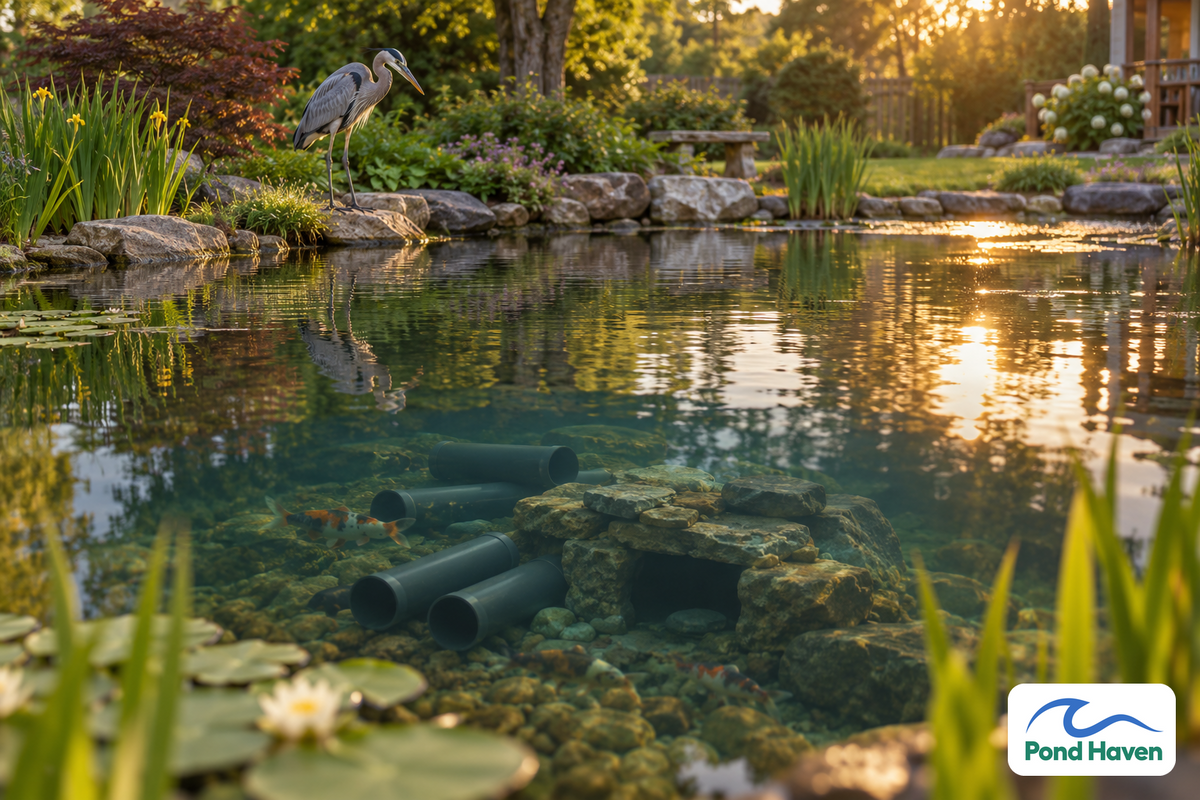

A pond without shelter is an open buffet. Herons wade in, raccoons fish the shallows, and even the sun becomes a stressor when there is nowhere to hide. Fish that cannot retreat live in a constant state of alert, and that vigilance costs them energy, health, and sometimes their lives.
This guide covers what pond fish shelter actually is, why fish need it beyond the obvious predator threat, and exactly how to add it to your pond. You will get specific depths, material rules, and placement logic, not vague advice.
- Place shelters at your pond's deepest point, ideally 3 to 6 feet, and never in water shallower than 2.5 feet where herons can wade and strike.
- Use only liner-safe, non-toxic materials: drinking-water-grade PVC, untreated lumber, or natural stone. Never use treated wood, copper, or galvanized metal.
- Cover 20 to 30 percent of your pond's surface area with overhead or nearby shelter, distributed in several small structures rather than one giant one.
- Add artificial shelter before the first hard frost, because winter is when natural plant cover dies back and fish become most visible to predators.
What Is a Pond Fish Shelter?
A pond fish shelter is any structure, natural or artificial, that gives fish a place to hide, rest, or escape. It can be a patch of water lilies, a rock cave, a length of PVC pipe, or a purpose-built commercial hide.
Shelters fall into three categories:
- Natural: aquatic plants, overhanging vegetation, submerged logs, and brush piles
- Structural: rock caves, stone ledges, clay pipes, and stacked flagstone hideaways
- Artificial/manufactured: PVC pipe arrays, mesh Koi Kastles, and commercial fish domes
| Shelter Type | Cost Range | Lifespan | Best Use Case |
|---|---|---|---|
| Aquatic plants | $10–$40 per plant | 3–10+ years | Backyard ponds under 1,000 gallons |
| Rock piles and ledges | $50–$300 | Permanent | Medium ponds needing stable caves |
| PVC pipe bundles | $20–$60 in materials | 5–10 years | Quick, cheap cover for any pond size |
| Commercial Koi Kastle | $40–$120 | 5+ years | Small ponds needing instant cover |
| Anchored brush piles | Free–$50 | 3–5 years | Acreage ponds and farm ponds |
Why Fish Need Shelter: The Non-Negotiable Benefits
Predator Defense
The Great Blue Heron (Ardea herodias) is the primary threat to North American pond fish. It stands nearly 4 feet tall with a wingspan that can reach 6 feet, and its long toes spread its weight so it can wade into ponds without sinking. Herons hunt in the early morning and late evening, striking in water shallow enough to wade, typically under 18 inches deep.
Herons are protected under the Migratory Bird Treaty Act of 1918. You cannot legally trap, harm, or kill one without a federal depredation permit from the U.S. Fish and Wildlife Service. That makes shelter your only fully legal, always-on defense. Fish that can retreat to deep water and dense cover survive encounters that would otherwise end them.
Stress Reduction and Fish Health
Fish without cover are stressed fish. When a fish cannot hide, its body stays in a heightened alert state. Chronic stress suppresses immune function and leaves fish more susceptible to disease and parasites.
The science is clear from aquaculture research. A 2019 study published in Frontiers in Veterinary Science examined environmental enrichment in farmed fish and found that individuals with access to hiding structures showed lower cortisol levels, the primary stress hormone in fish. These fish also converted feed more efficiently because they spent less energy on vigilance and more on growth.
Common pond stressors include netting, handling during cleanouts, crowding, and predator sightings. Every one of those events requires a recovery space. Fish that can duck into cover after a stressful encounter bounce back faster than fish forced to remain exposed.
Environmental Buffering
Shelter is not just about predators. Deep-water structures stay cooler in summer and warmer in winter, giving fish a refuge from temperature swings. Most pond fish thrive between 65 and 75 degrees Fahrenheit, and a minimum pond depth of 4 feet helps stabilize temperature.
Shelter also provides shade that regulates UV exposure and reduces algae pressure in the immediate area. And it protects fish from strong water currents near pumps and waterfalls, where they can otherwise exhaust themselves swimming against the flow.
Spawning and Nursery Habitat
Many fish species need structure for egg deposition. Koi and goldfish scatter eggs over aquatic plants, and without suitable substrate they may not spawn at all.
Fry survival rates increase dramatically with dense cover. Young fish are the most vulnerable to predation, and thick plant growth or tight structural spaces give them a place to mature. Shelters also create territories that reduce aggression in crowded ponds, giving subordinate fish somewhere to retreat from dominant individuals.

How to Give Pond Fish Shelter: A Strategic Guide
Choosing Location and Depth
Place shelters at your pond's deepest point. For backyard ponds, that typically means 3 to 6 feet. This puts the maximum distance between your fish and wading predators.
Avoid water shallower than 2.5 feet. Herons can wade and strike there, and shallow shelters expose fish to UV stress. Shallow water also lets sunlight reach the bottom, promoting excessive weed growth around your structure.
Position shelters near, but not directly in, strong water flow. Fish want a calm retreat, not a current to fight. And remember that several shelters spread around the pond beat one large structure. A fish being chased needs an escape route nearby, not a single distant refuge.
Selecting the Right Shelter Type
Match your shelter to your pond size and fish population:
- Small ponds (under 1,000 gallons): one or two artificial domes or PVC pipe arrays
- Medium ponds (1,000–5,000 gallons): a mix of plant cover and structural caves
- Acreage ponds (half-acre and up): anchored brush piles and wooden crib structures
Match shelter opening size to your fish. Openings should be 1.5 to 2 times the fish's body diameter. A koi that can wedge itself in but not turn around will panic, and a panicking koi can injure itself on the structure.
Installation and Anchoring
Here is a step-by-step for a simple PVC pipe shelter:
- Cut 4-inch diameter PVC pipe into 18 to 24 inch lengths.
- Arrange 6 to 10 pipes in a bundle.
- Secure them with zip ties or non-toxic adhesive.
- Attach the bundle to a concrete paver or cinder block base.
- Lower it slowly into position at your chosen depth.
Use only PVC rated for drinking water transport (NSF/ANSI 61 certified). It does not leach chemicals into your pond. Never use PVC that has carried solvents or other chemicals.
For brush piles, anchor them with cinder blocks or cement poured into a bucket. Allow 2 to 3 weeks for biofilm to develop on new structures. Fish are cautious of anything new and unfamiliar, and a freshly installed shelter may sit unused until it develops a natural coating.
Koi are powerful fish and can topple unsecured shelters when panicking. Weight every structure with rocks, cinder blocks, or a concrete base so it cannot shift, roll, or collapse on your fish.
How Much Shelter Is Enough?
A practical rule of thumb: 20 to 30 percent of your pond's surface area should have cover overhead or nearby. For acreage ponds, state fisheries agencies commonly recommend 5 to 10 brush piles or cribs per surface acre for fish habitat, though exact numbers vary by region.
Distribute shelters evenly around the pond. Clustering them in one corner leaves the rest of the pond exposed. Add more shelter if you see fish darting constantly, if predator visits are frequent, or if your fish cluster in one spot all day.
Shelter Types and What They Solve
| Shelter Type | Threat It Solves | Maintenance Impact | Effect on Fish Visibility |
|---|---|---|---|
| Deep-water refuge (3–6 ft) | Herons, raccoons, temperature swings | Low; set and forget | Fish hidden during the day, visible at feeding time |
| Caves and tunnels (PVC, rock) | Herons, kingfishers, stress | Moderate; check for debris clogging openings | Fish hidden most of the time |
| Overhanging edges and plant cover | Herons, direct sun, heat stress | High; plants need pruning and seasonal care | Partial cover; fish visible but protected |
| Submerged structure (brush piles, cribs) | Herons, large predators | Low for brush; cribs last longer but cost more | Fish hidden; structure itself may be visible |
| Floating cover (lily pads, hyacinth) | Herons, direct sun, aerial predators | Moderate; thin out fast growers | Fish partially visible through gaps |
The Trade-Off You Need to Accept
A hidden fish is a fish you cannot inspect. This is the real cost of good shelter.
When your koi spend most of their time tucked into a cave or under a ledge, you will not notice early signs of disease the way you would with fish that swim openly. You will not spot a developing fin infection or a parasite problem until it is advanced.
The solution is not less shelter. It is scheduled observation. Feed your fish at the same time each day and use that moment to count them and look for visible issues. A fish that comes out eagerly to feed is usually a healthy fish. A fish that stops coming out, or that hides even at feeding time, is your first warning sign.
You also need to be able to reach your fish when treatment is necessary. Do not place every shelter in a spot where you cannot net fish out. Keep at least one open area clear for handling, and design your shelters so fish can be encouraged out rather than trapped inside.

Beyond Shelter: Integrated Predator Defense
Shelter works best as part of a layered defense. Physical barriers and deterrents back up your underwater structure:
- Heron netting strung 12 to 18 inches above the water surface blocks wading birds entirely
- Fishing line grids at 12-inch spacing disrupt heron landing approaches
- Steep-sided pond edges with a sharp drop-off reduce wading access
- Heron decoys exploit the bird's solitary nature, but move them every 2 to 3 days or they become ignored furniture
- Motion-activated sprinklers startle predators approaching the water
For the full picture on heron defense, see our guide to heron deterrents for ponds.
Seasonal and Maintenance Tips
Winter Preparation
Winter is when most ponds lose their shelter. Lily pads die back, floating plants collapse, and fish that had overhead cover all summer suddenly have none. This is exactly when predators like herons and raccoons are most desperate for food.
Add artificial shelters before the first hard frost. A PVC bundle or commercial cave does not die back with the seasons. Keep a de-icer running to maintain an open hole in the ice; fish will shelter near it because it provides both oxygen exchange and a predator-free zone.
Deep-water shelters protect fish from both predators and temperature crashes. Water at 4 feet or deeper stays more stable than surface water, giving fish a refuge from sudden cold snaps.
Ongoing Care
Inspect your shelters twice a year, in spring and fall. Remove leaves and debris that clog openings. A shelter with a blocked entrance is a trap, not a refuge.
Check anchoring after heavy storms or ice melt. Structures shift, and a shelter that has rolled into shallow water is worse than no shelter at all because it gives fish false confidence in a vulnerable spot.
Replace degrading PVC or fabric every 3 to 5 years. Sun and ice damage plastics over time. During your spring cleanout, pressure-wash artificial shelters to remove accumulated sludge.
Common Mistakes to Avoid
- Using toxic materials: never use treated lumber, copper, or galvanized metal in your pond. Chemicals leach into the water and poison fish slowly.
- Placing shelters in shallow water: anything under 2.5 feet deep is within heron striking range. You are building a trap, not a refuge.
- Overcrowding shelters: fish need to enter and exit quickly. A structure packed so tight that fish cannot turn around causes panic injuries.
- Ignoring water quality: shelter does not fix low dissolved oxygen. Target 5 to 8 mg/L for healthy fish, and run aeration if your levels drop.
- Building one giant shelter instead of several small ones: a single structure limits escape options. Fish being chased need a refuge nearby, wherever they are in the pond.
- Forgetting winter: summer-only planning leaves fish exposed exactly when natural cover disappears.

Frequently Asked Questions
How deep should a pond fish shelter be?
Place shelters at your pond's deepest point, typically 3 to 6 feet for backyard ponds. Never put them in water shallower than 2.5 feet, where herons can wade and strike. For ponds over 12 feet deep, verify oxygen levels before placing bottom structures, because summer stratification can create oxygen-free zones.
Will a pond fish shelter harm my liner?
Not if you choose the right materials and weight. Use smooth, liner-safe materials like drinking-water-grade PVC, natural stone without sharp edges, or commercial shelters designed for pond use. Always set structures on a flat base or paver rather than directly on the liner, and avoid anything with rough edges that could rub through over time.
How many shelters do I need for 10 koi?
For 10 koi in a typical backyard pond, provide 3 to 4 separate shelters distributed around the pond. Each should have openings 1.5 to 2 times the body diameter of your largest fish. Several small shelters beat one large one, because fish being chased need a nearby escape route.
Do fish actually use artificial shelters?
Yes, but not immediately. New structures need 2 to 3 weeks to develop biofilm and smell like part of the pond. Fish are cautious of anything unfamiliar. Once a shelter develops natural coating, koi and goldfish will use it readily, especially when predators are around or during temperature stress.
Start With One Well-Placed Shelter
Shelter is not optional decoration. It is the difference between fish that thrive and fish that merely survive. Fish that can hide are less stressed, grow faster, resist disease better, and are more likely to spawn.
You do not need to overhaul your pond today. Assess what you have, identify the gaps, and start with one well-placed shelter at your pond's deepest point. Build from there.
If you are building a new pond or redoing an existing one, plan shelter into the design from the start. A pond kit with proper depth and a quality liner gives you the foundation; adding structure on top of that foundation creates a complete habitat your fish will use for years.