
Filters
Filters










Before you order
Two things to settle before you choose
Frequently Asked Questions
What is the difference between natural stone and cast stone outdoor fountains?
The difference between natural stone and cast stone water fountains is what the visible body is made from. Natural stone is quarried basalt, granite, marble, or onyx, carved so each piece is one of a kind and heavy. The molded pieces here are glass-fiber-reinforced concrete (GFRC), formed in molds taken off real rock. The weight gap is the practical difference: the GFRC Matterhorn is 25 lbs, the natural granite sphere 185 lbs at its smallest size.
What types of outdoor stone fountains are there?
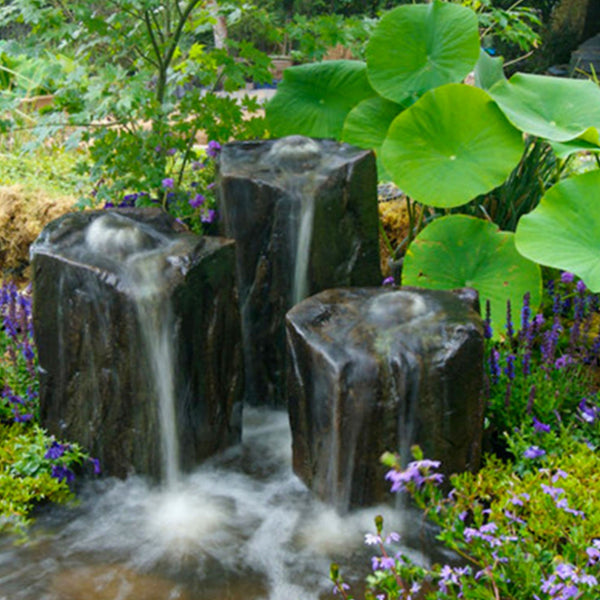
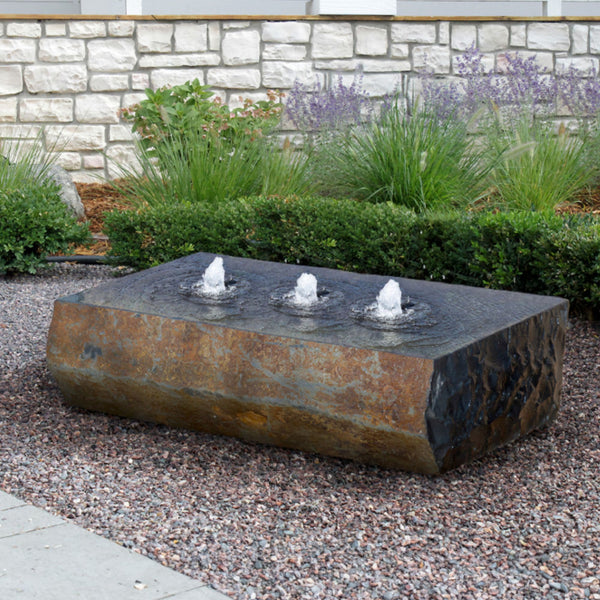
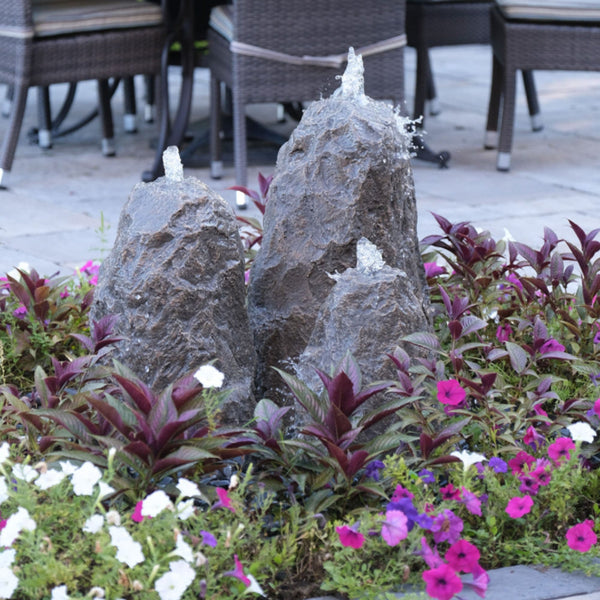
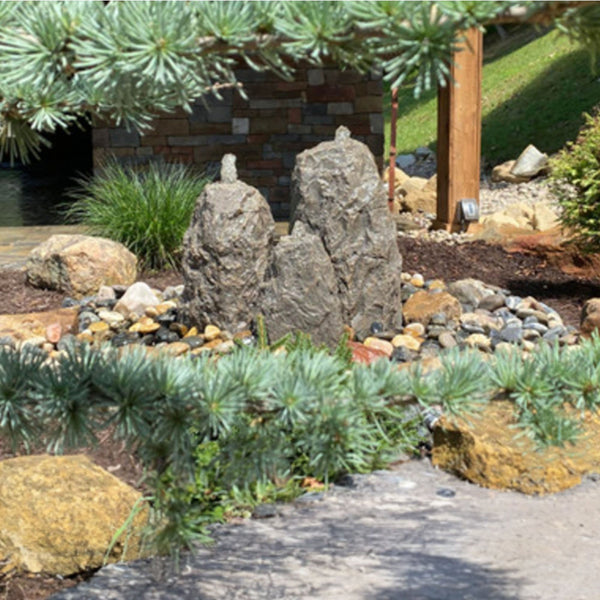
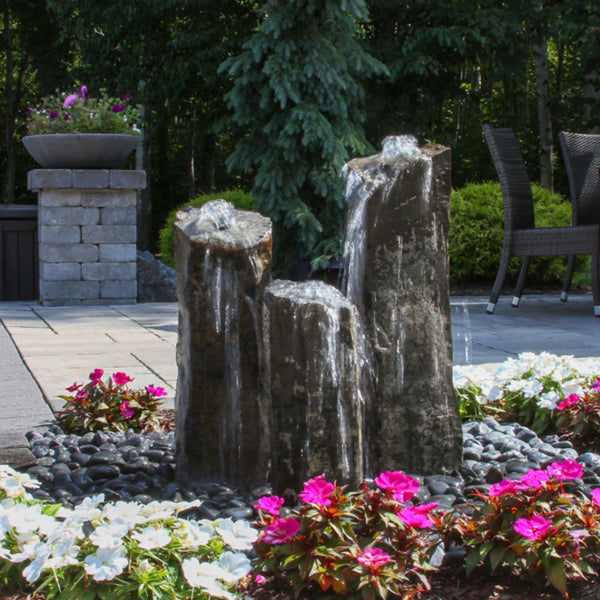
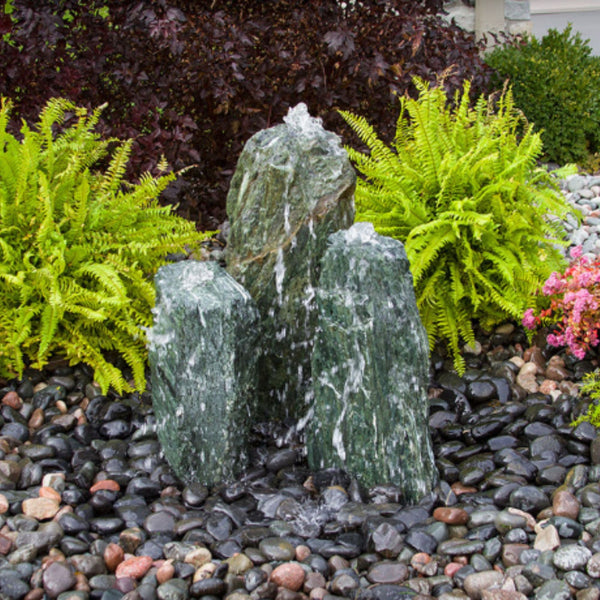
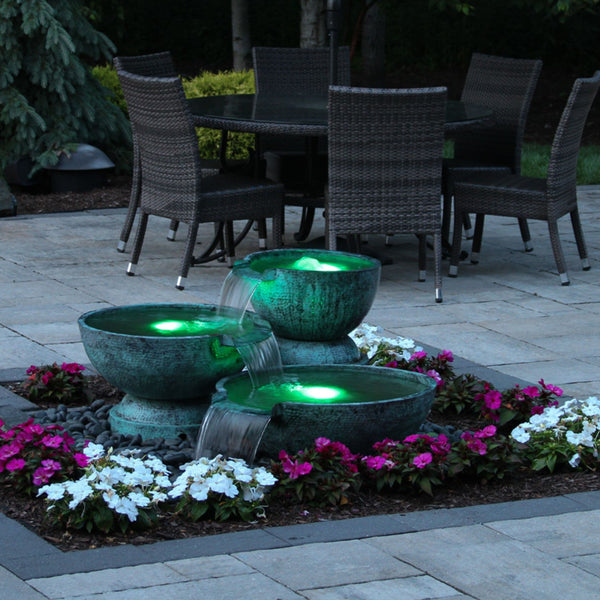
Stone water fountains come in five forms: basalt columns, polished spheres, bubbling boulders and rock falls, shallow bowls and bird baths, and urns. Columns and boulders often come as triples, three stones of staggered height sharing one basin, which is the most common configuration on this page. Form decides more than looks: only the shallow-bowl forms work as bird baths, and the Basalt Bird Bath Stone Fountain has a 23 x 26-inch bowl at 12 inches tall, running an 800 GPH pump. Sphere fountains, bubbler fountains, bird bath fountains, and cascading waterfall fountains each have their own collection if you already know the shape you want.
How much does an outdoor stone fountain cost?
Stone fountains at Pond Haven start around $500 and run to roughly $9,000. Material and stone size set the price, not the design. Molded GFRC pieces occupy the bottom of that range, while natural basalt, granite, and marble start near $1,600 and climb with the size of the stone.
What is a stone fountain basin, and how is it matched to the fountain?
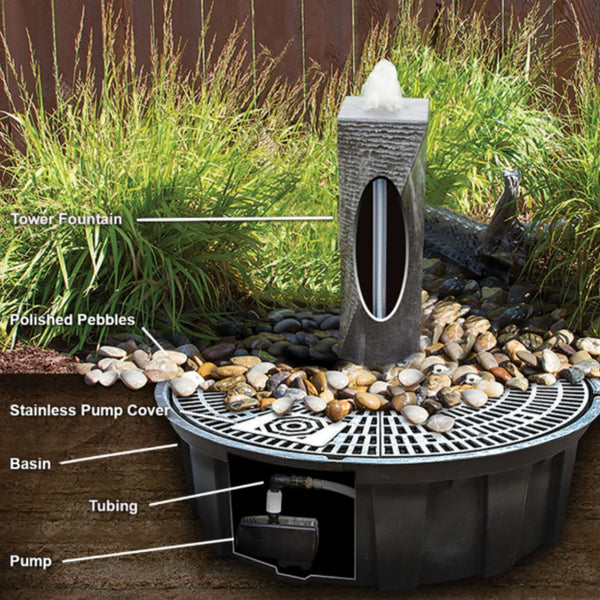
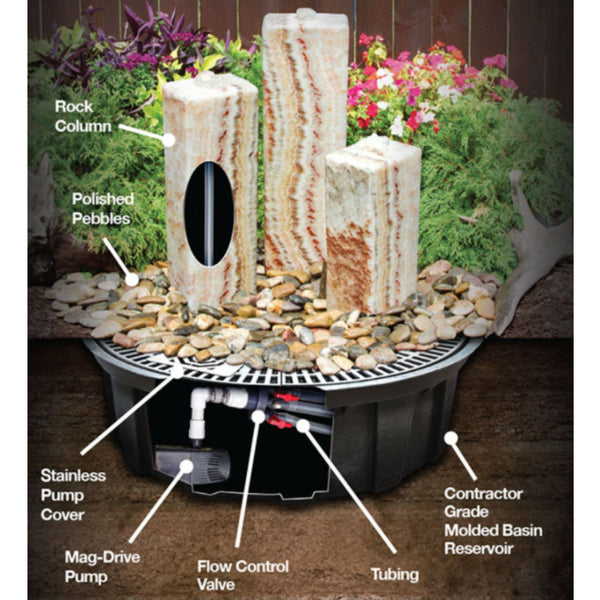
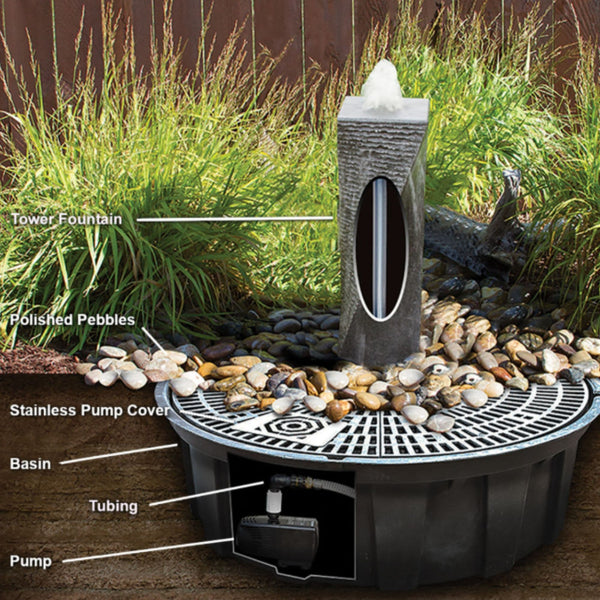
A stone fountain basin is the reservoir buried beneath the stone that holds the water and the pump. The basin and the pump are matched to the fountain at the factory, so you do not need to size either: the granite sphere and basalt bird bath use 36-inch or 48-inch Achelous basins, while the lighter Sonoma rock uses a 25-inch square basin holding 12 gallons. Pump flow is matched the same way, from 370 GPH on the Sonoma to 1,495 GPH on the Triple Split Polished Basalt, scaled to the fountain's height, stone count, and water pattern. The basin carries the static load of the stone above it, so it is sized to the piece.
Do stone water fountains need a pond, plumbing, or an electrician?
Stone water fountains need no pond and no permanent water-supply connection. Water sits in the buried basin, the pump lifts it through the stone, and it drains back to run again. You dig for the basin, fill it from a garden hose, and plug the pump into a GFCI-protected outdoor outlet. These kits use plug-in submersible pumps rather than hardwired ones, so an electrician is only involved if you need a new outdoor circuit, and local code decides that.
How loud is a stone water fountain?
A stone water fountain is a soft, steady sound, and the form sets how strong it is. Water sheeting over a polished sphere or a single column is quieter than a cascade dropping over several levels. Flow rate and drop height both raise the volume, and every kit has a flow-control valve, so the same fountain can run louder or softer than it does in the photo.
How often do I have to refill the basin?
You refill the basin about once a week in summer heat and less often in cool or wet weather. Evaporation and splashing are the two causes, and the pump must stay submerged at all times, or it runs dry. If you are topping off more than that, turn the flow down at the ball valve or move the pebbles that are causing water to spill outside the basin. An auto-fill kit ties into a garden hose and handles it for you.
Can I leave a stone fountain outside during winter?
Most basalt and boulder stone fountains can stay uncovered in the basin all winter, but the pump has to come out. Disassemble and clean it, then store it in a bucket of water somewhere that won't freeze, which keeps the seals wet and the impeller from sticking. Leave the basin about half full, since draining it invites heaving through freeze and thaw. This matters beyond the fountain: winter damage is excluded from the warranty, and claims can be denied if a fountain wasn't winterized properly.
What warranty comes with a stone fountain?
Stone fountains carry a Blue Thumb limited warranty against workmanship defects for a minimum of one year. The mag-drive pump is warranted separately for 5 years with the impeller excluded, and the molded basin reservoir is covered for life against manufacturing defects to the original purchaser. Every part of that assumes the fountain was installed and maintained per the manual, and winter damage is excluded outright.
What does installing one involve?
Installing a stone fountain means excavating slightly wider than the basin, leveling and compacting the base, setting the basin, connecting the pump and tubing, and placing the stone on the grate. Get the base level in both directions before anything goes on top of it, because an uneven base can cause the basin to sag or shift under the weight of the stone.
Need expert help finding the right setup?
Contact Pond Haven Support