

Keeton Industries Solar Aeration Systems
Guide & FAQ
How to choose the right Keeton Industries solar aerator
- 3 min overview
- Sizing, shape & placement
- 5 common questions
Why run aeration on solar power
A pond with no power nearby often goes un-aerated, and still, deep water can lose oxygen near the bottom during warm weather or as layers separate. Bottom-diffused aeration reaches that water: the compressor sits on shore and pushes air down to diffusers on the pond floor.
Rising bubbles lift deeper water toward the surface and mix the pond. That circulation supports fish and beneficial bacteria and can help reduce stagnant areas and the buildup of gases in deeper water.
Solar aeration is worth considering for:
- remote livestock ponds and farm reservoirs
- fishing lakes and aquaculture ponds
- off-grid properties
- ponds where trenching and electrical work would cost more than the equipment
- ponds with fish, heavy organic matter, or recurring low-oxygen conditions
Solar aeration will not solve every water-quality problem on its own, but it can support healthier conditions and often plays a useful part in managing a pond from a distance.
Which solar aeration setup fits your pond
Bottom-diffused solar systems differ mainly in how many places they release air on the pond floor. That number should follow the shape of the pond, not just its size.
Fewer diffuser plates
Choose a setup with one or two release points when the pond is a simple, rounded shape and a small number of plates can circulate the whole body of water without leaving still pockets.
More diffuser plates
Choose a setup with three or four release points when the pond has bays, coves, islands, or separate basins that each need their own air release to move water properly.
PondHaven carries four Keeton ProLake Solaer models: 1.1, 1.2, 2.3, and 2.4. Send us your pond dimensions and shape and we will confirm which one matches.
Two other categories may suit you better. If mains power sits within reasonable reach of the water, an electric bottom-diffused aerator is usually simpler and costs less to buy. If the pond is shallow or you want a visible spray, look at surface aerators and solar fountains instead.
How to choose the right model
Start with three details about the pond.
Pond size
Water volume decides how much air the pond needs to turn over, and it is the first filter when comparing models.
Pond shape
A roughly circular pond and a long, bent, or divided pond of the same size need different setups. Multiple shorelines and deep areas usually call for more release points.
Depth
Bottom diffusers work by lifting water off the floor, so ponds with real depth gain more circulation per plate. Ponds only a few feet deep are usually better served by a surface aerator.
Placement and installation requirements
No grid connection is needed, but a few site details matter before you order.
- Solar exposure: mount the panels where they get full, unshaded sun with clear southern exposure in the US. Shade on the panels means less charging.
- Airline run: the distance from the cabinet to the water's edge sets how much airline you need, so measure that run before choosing a package.
- Diffuser location: place diffusers in the deep zones to get the most water lift, and avoid setting them straight into thick silt beds where they would stir up settled muck.
What normally comes with a Solaer system
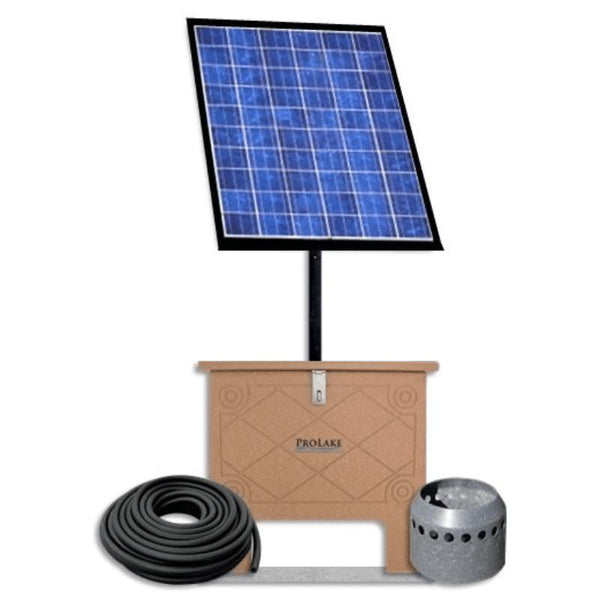
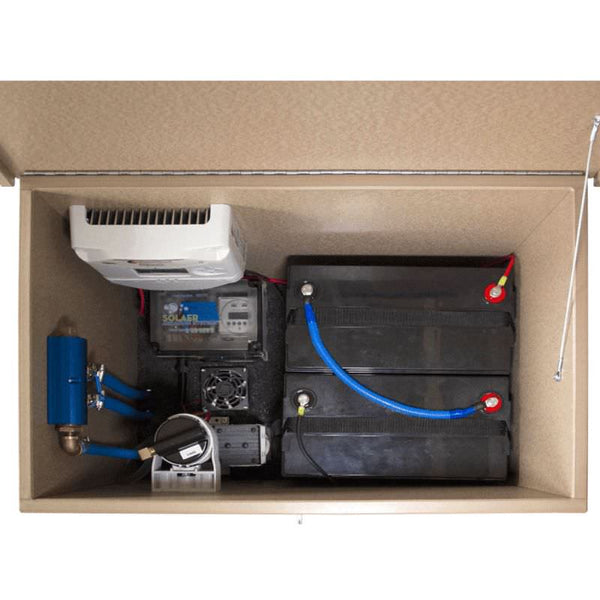
Each ProLake Solaer model is supplied as a system rather than a bare compressor. Across the four models, the descriptions list:
- solar panel
- cabinet
- programmable timer
- EcoFlow compressor
- Duraplate diffuser
- battery backup for operation day and night
Some models also list a charge controller and cooling fans. The Duraplate diffuser is described as self-cleaning and clog resistant, and Keeton backs the diffuser with a lifetime warranty. Check the individual product page for the model you are considering, since panel and cabinet details can differ.
Not sure which one you need?
Send PondHaven your pond's approximate size, average and maximum depth, and a short description of its shape, along with the distance from the pond to where the cabinet would sit. We will help you compare the four Solaer models and narrow it to one.
No page change, it expands right here
Frequently asked questions
Quick answers to the most common questions about our keeton industries solar aeration systems.
Will a Keeton solar aerator keep running at night and in cloudy weather?
Yes, all four ProLake Solaer systems include battery backup, so aeration can continue day and night rather than only while the sun is on the panels. How long stored power carries the system through extended cloudy spells depends on the model and the site, so ask us about your conditions.
How do I choose between the Solaer models?
PondHaven lists four ProLake Solaer models, and the right one depends on pond size, shape, and depth. The shape of the shoreline is often what decides how many air release points the pond needs, so send us those details and we will confirm which model fits.
What comes with the system?
Each model is described as a complete setup with a solar panel, cabinet, programmable timer, EcoFlow compressor, Duraplate diffuser, and battery backup, and some models also list a charge controller and cooling fans. Airline length and cabinet details vary, so check the product page for the specific system.
Do I need an electrician or trenching equipment to install it?
No grid connection is needed, which is the main reason buyers choose these systems over an electric aerator. The work is mounting the solar panel and cabinet, running airline to the pond, and placing the diffusers in the deeper zones.
How deep does my pond need to be for this to work well?
There is no fixed minimum depth, but bottom-diffused aeration works better where there is enough water above the diffusers to lift and mix the column. Ponds only a few feet deep generally gain less circulation per plate, and a surface aerator is often the better fit there.
Need expert help finding the right setup?
Contact Pond Haven Support